
Arakan Army Orders Villagers to Vacate Maungdaw in 3 Days

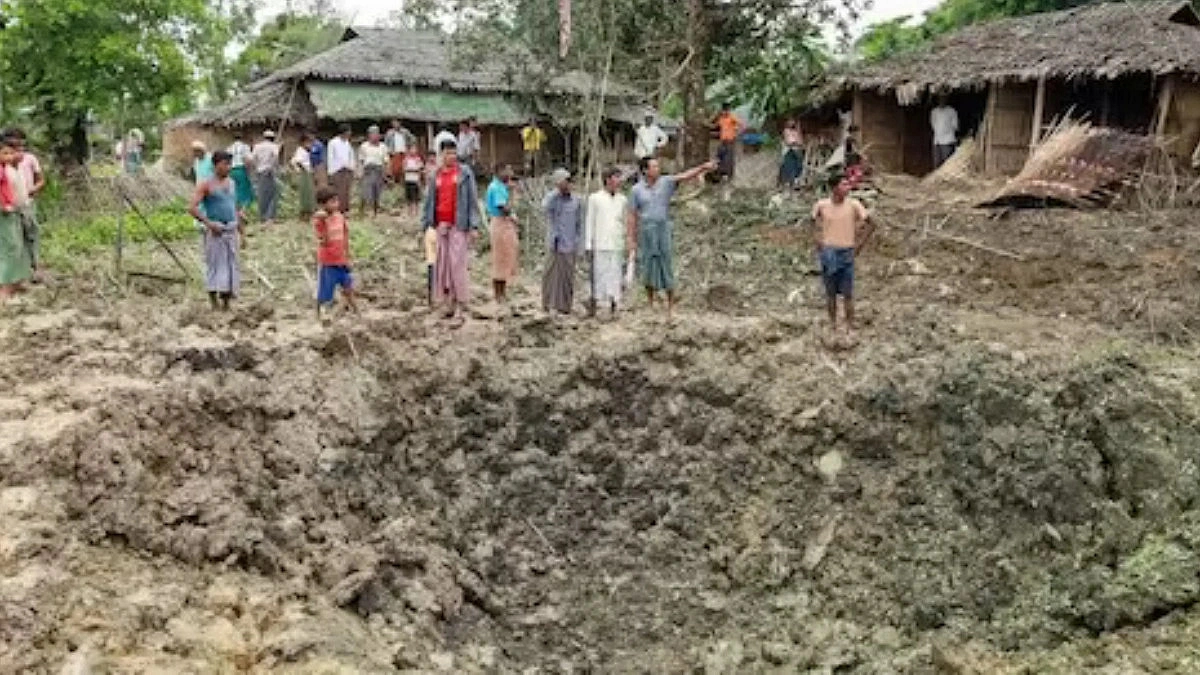
Locals in Rakhine are gripped by panic following army airstrikes. Photo: Collected.
The Arakan Army has ordered all residents of the Kya Gaung Taung village tract in Maungdaw Township, northern Rakhine State, to leave the area within three days. At the same time, the Myanmar military has carried out airstrikes in the Buthidaung and Maungdaw areas bordering Bangladesh. At least three people were injured in these strikes, and 10 houses were destroyed or severely damaged. Overall, fresh panic has spread across the border region.
The Kya Gaung Taung village tract is home to 10 families, comprising a total of 54 residents. They allege that on May 29, a battalion of the Arakan Army stationed in Ngar Khu Ya village summoned the local village heads and informed them that all residents must relocate to a place of their choice within three days. They were also warned that anyone remaining in the village after the stipulated deadline would face action.
Rohingya residents have stated that this order has created extreme anxiety and uncertainty throughout the village. Many families are unable to figure out where they will go for shelter. As a result, they are deeply worried about their future.
Meanwhile, locals report that the Myanmar military is conducting airstrikes at night targeting Arakan Army positions in the outskirts of Maungdaw. The Arakan Army is also retaliating. The loud explosions from the strikes are shaking homes in the Teknaf area along the Bangladesh border. In fear, many border residents are taking shelter in safer places.
The Rohingya crisis has long been recognized as one of Myanmar's biggest humanitarian crises. However, the country's military is reluctant to recognize this community as "Rohingya." Following attacks on several police outposts and checkpoints in Rakhine State on August 25, 2017, a massive military crackdown was launched. Subsequently, allegations of killings, torture, and repression against the Rohingya surfaced. The then-UN High Commissioner for Human Rights, Zeid Ra'ad Al-Hussein, described the crackdown as a "textbook example of ethnic cleansing."
To save their lives from that violence, over 700,000 Rohingya fled to Bangladesh in August 2017. The number has since increased further due to subsequent conflicts. Currently, a vast number of Rohingya live in the world's largest refugee camps in Ukhia and Teknaf, Cox's Bazar.
