

Iran Bombards Kuwait, Bahrain; Fragile Gulf Peace Talks Near Collapse

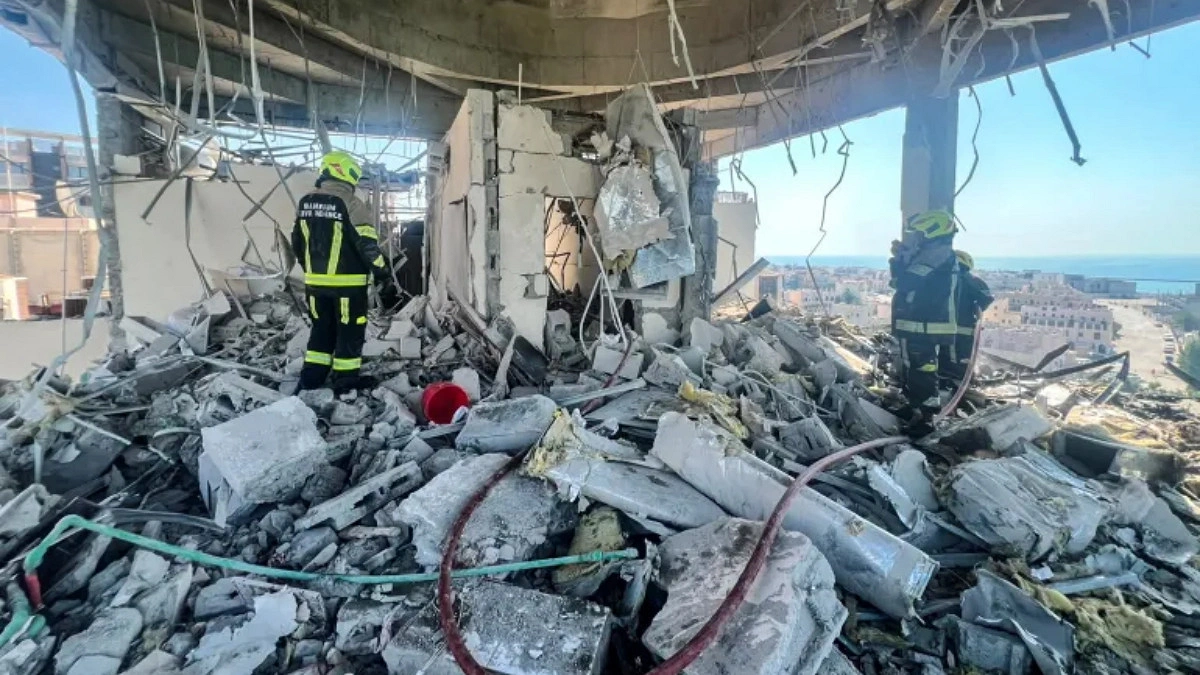
Iran strikes back Kuwait and Bahrain in response to US attacks. Photo courtesy: Alja Zeera.
The fragile truce between the United States and Iran appeared to be crumbling on Sunday as a relentless wave of reciprocal attacks pushed the region dangerously close to the brink of a full-blown war. Iran struck military infrastructure in Kuwait and Bahrain, while President Donald Trump issued an ominous ultimatum, warning that Washington might soon abandon diplomacy and resort to decisive military force.
The latest exchange began on Saturday when U.S. CENTCOM launched fighter jet strikes against ten Iranian military sites—including missile and drone storage facilities—in response to Tehran's persistent harassment of commercial shipping in the Strait of Hormuz. Iran, Washington argued, had been given a clear chance to uphold the ceasefire, but instead chose aggression by deploying a one-way attack drone against a Panama-flagged vessel.
“United States aircraft just struck Iranian missile and drone storage locations, and coastal radar sites, for violating the Cease Fire Agreement, AGAIN!,” Trump wrote on Truth Social.
He declared that Tehran's repeated violations might force the U.S. to "militarily complete the job," adding ominously that if that scenario unfolds, "the Islamic Republic of Iran will no longer exist."
Undeterred, the IRGC Navy command struck back at American assets in Kuwait and Bahrain, vowing via state media that U.S. bases would "experience hell" in the days ahead. Bahrain, which hosts the U.S. Navy's 5th Fleet, confirmed that the attacks damaged a residential building, though thankfully no lives were lost. In a strongly worded statement, Bahrain's Foreign Ministry denounced the aggression as a deliberate and systematic assault on its national sovereignty and the security of its people, reserving the right to self-defense.
Bahrain and Kuwait faced fresh Iranian attacks early Sunday, hours after U.S. Central Command (CENTCOM) said it had hit multiple targets across Iran in response to "continued aggression" against commercial shipping in the Strait of Hormuz. Kuwait's army reported Sunday that its air defenses had intercepted two ballistic missiles, with no damage reported. Bahrain, which hosts the U.S. Navy's 5th Fleet, confirmed that a residential building was damaged in the overnight attacks but reported no casualties, issuing a "strongest condemnation" of what it called a deliberate and systematic pattern of aggression against its sovereignty.
Trump's Warning
"United States aircraft just struck Iranian missile and drone storage locations, and coastal radar sites, for violating the Cease Fire Agreement, AGAIN!" President Trump posted Saturday on Truth Social. "It is very possible that they will never learn! There may come a point when we are no longer able to be reasonable, and will be forced to militarily complete the job that we very successfully started. If that happens, the Islamic Republic of Iran will no longer exist!"
CENTCOM said in a statement Saturday that U.S. fighter jets conducted strikes on ten Iranian military targets at multiple locations, acting after Iran launched a one-way attack drone at a Panama-flagged vessel on Saturday. Washington argued that Tehran had been given a chance to honor the ceasefire but instead chose aggression.
Iran's Response
Iran's Islamic Revolutionary Guard Corps (IRGC) said it had launched further missiles and drones at U.S. military infrastructure in Kuwait and Bahrain, according to state media. The IRGC Navy command vowed that American bases "will experience hell in these coming days," as reported by Iran's semi-official Fars news agency. IRGC spokesman Hossein Mohebi warned Sunday that "every time the enemy violates the ceasefire, it will receive a harsher response than before," according to Iran's hard-line Student News Network. The IRGC also said it would deal with vessels it claims violated its approved route "stronger than before."
The Sequence of Escalation
The series of reciprocal attacks began this week with a disagreement over shipping in the Strait of Hormuz. Tehran, which had committed to reopening the critical waterway, has insisted that vessels follow a specified route close to its coastline. However, many vessels have chosen instead to transit through the waters of the United Arab Emirates and Oman. After a series of Iranian threats to vessels using the alternative route, a Singapore-flagged ship was attacked on Thursday. The U.S. reciprocated by striking Iranian military targets, triggering an Iranian response and continuing the cycle of attacks that has since escalated.
Iran's Stance on the Strait
Iran's Foreign Minister Abbas Araghchi said later Sunday that the Strait of Hormuz will be managed under Iranian administration and "will return to pre-war capacity within 30 days." During a trip to Baghdad, he added, "No other country or entity has responsibility in this regard and any interference or attempt otherwise will complicate the situation."
U.S. Position
Vice President JD Vance, who had been tapped to play a lead role in ongoing U.S.-Iran negotiations, said Friday on X: "If they have disagreements about how the MOU is being applied, they can pick up the phone. But violence will be met with violence."
The Fragile MOU
The memorandum of understanding signed by the U.S. and Iran less than two weeks ago stipulates that the Strait of Hormuz — a vital waterway through which some 20% of the world's oil passed before the war — will reopen. It stated that Iran would "make arrangements" to allow the safe passage of commercial vessels with no charge for 60 days. However, both sides have repeatedly accused the other of breaching the terms of the deal.
Expert Analysis
Fawaz Gerges, a professor of international relations at the London School of Economics, described the MOU as "vague and ambiguous." While the deal stipulates that Iran "must make arrangements and best efforts to allow vessels to sail in the Strait of Hormuz," the U.S. "does not really accept Iran's designated route," he noted. This, he said, reveals "a great deal about the vast gulf that exists between the United States and Iran." He questioned, "If they cannot peacefully manage a 60-day ceasefire, how can they resolve the huge differences regarding Iran's nuclear program and a lasting settlement?"
Gerges added, "I think we don't have a full ceasefire, a complete ceasefire, we have a lesser ceasefire. I wonder whether the new normal is a limbo state of no war and no peace."
Regional Reactions
U.S. allies in the Gulf, including Qatar and Jordan, condemned Iran's latest attacks on Bahrain and Kuwait and called for restraint. Qatar's foreign ministry emphasized "the necessity of sparing the region the consequences of these unjustified attacks, continuing on the path of dialogue and diplomacy."
(Source: NBC News)

