
Women unsafe in sports, too, as allegations of harassment surface once again

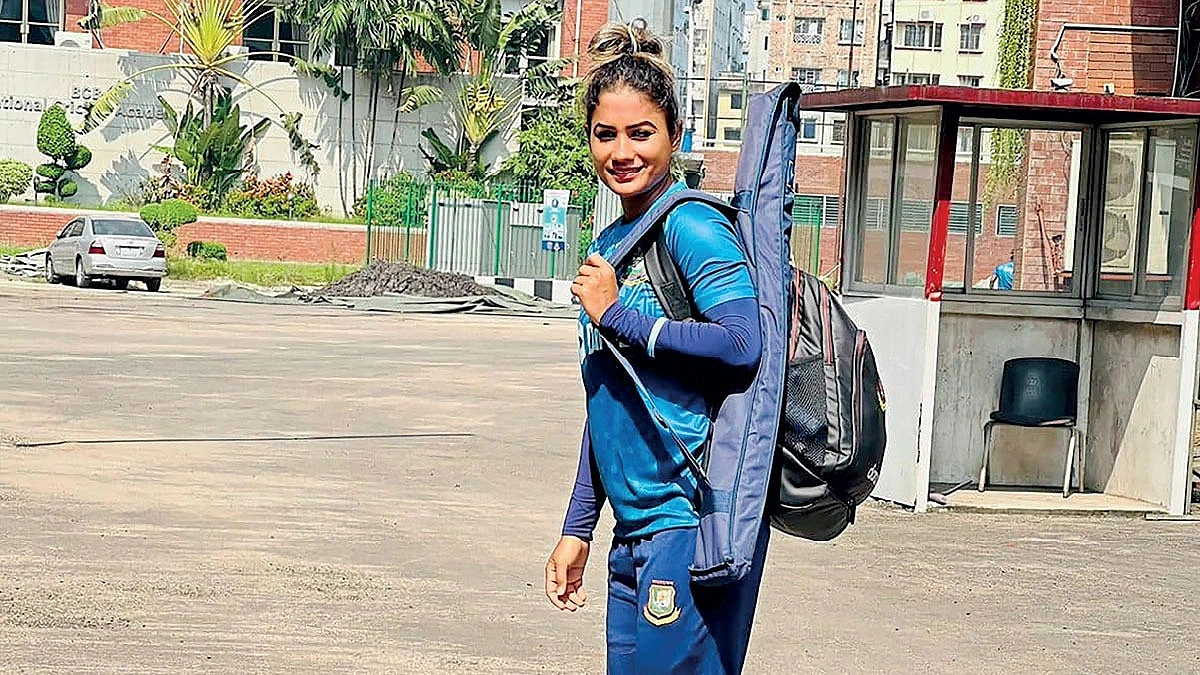
Jahanara Alam. Photo: Collected.
From home and workplaces to universities, public transport, and markets, reports of violence against women continue to emerge from across the country. Even the sports arena—often seen as a disciplined and protected environment—has repeatedly come under scrutiny for allegations of harassment and abuse against female athletes.
Following the brutal killing and rape of a minor girl in Mirpur, public outrage has grown nationwide, with demands for justice and stronger protection for women in all spheres of life. Authorities have reportedly promised to ensure punishment within a month.
However, concerns over women’s safety extend deeply into Bangladesh’s sports sector. In recent years, allegations of harassment have surfaced in cricket, football, swimming, shooting, and weightlifting, among others.
The issue gained significant attention after former national women’s cricket captain Jahanara Alam publicly alleged in November last year that she had faced sexual harassment by officials during the 2022 Women’s World Cup.
Following her statement, several other athletes—including Olympic scholarship shooter Kamrun Nahar Koli, Commonwealth Games and South Asian Games gold medalist shooter Sabrena Sultana, and Sharmine Akter Ratna—also spoke out about harassment within sports institutions.
Sharmine Akter even filed a legal case against a joint secretary of the sports federation, G M Haider Sajjad. After investigation, he was relieved from his duties by the National Sports Council.
However, controversy followed when some of the whistleblowers themselves were later suspended from their respective federations for different durations, raising further questions about accountability within sports bodies.
Sabrena Sultana has said that officials accused in multiple allegations should not remain in administrative positions. She also claimed that when athletes met federation authorities to discuss their concerns, they were instead issued suspension letters without justification.
Earlier, in 2007, former national women’s cricketer Reshma Akhter Aduri had also alleged widespread sexual harassment in women’s cricket, claiming that “99 percent of female cricketers have faced proposals of a sexual nature.”
In another case, following allegations raised by Jahanara Alam, the Bangladesh Cricket Board (BCB) reportedly banned coach Manjurul Islam from all cricket-related activities after an investigation. However, since he was not under contract at the time, critics have described the disciplinary action as largely symbolic rather than substantive.
No one follows the law
Under the “Prevention and Remedy of Sexual Harassment against Women in Educational Institutions and Workplaces Policy, 2009”, all federations and associations under the National Sports Council (NSC) were instructed to form a five-member complaints committee, including at least three women members. The committee was meant to receive complaints from victims and conduct investigations.
In reality, none of the country’s 53 sports federations and associations reportedly had such internal complaints committees in place.
According to Barrister Sarwat Siraj, President of the Women’s Sports Association, she has received repeated complaints of sexual harassment from female athletes across the country. She said most of the complainants preferred to remain anonymous. Later, on November 12, 2025, the NSC directed all sports federations to form internal complaints committees in line with the High Court’s guidelines on preventing sexual harassment.
A long history of abuse allegations
The issue of harassment in sports is not new.
In 2009, junior swimmer Arifa Khatun won five gold medals at the national swimming championship. In February 2011, she died by suicide at her home. Teammates alleged that she had taken her own life due to pregnancy-related distress, and suspicion fell on coach Md. Emdadul Haque of the Ansar team. Following investigations, he was banned by authorities. Several other swimming coaches, including Amirul Islam and Golam Mostofa, were also suspended by the federation over various allegations.
In 2018, a female national weightlifting gold medalist was reportedly raped, later suffering mental health issues and being admitted to the National Institute of Mental Health. The accused, an office assistant of the federation named Md. Sohag Mia, was arrested. He later became involved in weightlifting activities again, sparking controversy.
In another case, Jujutsu Association General Secretary Rafiqul Islam Newton was accused of raping and physically abusing female athletes by luring them with promises of foreign tours. He was later arrested by RAB.
Separately, a case was also filed at Gulshan Police Station against Tennis Federation General Secretary Golam Morshed following allegations of sexual harassment of a teenage expatriate tennis player.
Calls for reform and protection
Former national badminton champion, Women’s Sports Association ex-general secretary, and women’s rights activist Kamrun Nahar Dana said that fear among parents is increasing due to recent incidents, discouraging girls from entering sports. She stressed the need for more female coaches and managers to build trust and confidence. She also said that swift and strict punishment in sexual violence cases would deter offenders.
To ensure safety for female athletes, the Ministry of Youth and Sports is reportedly planning to form a special committee led by former national table tennis player and independence award recipient Zobera Rahman Linu, who is also a Guinness World Record holder.
Although she has not yet received an official letter, she emphasized that perpetrators should be punished publicly and swiftly. Referring to recent cases, she said strong and timely justice would help create fear among offenders and improve safety for women in sports.
