


Eleven Killed in Israeli Airstrikes on Southern Lebanon

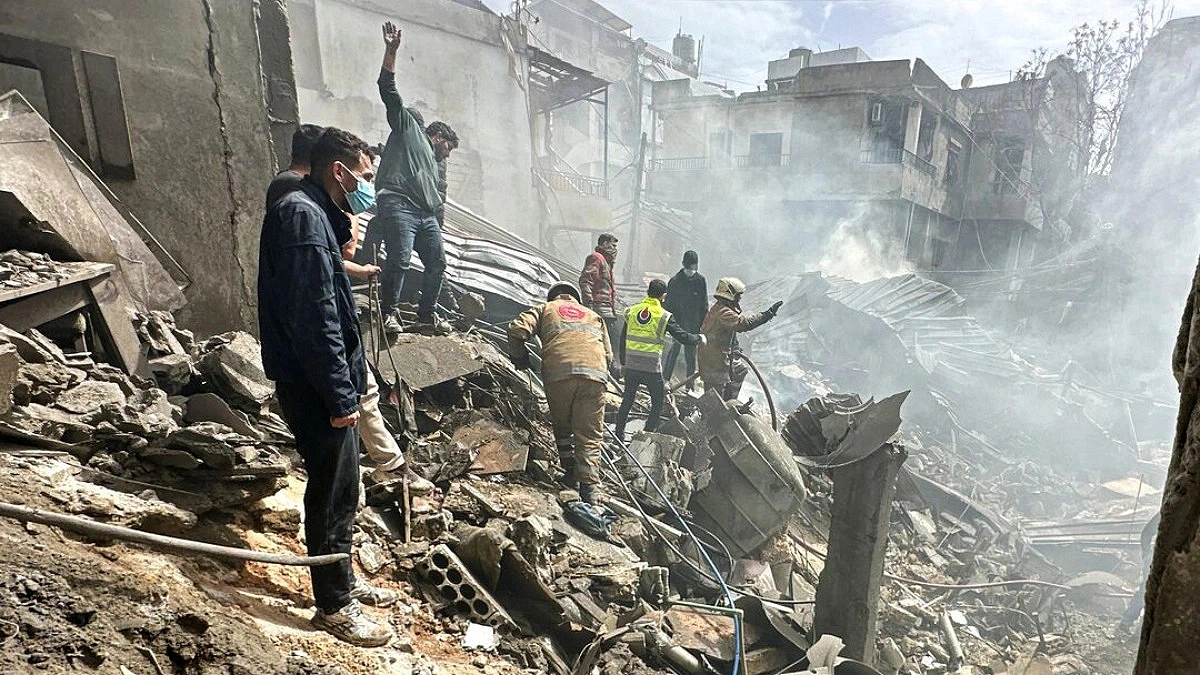
Rescue workers are working at the site devastated by an Israeli attack. Photo: Collected
At least 11 people have lost their lives in Israeli airstrikes targeting southern Lebanon, in what is being described as the deadliest such attacks since a ceasefire took effect on June 20. The strikes occurred on Saturday.
Lebanon's health ministry and state-run news agency reported that seven people—including three children—were killed and two others wounded when an Israeli strike hit a house on the outskirts of the village of Anser. In a separate attack on the village of Deir al-Zahrani, four more people were killed and 17 sustained injuries.
The violence comes against the backdrop of a "structural agreement" reached on June 26 between Israel and Lebanon, which laid out a plan for the withdrawal of Israeli troops from southern Lebanon in exchange for Hezbollah's disarmament. However, Hezbollah did not consent to direct negotiations and was not a party to the deal.
Lebanese Prime Minister Nawaf Salam condemned the strikes, stating that they are terrorising residents in their own homes and undermining efforts to restore stability in the southern region. He also noted that the seven victims in Anser were not associated with any "military infrastructure." President Joseph Aoun echoed the condemnation, describing the attacks as a "clear message" aimed at the United States' efforts to facilitate dialogue and implement the existing agreement.
Early Saturday morning, intensive strikes were also carried out on the strategic Ali al-Taher hill in the south. Despite the ceasefire, Israel has continued to launch near-daily attacks on areas north of the Litani River, while vast swathes of the southern region remain under Israeli military control.
The Israeli military confirmed that it had targeted Hezbollah infrastructure in the Anser and Ali al-Taher areas, claiming the operation was carried out in response to attacks on its soldiers. Prime Minister Benjamin Netanyahu's office added that the strikes were a direct reply to a Hezbollah assault that left three Israeli personnel seriously wounded.
Later, the Israeli military alleged that Hezbollah had deliberately positioned civilians at the military facility that was hit. They also claimed that among those killed in the Anser strike was Ali Samir al-Haj Hassan, a battalion commander in Hezbollah's elite Radwan Force.
Hezbollah supporters have reported on social media that the commander's family members were also killed in the same airstrike.
The group has called on the Lebanese government to find ways to halt what it terms "aggression," while reiterating its longstanding position against holding direct negotiations with Israel under US mediation.
Earlier this month, an explosion in southern Lebanon killed two Israeli soldiers—marking the first fatalities among Israeli forces since the ceasefire came into effect. Hezbollah has not issued any comment regarding that blast.
To date, seven rounds of talks have been held between Lebanon and Israel, with the most recent session taking place in Rome earlier this month. However, the Iran-backed Hezbollah has consistently refused to disarm, accusing the Lebanese government of making excessive concessions without securing firm guarantees of a full Israeli military withdrawal.
The ongoing Israel-Hezbollah war first erupted on March 2, reigniting when Hezbollah launched cross-border rocket strikes just two days after US-Israeli attacks targeted Iran. Since then, Israeli strikes on Lebanon have killed more than 4,000 people—including hundreds of civilians. On the Israeli side, approximately 40 soldiers and three civilians have lost their lives.
(Source: ABC News, Agencies)

