
Khamenei Lives On, Khamenei Lives Forever

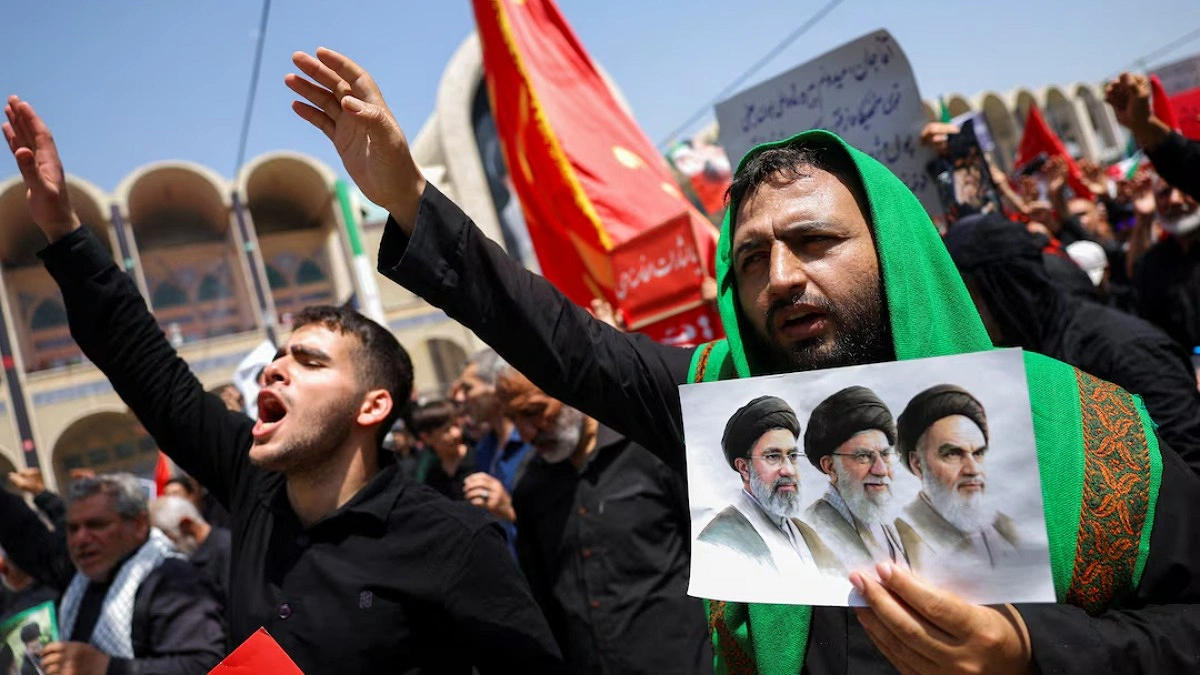
Khamenei was laid to rest before a sea of mourners. Photo: Reuters
Millions wept as Ayatollah Sayyid Ali Khamenei was laid to rest in the holy city of Mashhad amid full state and military honors. His burial beside the shrine of Imam Reza (PBUH), the eighth Imam of Shia Islam, marked the close of what the author describes as one of the longest, most influential, and most consequential political eras of modern history.
Following what Iran describes as his martyrdom in the February 28 US-Israeli attack, grief spread across cities and towns throughout the country. At the historic burial ceremony, however, that mourning gave way to what the author portrays as renewed resolve. From the streets of Tehran to the sacred precincts of Mashhad, crowds echoed a single slogan: "Khamenei lives on, Khamenei lives forever." According to the author, while Khamenei has died, the ideals of resistance, self-reliance, and independent decision-making that he championed remain alive.
Architect of Post-Revolutionary Iran
The author writes that Khamenei assumed leadership in 1989 after the death of Imam Khomeini, inheriting a country burdened by war, economic hardship, international pressure, and regional instability. Khomeini had laid the foundations of the Islamic Republic through the 1979 revolution, leaving his successor with the challenge of institutionalizing that system while adapting it to a changing global order.
Over more than four decades, through nuclear disputes and regional conflicts, Khamenei was, in the author's view, more than the country's supreme leader. He became the central figure shaping Iran's ideological direction, national security policy, foreign strategy, and regional posture.
A Simple Life in Power
Despite presiding over a country with an advanced missile and nuclear program, a powerful military, and influence across resistance movements in the Middle East, Khamenei maintained what the author describes as a remarkably modest personal lifestyle.
The article argues that his distance from personal luxury elevated him in the eyes of many supporters beyond the role of a political leader, making him a moral and spiritual guide.
Quoting a March 12 statement by his son, Sayyid Mojtaba Khamenei, the article says:
"This responsibility of leadership had rested with a man who spent more than six decades tirelessly striving in the path of God, sacrificing every form of comfort and worldly privilege. For that reason, he became not only a distinguished figure of our time but one of the brightest figures in the entire history of this nation's rulers."
The author notes that both supporters and critics acknowledge Khamenei remained the defining figure in Iranian politics for decades and that his influence extended well beyond Iran's borders.
Khamenei's Place in History
According to the article, Khamenei left behind more than political leadership. He built a philosophy, an institution, and a lasting political tradition.
The author argues that few leaders transcend their personal legacy to become enduring political and ideological institutions. Some Iranian political observers, the article says, believe Khamenei is among those rare figures whose influence will continue shaping Iran's politics and strategic decisions long after his death.
The article also acknowledges that history rarely judges leaders in simple terms. Their decisions, policies, and legacies are continually reassessed over time. Nevertheless, it concludes that Khamenei profoundly influenced Iran's domestic politics, Middle Eastern geopolitics, and the political thought of much of the Islamic world throughout more than four decades.
The article ends by recalling a prayer attributed to Khamenei:
"O Allah, accept this wounded body, this disabled hand scarred by attacks, and the remainder of my life as martyrdom in Your cause. Do not separate me from the caravan of martyrs."
The author concludes that Khamenei's burial in Mashhad marked the end of a long journey, but not the end of his legacy.
"Khamenei is more than a name," the article says. "He represents an era, a political philosophy, and a significant chapter in the modern history of the Middle East. He lives on. He endures."
Author: Senior Journalist, Iran's State Broadcaster IRIB
