

Super Typhoon 'Bavi' Batters Guam

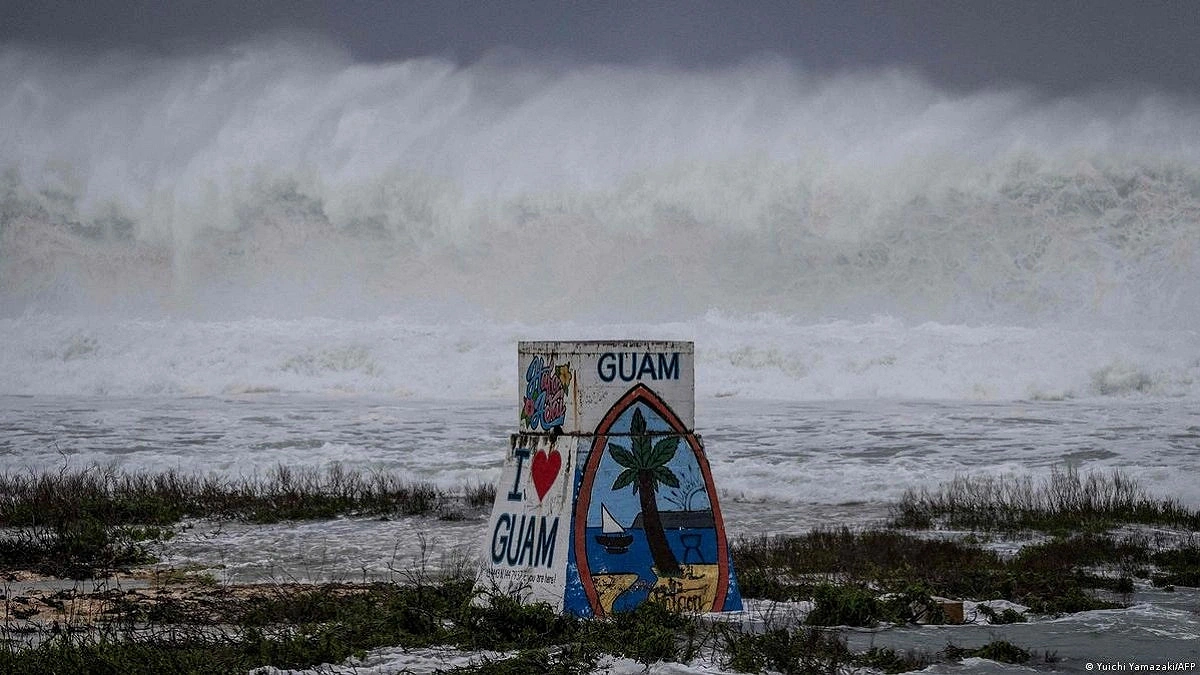
Exceptionally high waves batter Guam, a Pacific Ocean US territory. Photo: Collected.
Super Typhoon Bavi has struck the US Pacific territory of Guam and the Northern Mariana Islands, leaving a trail of destruction with fierce winds and torrential rains.
According to the US National Weather Service, the storm has recorded sustained winds of nearly 290 km/h with gusts reaching up to 350 km/h. Ocean waves are expected to surge up to 35 feet.
Severe Impact on Rota and Saipan
The weather service warned that Rota, an island in the Northern Mariana Islands, is currently taking a direct hit from the eye of the storm. Officials expect catastrophic damage across the archipelago.
Evacuation Orders: The mayor's office urged residents to prepare for destructive winds, warning that rapidly deteriorating conditions have made it entirely unsafe to be outdoors.
On the Ground: A spokesperson for the Mayor of Rota described the situation starkly: "We are barely managing. We are facing ferocious winds and severe flooding."
Saipan Status: Meteorologist Marcus Landon Aydlett reported that wind speeds on the neighboring island of Saipan have already exceeded 161 km/h.
Emergency Response and Resident Fears
The Guam Office of Civil Defense has opened five emergency shelters across the popular tourist island. One shelter has already reached maximum capacity, forcing officials to redirect displaced residents to alternative locations.
For many locals, this disaster reopens fresh wounds. The region is still reeling from the aftermath of Super Typhoon Sinlaku just last April, which claimed 17 lives and caused nearly $1.5 billion in damages.
"I cannot afford to lose money for this many days," said Pinky Cubacub, 55, a restaurant owner in Guam. "It’s devastating. I just started this business, and everything I make goes directly to rent, utilities, staff, and ingredients. I haven't even been able to take a salary for myself yet."
Tourists have also been caught in the chaos. Miku Sakurai, a visitor from Japan, expressed her anxiety: "We will stay in the hotel when the storm hits. I am very scared."
Climate Change Driving Stronger Storms
Meteorologists and climate scientists note that rising ocean temperatures—fueled by climate change and the El Niño phenomenon—are making these ultra-powerful typhoons a more frequent reality.
A Dangerous Trend: Bavi marks the 11th Category 4 or 5 tropical cyclone to strike US territory within the last decade.
The Joint Typhoon Warning Center has officially designated Bavi a Super Typhoon, meaning its destructive capability is equivalent to a high-end Category 4 or Category 5 hurricane.

