
Sundarbans Under Parasite Attack, Coastal Livelihoods in Grave Danger

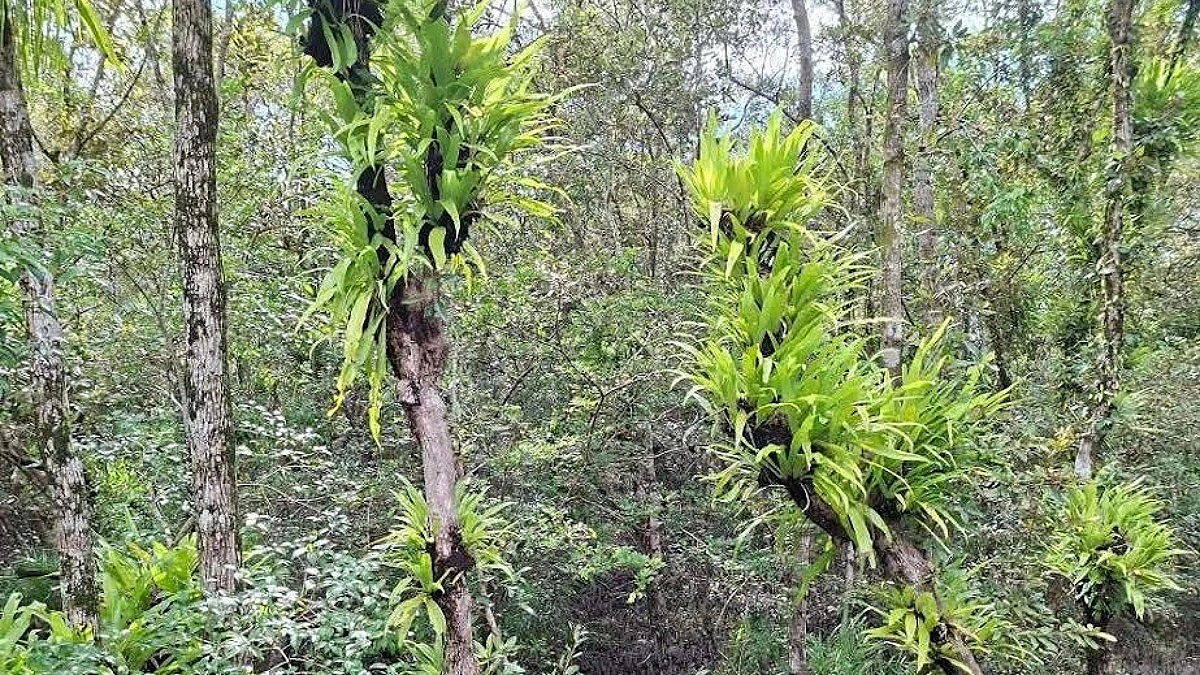
Photo Credit: Mahidul Islam
After the 'Top Dying' disease, the Sundari tree, the principal species of the Sundarbans, is now facing a new threat. This new danger is a parasitic plant called 'Pargacha' (mistletoe). Previously, Pargacha was confined to the branches of trees. However, it is now spreading to the main trunks of the Sundari trees. As a result, the trees are rapidly weakening and dying. The Forest Department and experts have expressed concern, noting that the infestation of this parasite has increased excessively over the past few years, placing the Sundari tree under severe threat.
Experts say the Sundarbans is being damaged in various ways due to the impacts of climate change. The increase in salinity, in particular, is exacerbating the 'Top Dying' disease in Sundari trees and promoting the spread of the parasitic plant. If this parasite is not controlled, it is feared that the Sundari tree could move to the list of extinct species within the next one to two decades. This would not only endanger the forest's biodiversity but also make it difficult for coastal residents to sustain their livelihoods and withstand natural disasters, as they would lose their primary shield. Due to a lack of research on Pargacha so far, the Forest Department is unable to determine a course of action to get rid of this infestation.
This forest, sprawling across the southwest of Bangladesh, is the world's largest mangrove forest. It is not only the world's largest mangrove forest but also a UNESCO World Heritage Site. Located along the Bay of Bengal, this forest has long played a vital role in maintaining the country's environmental balance, in addition to being a source of natural resources. The forest is named after the 'Sundari' tree itself. Once, the Sundari tree reigned supreme over most of the Sundarbans. But now, this parasitic plant called Pargacha has emerged as a severe threat to these trees.
The Sundari tree is intrinsically linked to the biodiversity of the Sundarbans and the local economy. Furthermore, the Sundari tree is naturally stronger and more robust than other trees. Its roots play a special role in preventing soil erosion. This Sundari tree and the Sundarbans act as a natural wall, protecting the coast from the turbulent waves of the Bay of Bengal, cyclones, storm surges, and salinity. Additionally, the roots and fallen leaves of the Sundari tree create shelter and a conducive environment for the breeding of various species of fish, shrimp, and other wildlife.
Investigations have revealed that the once-swift Bhola River, which flowed through the forests and settlements of the Sharankhola and Chandpai Ranges in the eastern Sundarbans, has silted up and turned into a narrow canal. Approximately 16 kilometers of the river, stretching from the Dasher Bharani Forest Outpost in the Sharankhola Range to Joymoni via the Nangli Outpost, Dhansagar Station, Jiudhara Station, and Kadolmateji Outpost in the Chandpai Range, has become landlocked. Because of this, the river is now locally known as 'Mara Bhola' (Dead Bhola). The silting of the Bhola River has also led to the death of its tributary canals flowing inside the forest. The natural flow of water has decreased significantly. Consequently, in this region of the eastern forest division, the number of Sundari trees and other mangrove species has alarmingly declined. This has further compounded the severity of the 'Top Dying' disease and the Pargacha infestation on the Sundari trees.
Forest Department Data on the Sundarbans
According to the Forest Department, the total area of the Sundarbans (Bangladesh and India) is approximately 10,000 square kilometers. Of this, the Bangladesh portion covers 6,517 square kilometers, which constitutes 66% of the total forest. It is located across the Khulna, Bagerhat, and Satkhira districts. The Sundarbans is home to 334 species of plants, including 35 true mangrove species. Additionally, there are 165 species of algae, 13 species of orchids, 28 species of grasses (such as reeds and sedges), and 9 species of fungi. It also hosts 453 species of wildlife. Although exact numbers are not known, the Sundarbans is crisscrossed by a vast network of countless rivers, canals, creeks, and oxbow lakes. These water bodies harbor 300 species of fish, 24 species of shrimp, and several species of crabs. In the most recent survey conducted in 2024, 184 species of plants were recorded in the Sundarbans. This survey did not specify the exact number of Sundari trees individually. However, it mentioned that the three species—Sundari, Gewa, and Goran—together account for 70% of the total tree population.
Forest Department sources further indicate that over one million (10 lakh) people directly depend on the Sundarbans for their livelihoods. This vast population sustains itself by fishing, crabbing, collecting honey and wax, and cutting sedges, reeds, and golpata (Nypa fruticans) leaves, among other forest resources. Additionally, many people in the region are involved in the tourism industry centered around the Sundarbans.
Nature and Extent of the Parasite Attack
According to Forest Department estimates, currently 25% to 30% of Sundari trees in the Sundarbans are infected with the Pargacha parasite. This parasite is a type of epiphytic plant that attaches itself to the trunks and branches of the Sundari tree. It survives by sucking the sap from the host tree. As a result, the tree gradually weakens, its leaves turn yellow and fall off, and eventually, the entire tree withers and dies.
Multi-Faceted Crisis
The effects of climate change have emerged as a major threat to the Sundarbans. This has led to increasingly frequent natural disasters. Sea levels are rising day by day, and the salinity of the water is increasing excessively. During disasters, abnormal storm surges repeatedly inundate the forest, depositing saline water and silt on the forest floor. This creates favorable conditions for various species of parasites, vines, and fungi to thrive. Most of these weeds aggressively attack the Sundari tree, the forest's primary species. Furthermore, the rivers flowing through and alongside the forest are silting up day by day. Freshwater can no longer reach the relatively higher areas of the forest. The reduced water flow is exacerbating the attacks of parasites, fungi, and insects on the Sundari trees, further threatening their existence.
Impact on Biodiversity
If the number of Sundari trees declines, the entire ecosystem will collapse. Various species of fish and shrimp take shelter among the roots of the Sundari trees. Monkeys find refuge in the trees, and numerous species of birds build their nests in the branches. These trees also provide shelter for tigers, deer, and other wildlife. The deer and other prey animals in the forest are the primary food source for the Royal Bengal Tiger. Therefore, a decline in Sundari trees threatens to break down the ecosystem and disrupt the food chain.
Adverse Effects on Local Livelihoods
Over one million (10 lakh) people directly depend on the Sundarbans. This forest is their sole means of survival. The fish, honey, and dried fish from the Sundarbans have high demand and a strong reputation both domestically and internationally. These forest and aquatic resources play a significant role in the economic prosperity of the southwestern region. Moreover, the harvesting and processing of these resources have led to the creation of new businesses, trades, and entrepreneurs along the coast. Consequently, a decline in Sundari trees will not only harm biodiversity but also push the entire Sundarbans into an existential crisis, thereby threatening human livelihoods.
Voices from the Sundarbans Professionals
Md. Shahjahan Akon (60) and Md. Auwal Khan (55), honey collectors (Mawals) from the Khuriyakhali village adjacent to the forest in Sharankhola Upazila, said, "We have been collecting honey from the Sundarbans for 30-35 years. We know every part of the forest. But now we don't get honey like we used to. Because there are no Sundari trees in many areas. Places that were dense forests just 5-6 years ago are now empty. Many Sundari trees have dried up. And bees don't build hives on dead trees. Nowadays, even after walking 4-5 kilometers, we can't find a single beehive."
Md. Ashraf Ali Farazi (70) and Md. Rustam Goldar (60), fishermen from the same village, stated, "We have been fishing in the Sundarbans since childhood. The fish we used to catch before are no longer found. We don't even see many species anymore, like Chitra, Shilon Tangra, and Dogri fish—they are practically gone. These were very tasty fish and used to be abundant in the small canals of the Sundarbans. But the forest doesn't have its old environment anymore."
Voices of Entrepreneurs
New entrepreneurs have emerged in areas adjacent to the forest, capitalizing on the aquatic and forest resources of the Sundarbans. Among them are Russell Ahmed from Sharankhola and Hafizur Rahman from the Shyamnagar area of Satkhira. They sell fish and honey from the Sundarbans by parcel to various parts of the country via online platforms. Additionally, they produce and sell golpata palm powder and pickles made from keora (mangrove apple). Customers are delighted to receive these organic products, and demand is increasing day by day. Currently, their monthly sales range from one to one and a half lakh taka (BDT 100,000–150,000). They are also involved in the Sundarbans tourism business. Through their regular visits to the forest, they have witnessed firsthand that numerous Sundari trees have fallen victim to the parasite attack. The dead trees are still standing. These entrepreneurs fear that if the Sundari trees continue to die, the people of the southwestern region will face massive overall losses.
Views of an Academic Expert
Professor Dr. Wasiul Islam, from the Forestry and Wood Technology Department at Khulna University, stated, "Various changes are being observed in the Sundarbans due to the impacts of climate change. A notable change is the increase in salinity. This rising salinity is significantly harming the forest's biodiversity. In particular, it is exacerbating the 'Top Dying' disease in Sundari trees and increasing the infestation of the Pargacha parasite. This is leading to changes in the composition and structure of the forest. If the Sundari or other mangrove plants decline, there is a risk of the Sundarbans' entire ecosystem collapsing."
When asked about ways to overcome this crisis, Dr. Wasiul Islam said, "There is no scope for plantation in the Sundarbans. In areas where trees have died and created gaps, other species are naturally taking over. However, if the number of Sundari trees continues to decline alarmingly for any reason, the very existence of the Sundarbans, its biodiversity, the environment, and the livelihoods of coastal communities will face extreme threats. Without extensive research on the Pargacha parasite affecting Sundari trees and on disease prevention, it is not possible to offer any specific decisions or opinions."
Views of a Fisheries Researcher
According to Dr. Md. Latiful Islam, Chief Scientific Officer at the Brackish Water Station of the Bangladesh Fisheries Research Institute in Khulna, fish are no longer being found in the Sundarbans as they were before. This information has been gathered by speaking with numerous fishermen returning from the forest. Many rivers and canals inside the forest have become silted up and filled in. As a result, the habitat for fish is shrinking, and fishermen are not catching as many fish as they used to.
In this researcher's opinion, it is not that any single species of fish is going extinct or declining, but rather that the overall fish population is decreasing. Moreover, the decline in fish numbers is not solely due to the Sundari trees dying; fishing with poison and excessive, unsustainable fishing are also major contributing factors. Consequently, the impact is being felt by the fishermen. Compared to other professions in the Sundarbans, the number of fishermen is higher. Therefore, if they do not catch enough fish, there is a risk that this vast fishing community will eventually lose their livelihoods.
Views of the Forest Department
Md. Rezaul Karim Chowdhury, Divisional Forest Officer (DFO) of the Sundarbans East Forest Division in Bagerhat, said, "The 'Top Dying' disease in Sundari trees has existed for some time. Now, the Pargacha infestation has emerged as an even greater threat. Visiting various areas of the Sharankhola and Chandpai Ranges in the Sundarbans, it has been observed that 25% to 30% of Sundari trees are affected by the parasite. Numerous trees have died and are still standing. This Pargacha parasite has become a major concern for the Forest Department. To protect the Sundari trees, initiatives for urgent research on this parasite will be taken."
When asked about dredging the silted-up Bhola River, DFO Rezaul Karim Chowdhury said, "Under the Sundarbans Protection Project, approximately one kilometer of the 16-kilometer-long silted section of the Bhola River has been dredged. Work is currently suspended. Plans are in place to dredge the remaining portion later. If the Bhola River is dredged, water flow will increase in a significant part of the forest. The Sundarbans will regain its vitality."
