
After 54 years, 'Pakeezah' returns in a new form

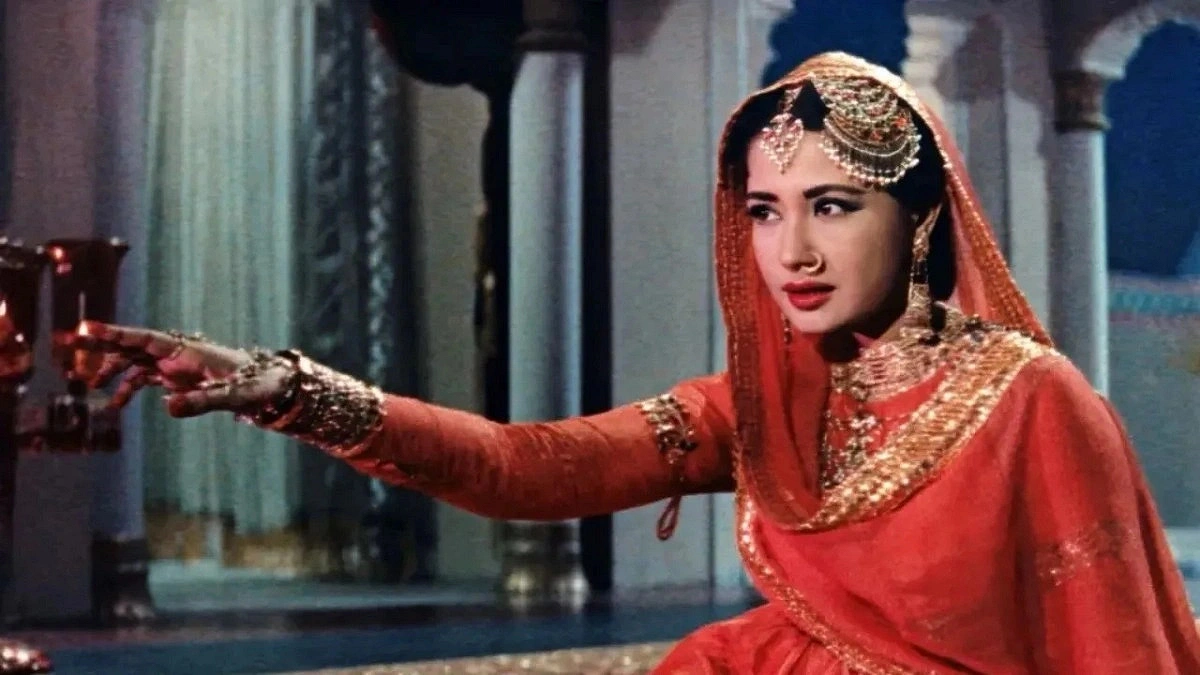
Actress Meena Kumari from a Pakeezah scene. Collected photo.
The film cans were carried in a palanquin! That scene from the premiere of Pakeezah at Mumbai's Maratha Mandir nearly 54 years ago remains unforgettable in the history of Indian cinema. Present were director Kamal Amrohi, Meena Kumari, and many other renowned figures from the film world. Now, transcending the bounds of time, that historic film is returning in a new form.
After two years of preservation and restoration work, Pakeezah is set to make a fresh debut on the international stage. The restoration has been completed under the initiative of the
The restored version of Pakeezah will have its world premiere at the Festival Lumière in Lyon, France, this coming October. Following that, special screenings will also be arranged at the British Film Institute's London Film Festival.
Pakeezah is not merely a film; it is an emotion in the history of Indian cinema. Kamal Amrohi had conceived the film in the mid-1950s. The idea for this epic came to him as a tribute to the beauty of his wife and muse, Meena Kumari.
Set against the backdrop of the final days of Lucknow's Nawabi era, the film features Meena Kumari in the role of the tawaif Sahibjaan. Her unparalleled performance became one of the film's biggest draws.
However, the path to making Pakeezah was fraught with obstacles. Technical issues, personal tensions, budget constraints, casting changes, and multiple revisions to the script repeatedly stalled production. Filming began in black and white in 1956 but was switched to Eastmancolor in 1958. All in all, the film took nearly 15 years to complete.
In 1964, due to personal differences, the relationship between Kamal Amrohi and Meena Kumari soured, which also affected the making of Pakeezah. Later, in 1968, when Meena Kumari was diagnosed with liver cirrhosis, the film's future became even more uncertain.
Nevertheless, Meena Kumari did not walk away from the project. Sunil Dutt and Nargis encouraged her to finish the remaining shoot by showing her the old footage. Despite her failing health, she returned to the set.
An even greater blow came with the death of legendary cinematographer Josef Wirsching in 1967. To preserve the visual beauty he had created, several top cinematographers from India collaborated to complete the remaining portions of the film.
In 1968, music composer Ghulam Mohammed also passed away. After he had composed the film's timeless songs, the responsibility for the unfinished work was taken over by the legendary composer Naushad.
Finally, on February 4, 1972, Pakeezah was released. At that time, a period of change was underway in Indian cinema. Sophisticated, Urdu-oriented studio melodramas were being replaced by urban action films. Even during this time of transition, Pakeezah won the hearts of audiences and achieved great success at the box office.
However, just a few weeks after the film's release, Meena Kumari passed away on March 31. Now, after several long decades, an initiative has been taken to restore that same Pakeezah. During the restoration process, upon examining the film's original camera negative, it was found to be in a near-decayed state. Other film materials also showed signs of colour fading, scratches, and fungal spots.
Old film stills and various preserved materials were salvaged, and with their assistance, the restored version of the film has been created. For this work, an interpositive and CinemaScope print obtained from Ramnord Labs, as well as a colour reversal internegative preserved at the NFDC-National Film Archive of India, were also used.
In total, this timeless 153-minute film has been newly preserved. Now, Meena Kumari's immortal 'Sahibjaan' and Kamal Amrohi's dream Pakeezah are returning to the big screen. Not just in India, but on the international stage, this unique chapter in the history of Indian cinema will once again be unveiled before a new generation of audiences.


