

Looms Go Silent as 10,000 Workers Jobless

Collected Photo
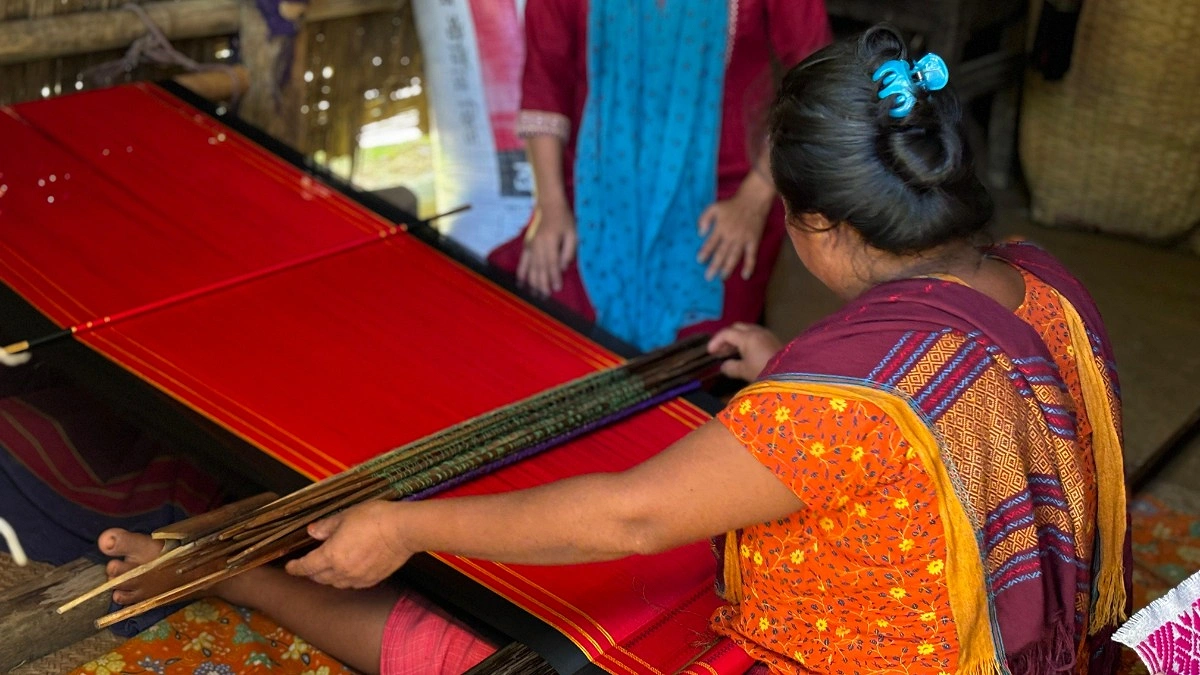
Around 10,000 workers are unemployed after factories shut down across Syedpur, Nilphamari weaving neighborhoods - Gholahat, Kazihat, and Hatikhana.
Families in these neighborhoods were once busily engaged in the production of gamchas (traditional towels), towels, sarees, and Banarasi fabrics. The products, after meeting local demand, were supplied to various districts across the country.
The clatter of looms that once filled the air has fallen silent, and a once-thriving industry now stands on the verge of extinction.
Local sources reveal that beyond Syedpur, more than 5,000 families across fifty villages- including Ranirbandar, Satnala, Bhushirbandar, Gachahar, Alodihi, and Binyakuri in Dinajpur’s Chirirbandar upazila, as well as Goaldihi, Chandipara, and Kachiniya in Khansama upazila - were once dependent on this craft.
Over 2,000 families in various areas of Syedpur were involved in the weaving industry both before and after independence. Around 10,000 workers were employed in this sector.
The Banarasi sarees crafted by local artisans were supplied to various shopping malls in Dhaka and the Banarasi Palli in Mirpur.
However, the rising cost of raw materials, capital shortages, a lack of government assistance, and an inability to compete with Indian fabrics have led to the shuttering of one factory after another. Only a handful of craftsmen remain in the profession.
Mohammad Harun, an entrepreneur from the Kazihat area, said, “I have been with this industry since 1988. Previously, almost every house in Kazihat had a handloom. Now, I am somehow holding on to this profession alone. Currently, 30 workers are working on 10 autolooms. I used to make sarees, gamchas, and Banarasi; now I only produce handkerchiefs and towels.”
He added, “Without easy-term loans, price control for raw materials, and government patronage, it will be difficult to sustain this industry.”
Another weaving entrepreneur, Mohammad Badru, said, “The prices of yarn and dyes have increased, but we are not getting fair prices for the finished products. Due to the lack of modern finishing, local products are falling behind in market competition. If the government arranges for calendar machines and easy-term loans, this industry could turn around.”
Moyin, a Banarasi artisan, added, “My factory closed five years ago. Once, Syedpur-made Banarasi had a good market. Now, that market is gone due to Indian sarees and fabrics made with modern technology.”
Anarul, a craftsman who has worked in the weaving industry for 35 years, shared, “I do not know any other work. So, even with the hardship, I stay in this profession. Now I earn Tk 300-400 in daily wages. Handkerchiefs used to be in high demand, but the market has shrunk with the increased use of tissues.”
BSCIC Syedpur Industrial Estate official Moshiur Rahman, said, “The weaving industry is in crisis due to the rising price of yarn and competition with power looms. We are providing various forms of assistance, including training, to keep the industry alive.”

