
Fishing in the sea amid govt ban

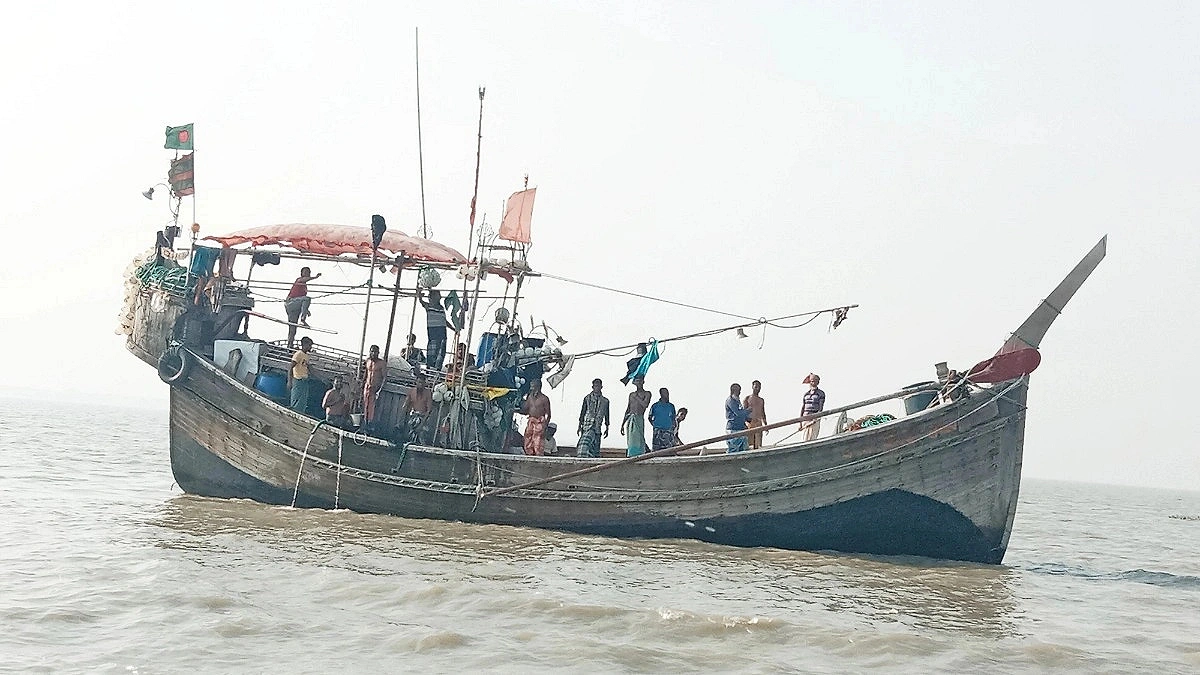
Photo: Agamir Somoy
A series of incidents have indicated that some trawlers are continuing to fish in the Bay of Bengal even during the ongoing ban. This has raised new questions about the enforcement of the 58-day marine fishing ban, the effectiveness of monitoring, and the performance of relevant authorities.
To ensure the safe breeding of marine fish and conserve fishery resources, the government has banned all types of fishing in the Bay of Bengal from April 15 to June 11, as it does every year. However, several recent incidents have shown that despite the ban, some trawlers are operating and fishing in the deep sea.
On May 19, it was alleged that 12 fishermen along with a trawler were kidnapped by pirates while fishing in the Kotka area of the Bay of Bengal. The abducted fishermen hail from various areas of Patharghata upazila in Barguna. After the incident came to light, questions arose among locals about how the fishermen went to the deep sea during the ban period. If they went fishing, where was the monitoring by the agencies responsible for enforcing the ban?
A few days later, on May 31, a trawler's net got entangled with a mysterious drone-like device while fishing in the estuary of the Bay of Bengal. The device was later recovered and brought ashore, after which police took it into custody. While the incident sparked curiosity, it also made clear that some trawlers were present at sea during the ban period.
Meanwhile, on June 2, the Coast Guard seized a trawler named FB Nazma-2 for violating the ban. A large quantity of marine fish was confiscated from the trawler, and 12 fishermen were sentenced to imprisonment. This incident also proves that some trawlers are breaking the rules and fishing during the ban period.
Locals allege that the relevant authorities do not have reliable or up-to-date information on how many trawlers leave from Patharghata each day, how many fishermen they take, or when they return. As a result, many trawlers secretly leave the jetties late at night and head out to sea.
Multiple sources at the fishing port claim that some fishermen have been violating the ban since it began. There are allegations that these activities are being carried out by influencing local administration officials, journalists, and politically influential individuals. Sources say that the fish caught from the sea are sold late at night at the temporary market in Patharghata's Padma area and at the Char Duani market.
Several ice factories near the landing center are also operational during the ban period. It is known that the upazila administration has conducted raids on some of these factories and imposed fines for operating during the ban.
According to local fishermen, one of the main reasons for violating the ban is weak monitoring. Many trawlers leave the jetties under the cover of darkness, allowing them to evade the attention of relevant authorities.
The Patharghata Fisheries Department has reported that, to enforce the 58-day ban, the Coast Guard, Navy, and Fisheries Department jointly conducted 98 operations and 12 mobile courts until June 8. During these operations, 8.5 metric tons of fish and 30.757 million meters of illegal nets were seized.
Additionally, one trawling boat was confiscated, 12 fishermen were sentenced to imprisonment, 9 cases were filed, and fines totaling Tk 398,000 were imposed. The seized fish were sold at auction, and Tk 480,000 was deposited into the government treasury.
According to experts, the root causes of the problem include the lack of a comprehensive database for trawlers and fishermen, limited surveillance, and a deficit in technology-based management. They suggest that if digital registration for each trawler, a central database for fishermen, and mandatory GPS tracking are introduced, the movement of trawlers at sea could be easily monitored. Furthermore, surveillance at jetties, river mouths, and the deep sea needs to be significantly strengthened.
Golam Mostafa Chowdhury, president of the Barguna District Trawler Owners' Association, told "Agamir Samay" (Future Time), "Trawlers are fishing in the sea right now. We supply all the ice and fuel. You just need to keep the administration happy; you have to pay the administration. I am the president of the trawler owners' association. If my fishermen can fish, what problem do I have? Trawler owners spend a lot of money to go to sea. The price of ice is also high during this time. Fishermen go to sea and catch good fish. Just enforcing a blockade yields no benefit."
The Barguna District Fisheries Officer, Mohammad Zia Uddin, stated that due to a manpower shortage, it is not possible for them to conduct regular surveillance directly in the deep sea. The primary responsibility for conducting operations and monitoring at sea falls to the Navy and Coast Guard.
He said, "Many people go to sea by evading the ban or secretly. As a result, it becomes difficult to take immediate action all the time. Nevertheless, we are making the utmost effort to enforce the ban."
Mir Mohammad Ali, Assistant Professor at the Faculty of Fisheries and Marine Science at Sher-e-Bangla Agricultural University, said that uncontrolled fishing in coastal areas is severely damaging the country's marine resources. According to him, the responsibility cannot simply be placed on the fishermen. Accountability must also be ensured for management, monitoring, and law enforcement agencies.
He further stated that the incidents of fishermen being kidnapped and the recovery of a drone-like device during the ban period prove that some trawlers were still at sea. This raises the question of how these trawlers managed to leave the jetties and go to sea during the ban. The matter needs to be investigated seriously.
According to Mir Mohammad Ali, if the ban remains only an announcement, the desired benefits will not be achieved. Positive changes in marine resource conservation will occur only if effective monitoring, regular operations, technology-based surveillance, fisherman safety, and support for genuine fishermen are ensured. Otherwise, even if the ban exists on paper, the primary goal of protecting sea fish and biodiversity will remain unfulfilled.
