
Us-Iran Peace Deal Confirmed, Asian Shares Surge as Oil Drops

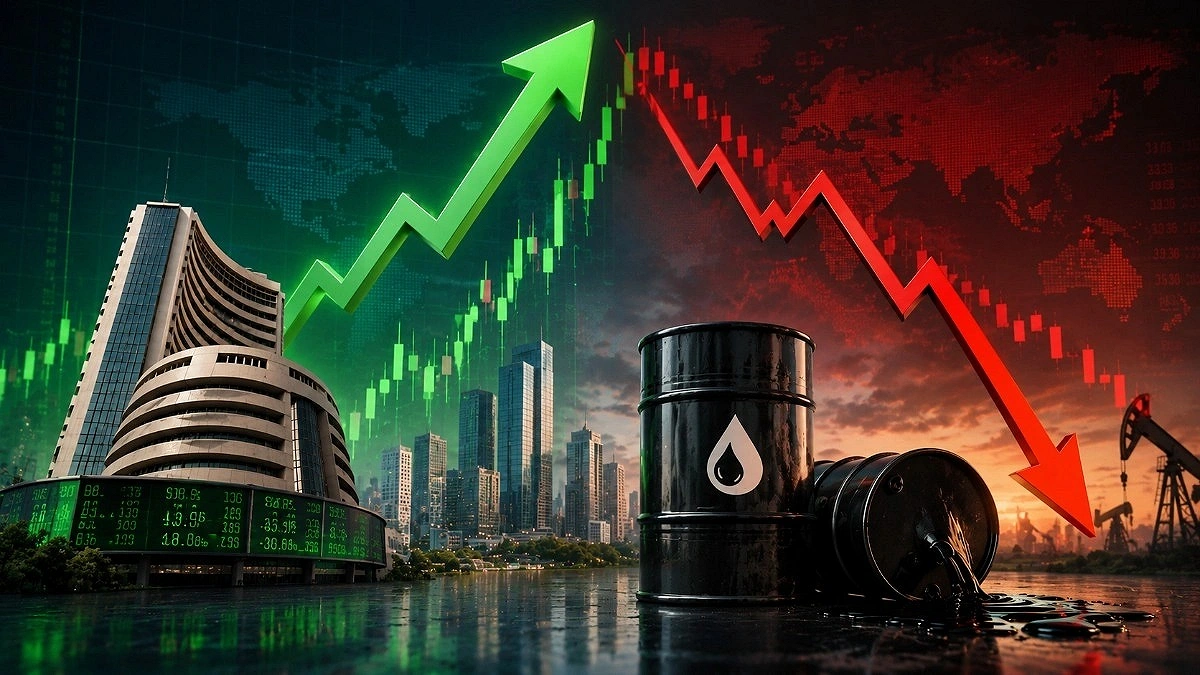
Photo: AI Generated
Pakistani Prime Minister Shehbaz Sharif said that a “peace deal” between US and Iran has been reached and is “now in place” with the signing ceremony scheduled for Friday in Switzerland.
Following the announcement, Asian share prices skyrocketed on Monday. Investors cheered the news, driving Japan’s Nikkei 225 up by 5.5 percent and South Korea’s Kospi by 5.7 percent.
Taiwan’s Taiex climbed 2.7 percent, while Australia’s ASX200 rose around 1.5 percent. Hong Kong’s Hang Seng Index initially gained 1 percent before settling lower later in the session.
In Western markets, US stock futures for the S&P 500 and the tech-heavy Nasdaq Composite rose by 1 percent and 1.8 percent, respectively. Simultaneously, Brent crude prices tumbled roughly 4.5 percent, falling below $83.40 per barrel.
Khoon Goh, the head of Asia research for ANZ, told Al Jazeera that actual confirmation spurred a further rally following initial hints of a deal last week. Goh noted that the fall in oil prices will provide some relief for central banks around the world who were worried about the inflation outlook, as attention shifts to the US Federal Reserve’s upcoming interest rate decision.
US President Donald Trump announced the ceasefire via a social media post on Sunday, confirming he had authorised the toll-free reopening of the Strait of Hormuz and the immediate cessation of the US naval blockade on Iranian ports.
On Truth Social, Trump wrote, “Ships of the World, start your engines,” adding, “Let the oil flow!”.
Iran’s Supreme National Security Council and Deputy Minister of Foreign Affairs Kazem Gharibabadi later verified that both sides had reached an accord. While official details remain sparse, the Iranian news agency Mehr reported that the deal includes an immediate halt to hostilities on all fronts - including Lebanon - and the suspension of sanctions on Iranian oil sales.
The successful implementation of this agreement would restore normal shipping through the Strait of Hormuz. The waterway’s closure, caused by Iranian threats and the US blockade, has disrupted global energy markets for nearly four months.
According to the International Energy Agency, the blockage resulted in a daily shortfall of 14 million barrels of oil, triggering worldwide fuel shortages and price hikes.
However, experts warn that global energy flows will not recover instantly. US Secretary of Energy Chris Wright admitted during a recent forum that restoring supplies could take “many months”. Svein Ringbakken, managing director of the Norwegian Shipowners’ Mutual War Risks Insurance Association, highlighted that thousands of vessels remain trapped in the region.
“Even at full capacity this would take months to restore to normal,” Ringbakken told Al Jazeera. He explained that “production lines have had to be stopped for many products because of lack of storage capacity,” and noted that damage to infrastructure adds further “inefficiencies when the strait is opened”.
Ringbakken also warned of a final hurdle: “Finally, if mines have been laid out, there may be the need for mine clearing before traffic at full capacity can be restored”. He concluded that such operations “can take months”.
Source: Al Jazeera (adapted)
