


Chittagong EPZ resumes full production after receiving power

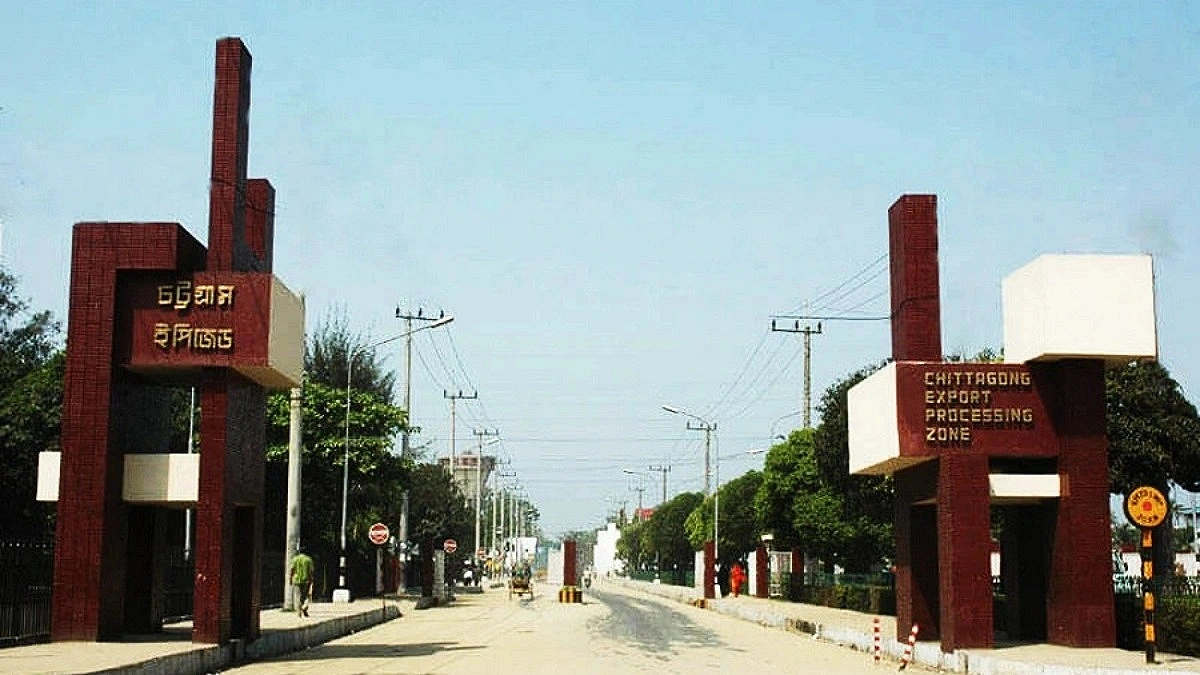
Production in CEPZ returns to normal after power grid starts providing electricity as per demand. Collected photo.
With adequate electricity supply matching demand, the country's largest export processing zone—Chittagong EPZ—has resumed full-scale production from Saturday.
The Power Development Board (PDB) is now supplying the full 70 megawatts required to maintain full production. As a result, production activities have normalized across all 501 industrial plots in the EPZ, bringing relief to both local and foreign investors.
Previously, the EPZ's own captive power plant had become nearly inoperable due to the gas crisis. Consequently, the 35 megawatts supplied by the PDB could not even meet half the demand, disrupting factory production.
On August 13, Agamir Somoy online published a report titled "No gas, half power, Chittagong EPZ in disarray." Following that, the PDB took initiatives to increase power supply. From Saturday, the EPZ began receiving 65 to 70 megawatts of power according to its demand.
Mohammad Shariful Islam, Executive Director of Chittagong EPZ, confirmed that considering the importance, all industrial plots have been receiving 65 to 70 megawatts of power as per demand since Saturday. The entire supply is being provided by the PDB. This has normalized production. He thanked the PDB and Agamir Samoy.
Chittagong EPZ provides employment to nearly 200,000 people. It houses 501 industrial plots of various local and foreign enterprises. Alongside Bangladesh, investors from China, Japan, South Korea, the UK, the US, the Netherlands, Malaysia, and India are associated with these establishments.
The EPZ exports goods worth approximately $237.57 million annually. At Tk 125 per dollar, this amounts to around Tk 30,000 crore.
To run the EPZ factories at full capacity, 70 MW of power is required. Of this, the captive power plant of the private United Group was supposed to generate electricity using 15 to 17 million cubic feet of gas. However, due to the gas crisis, that plant could not produce adequate power.
In this situation, upon the EPZ authority's request, the PDB was supplying 35 MW. The lack of the remaining 35 MW was disrupting production across the 501 industrial plots. To manage the situation, investors had taken alternative measures such as changing weekly holidays, reducing working hours, canceling overtime, and using diesel-run generators.
Mohammad Shahedul Islam, General Manager of Hempel Rei Manufacturing Limited, said that adequate power supply has brought relief to investors. Factories are now working at full capacity to normalize production. He expressed hope that this relief will be long-lasting.
Kamal Uddin, Chief of PDB's Southern Zone, said, "I did not have the capacity to supply power as per the agreement. Still, I made alternative efforts in the national interest and succeeded. I also feel good being able to supply power to this priority sector of the country."

