
Another Struggle Begins as Flood Victims Return Home

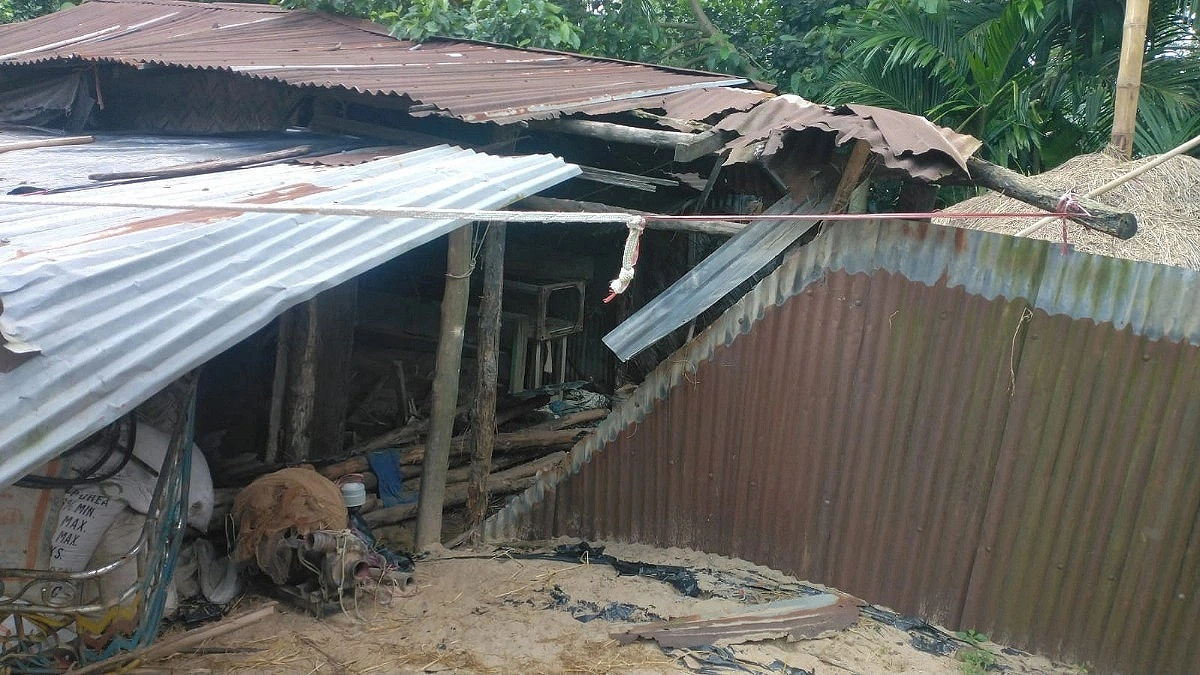
Flood-damaged homes in Dhopachhari Union of Chandanaish. Photo: Collected
The rain stopped days ago, and floodwaters have receded from most areas. Knee-deep water still remains in some places. People who had taken shelter at evacuation centers or relatives' homes have started returning to their own houses. But many no longer recognize the homes they left behind. Some houses have collapsed, while others bear the scars of the flooding.
They left their homes to save their lives. For now, they have survived. But returning home has marked the beginning of another struggle. Flood victims must now repair their damaged houses while figuring out how to restore their livelihoods.
Akhtar Mia, a rickshaw puller from Ward 1 of Dhopachhari Union in Chandanaish, is one such resident. He returned home Tuesday from an evacuation center with his wife and four children. What awaited them was little more than a ruin. Sections of the bamboo walls had collapsed, the earthen foundation beneath them had washed away, and knee-deep mud covered the floor. The few pieces of furniture they owned were coated in mud.
"I stayed at the union council building for six days," Akhtar said. "I couldn't drive my rickshaw during that time. Many roads are still underwater. I've returned home, but it will take more time before the house is livable again. We have to clear the mud, and repairs will cost money."
Dhopachhari Union is a remote area near the Bandarban border at the foot of the hills. Continuous rain and flash floods from the hills left many homes submerged for nearly a week. Residents took shelter at the union council building and the nearby Taiyabia Madrasa. Floodwaters began receding three days ago, prompting families to return home. On Tuesday, the last eight families staying at the union council returned to their houses.
Nazrul Islam, an entrepreneur at the union council, said floodwaters entered most homes in Wards 1, 2, 5, and 6. Most of the houses had bamboo walls. Residents stayed at the union council building and the madrasa, where authorities arranged meals for them. They have now begun rebuilding their homes.
Most houses in Dhopachhari are made of bamboo. Another rickshaw puller, Abdur Rashid, had taken shelter at a relative's home. He returned to his house Monday with his wife and two children and has already started repairing the damage.
"I'm still cleaning the house," Rashid said. "The bed and table were damaged by the mud. The soil beneath the walls has washed away. I don't have any money right now. I'll repair the house gradually."
Dhopachhari is a hilly area along the Sangu River. Heavy rain and runoff from the hills caused floodwaters to rise rapidly and inundate homes. Road access from Chandanaish to the union was cut off on the third day of continuous rainfall. Although the union is about 15 kilometers away by road, delivering relief there proved extremely difficult. The area was accessible only by river, and the trip took about an hour against the strong current of the swollen Sangu. Relief supplies reached the area four days after it went underwater.
Abdul Mabud, a day laborer from East Dhopachhari, also returned home Tuesday. His bamboo house had been submerged up to neck level. He had taken shelter at the union council with his wife and two daughters. When they returned, they found their home badly damaged.
Parts of South Harala in Chandanaish municipality remain underwater. Waist-deep water still covered the area Tuesday afternoon, while some homes remained surrounded by knee-deep water. Mohsena Khatun, a resident of Nizamuddin Para, returned home from an evacuation center Monday. Water still stands in front of her house, although it has receded from inside. She is now cleaning her home.
"My husband drives a rickshaw, but he hasn't been able to work for more than a week," Mohsena said. "The rickshaw was also submerged. Now we have to repair both the house and the rickshaw."
This year's floods inundated both municipalities and all eight unions in Chandanaish upazila. District Relief and Rehabilitation Officer Mohammad Masudur Rahman said the flooding destroyed about 250 houses and 30 schools in the upazila. Many more sustained partial damages, while about 40 kilometers of roads were also damaged.
