


Half of Venezuela's oil now shipped to United States
- Proceeds from oil sales deposited in Washington
- Questions raised regarding transparency in the use of the deposited funds

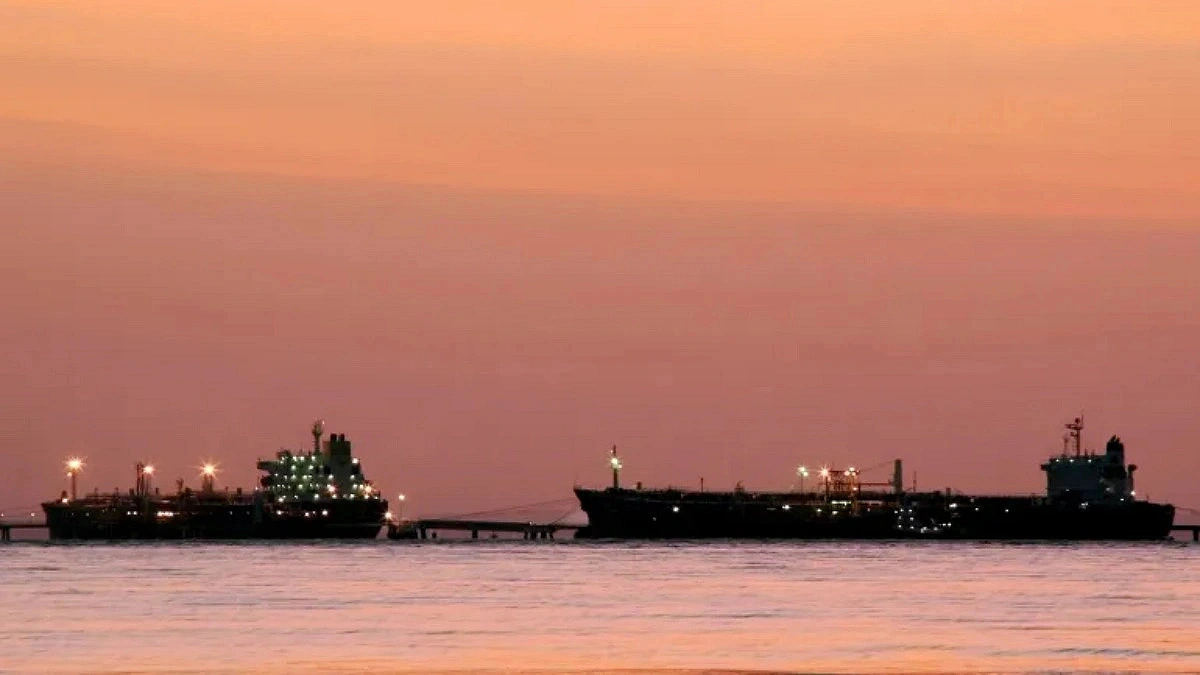
An oil tanker at the Bajo Grande terminal on the western shore of Lake Maracaibo, south of the Venezuelan city of Maracaibo, at dawn. Photo: Reutersoto: Reuters file photo.
Nearly half of the oil currently produced by Venezuela is being exported to the United States. The country's total daily production stands at about 1,250,000 barrels, of which more than 500,000 barrels are going to the United States.
Earlier this year, in a special operation conducted late at night from his own residence in Caracas, socialist leader Nicolás Maduro was taken to the United States. Months after the removal of this anti-US imperialist leader from power, such news has come to light.
These details were revealed on Tuesday at an energy industry event in Houston, USA, by Kyle Hestveit, Deputy Minister of the country's Ministry of Petroleum.
He stated that Venezuela's oil is going to refineries that are specifically designed to process this type of crude.
Venezuelan oil is heavy and high in sulfur. Several refineries along the US Gulf Coast are built to process such crude. As a result, these refineries are directly benefiting from the resumption of oil imports from Venezuela.
Venezuela has the largest oil reserves in the world, with an estimated 303 billion barrels, accounting for about 17% of the world's total proven reserves.
However, due to a long-standing investment shortfall and US sanctions, the country's production had declined significantly. Venezuela's share of global oil supply was around 1%.
By the end of 2025, the country was producing about 1 million barrels per day, of which around 135,000 barrels were going to the United States.
Hestveit also said that the United States is helping Venezuela increase its oil production. As part of this, more than 100,000 barrels of naphtha are being sent daily from the US to Venezuela, which is mixed with the heavy crude for processing.
He referred to this arrangement as a "beautiful energy partnership," claiming that both countries are benefiting from this trade.
Venezuelan officials at the event also expressed optimism about further increasing production.
Giovanni Martínez, Vice President of the state-owned oil company PDVSA, said that by the end of August, the country's daily oil production would reach 1,245,000 barrels. Oil exports have increased by 19.7% this year.
At the same time, energy production has risen by 12.9%, and fuel supply to the domestic market has also increased by 5.4%.
Martínez said, "We have attempted major reforms in the energy sector. Now we want to see tangible results in terms of development."
He further stated that Venezuela's refineries need to be upgraded, modernised, and expanded. The necessary liquefaction components for heavy crude oil also need to be produced domestically.
Venezuela's oil production has started to rise at a time when, after the removal of President Nicolás Maduro from power, the United States had stated that it would manage Venezuela's oil resources.
After Maduro was taken to the United States in a surprise late-night operation, US President Donald Trump said that the money from Venezuela's oil would be under his control. He claimed that this money would be used for the benefit of the people of Venezuela and the United States.
Later, US Secretary of State Marco Rubio informed the US Congress that the proceeds from Venezuela's oil sales would be deposited into an account that the United States would monitor.
According to him, Caracas would submit a budget request each month to use funds from that account, and Washington would pre‑determine which sectors could not receive those funds.
In July, the Financial Times reported that the United States had generated more than $13 billion in revenue from Venezuela's oil sales this year.
When speaking about this report on 27 July, Trump said the actual amount was even higher.
However, the Trump administration has not yet provided detailed information on what happened to that money.
In April, a US State Department official informed Congress that approximately $3 billion in waivers had been approved for Venezuela.
In June, the independent research institute Council on Foreign Relations noted that the Trump administration repeatedly claimed that controlling Venezuela's oil exports benefits both countries.
But according to the institute, the US has not disclosed how much oil it has sold, how much revenue it has received, or how that money has been used.
The institute also stated that a similar lack of transparency exists regarding revenue from Venezuela's gold and other mineral resources.
The institute also expressed concern over the decision to exclude Venezuela's opposition parties and civil society from negotiations with the interim government in Caracas.
That interim government is currently led by Maduro's Vice President, Delcy Rodríguez.
The Council on Foreign Relations said that without accountability mechanisms and a clear democratic roadmap, the United States risks strengthening a corrupt successor government in Venezuela.
Meanwhile, Venezuela's opposition parties have also put forward their own political roadmap. Opposition leaders, including Nobel Peace Prize winner María Corina Machado, agreed in May on a new plan to resolve the crisis through presidential elections and political dialogue.
Source: Al Jazeera

