
500 Garment Factories Shut Down, 150,000 Workers Left Jobless

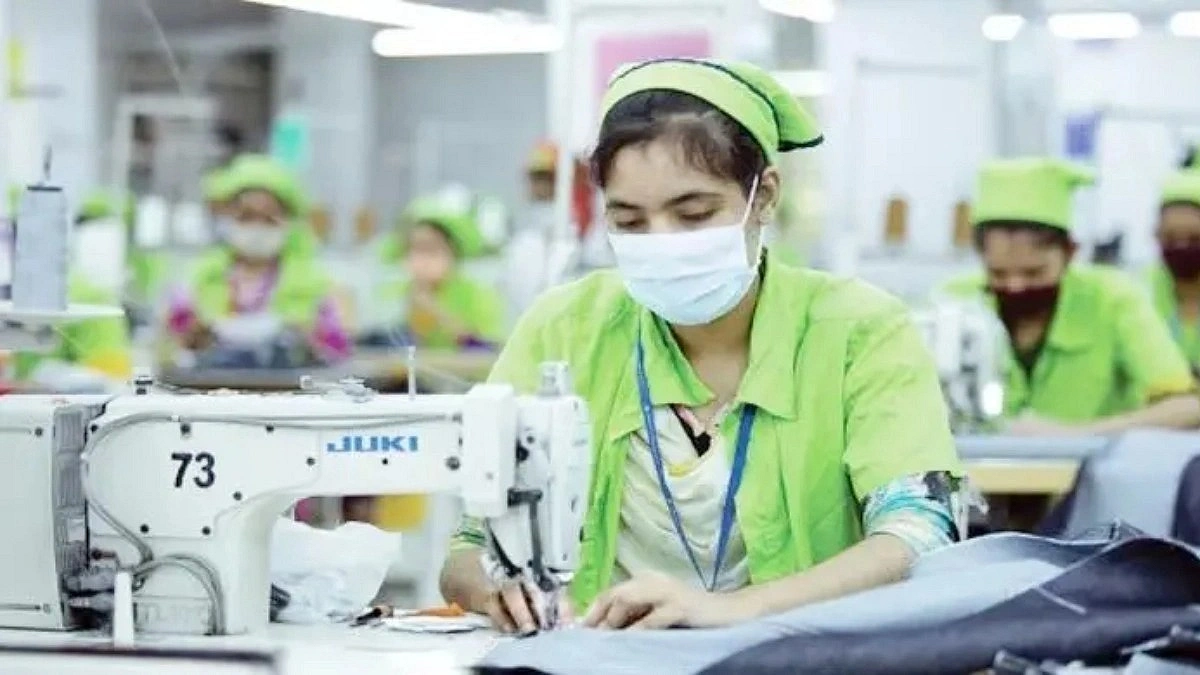
Collected Photo
More than 500 garment and textile factories across the country have permanently shut down over the past two years, leaving nearly 150,000 workers completely unemployed. This picture has emerged from information provided by the Industrial Police and organizations representing the garment sector.
According to the organizations, more than 500 industrial factories have permanently closed during the past two years. Many more factories are at risk of shutting down. During this period, nearly 150,000 workers in the garment sector lost their jobs. The main reasons behind the factory closures are a decline in purchase orders and reduced production capacity due to shortages of gas and electricity. In some cases, weak management and failure to make shipments on time also contributed.
Among the international factors are the volatility in global markets, including energy markets, triggered by the joint US-Israeli attack on Iran on Feb. 28, the impact of the Russia-Ukraine war, and declining global demand caused by retaliatory tariffs imposed by the United States.
According to the Industrial Police, 457 industrial factories were closed during the two years from June 2024 to June 2026. Of these, 170 were textile and ready-made garment factories, while the remaining 287 were non-garment factories.
The list of closures includes 108 factories that are members of the Bangladesh Garment Manufacturers and Exporters Association (BGMEA), 35 factories belonging to the Bangladesh Knitwear Manufacturers and Exporters Association (BKMEA), and eight factories under the Bangladesh Textile Mills Association (BTMA). The remaining 19 factories are affiliated with the Bangladesh Export Processing Zones Authority (BEPZA).
However, there is a discrepancy between the Industrial Police data and the figures provided by the three organizations representing the garment and textile sectors. According to BGMEA data, 221 of its member factories have shut down over the past two years. Of these, the highest number, 141 factories, closed last year. In the previous year, 2024, a total of 77 factories were shut down. BGMEA currently has 2,127 member factories in its Dhaka and Chattogram zones combined.
Shams Mahmud, managing director of Shasha Denims, was involved in setting this target. He said, “During the COVID period, when many things around the world had come to a standstill, several renowned brands came to Bangladesh and garment export growth increased. But although the then government promised to take several initiatives, those were not implemented.”
“The country’s financial sectors came under the control of a few individuals, leading to such a collapse. As a result, instead of achieving growth in garment exports, owners had to begin fighting for survival. The current government has taken several initiatives. It will take at least two years for these to be implemented. Therefore, achieving that target will be difficult,” Shams Mahmud said.
Shovon Islam, managing director of Sparrow Group, said that the country’s garment sector is currently suffering from a crisis of confidence. As a result, several renowned global brands are reducing sourcing from Bangladesh. To restore their confidence and achieve the $100 billion export target, policy reforms and increased investment in the garment sector are essential.
According to Shovon Islam, ensuring sustainable growth will require an adequate supply of gas and electricity. Simplifying customs procedures is also critically important. Administrative delays and complexities must be reduced.
In addition, the global garment trade is undergoing rapid changes. Online sales and direct-to-consumer delivery are increasing. Entrepreneurs also believe that developing their own brands and strengthening international marketing activities are necessary to expand e-commerce-based sales.
The government has taken an initiative to reopen closed factories through an investment of about Tk 20,000 crore. Shovon Islam expressed hope that this would increase production capacity.
Demand in the global market remains on a growth trajectory. Former BGMEA director Mohiuddin Rubel believes that with proper policy support and enhanced production capacity, Bangladesh may not achieve its $100 billion export target within the stipulated timeframe, but it will be possible over time.
