

Politics Behind US Tariffs

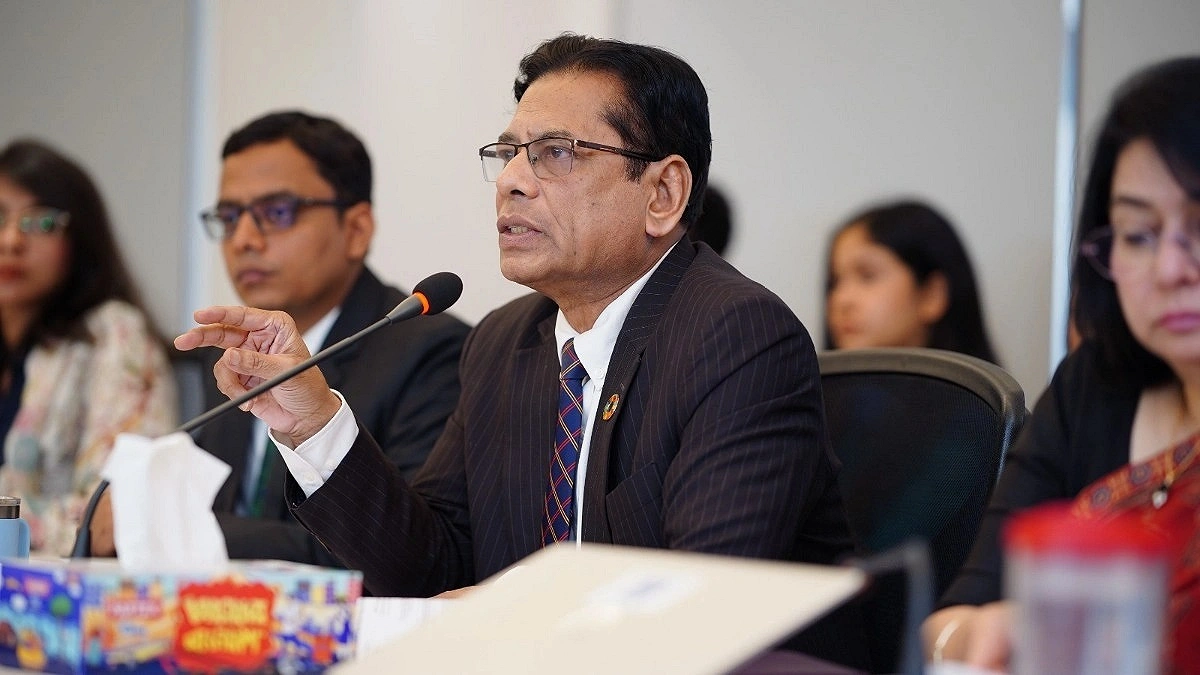
Picture: Dr. Mustafizur Rahman
CPD Fellow Dr. Mustafizur Rahman has expressed deep concern over the negative impact of newly imposed US tariffs on Bangladeshi exports and the political economy behind them.
He said Washington’s strategy of imposing tariffs by highlighting issues such as child labour and forced labour is not a genuine expression of concern. Instead, it is largely influenced by geopolitics and bilateral trade strategy.
He made the remarks at an event titled “State of the Bangladesh Economy in FY 2025–26,” organized by the Centre for Policy Dialogue (CPD) on Thursday.
Dr. Rahman explained that when a US court previously struck down counter-tariffs, the US President imposed an additional 10% tariff using special authority (Section 301), which is set to remain in effect until July. With that period ending, he said there are indications that a new 10% tariff may again be justified under the pretext of forced labour or child labour issues.
He warned that Bangladesh could face a significant tariff burden in the US market. The average tariff on Bangladeshi goods is already 15%. Under an existing agreement, an additional 19% tariff could be applied, raising the total to 34%. If another 10% is added, the total could reach 44%. He noted that countries which did not sign the agreement are not subject to the additional 19% tariff, and only 9 out of 60 affected countries signed it.
He questioned where Bangladesh’s export competitiveness would stand under such an unequal tariff structure, calling it a critical issue for policymakers. He stressed the need for strong bilateral negotiations with the US administration.
Referring to recent Bangladesh Bureau of Statistics (BBS) data, Dr. Rahman said there are around 3.2 million street children in Bangladesh who are vulnerable due to social and economic realities, and many children are forced into labour. However, he argued that using this issue as a tool to impose additional export tariffs is not a sustainable solution.
He suggested that if the US truly wants to eliminate child labour, it should provide a dedicated aid fund to support Bangladesh rather than imposing tariff burdens. He emphasized a shift from punitive measures to cooperative assistance.
Dr. Rahman also discussed domestic macroeconomic challenges, noting that successive increases in energy prices have created cumulative pressure on the economy and affected domestic production sectors.
He said producers, exporters, and import-substituting industries are facing rising costs, and government policy support and incentives are necessary to maintain competitiveness. Without such measures, he warned, there is a strong risk of losing competitiveness.
On the proposed new pay scale for government employees, he said rising inflation has reduced real income levels, making a revision justified. However, he cautioned that the fiscal burden is too large to implement at once and should be introduced gradually through a roadmap in the upcoming budget.
He also emphasized merit-based recruitment, skill-based promotions, improved working conditions, and stronger accountability in the public sector.
Regarding investment, Dr. Rahman noted that private sector confidence has not yet fully recovered despite political changes. Credit growth remains around 5%, while imports of capital machinery and intermediate goods remain sluggish.
He said investors are waiting for clarity in the upcoming budget, particularly regarding tax policy, tariff structure, and structural reforms.
He added that while the government is introducing refinancing schemes, private sector investment remains far more impactful in generating employment and boosting supply. He said strengthening private investment is essential to controlling inflation and sustaining economic growth.

