
Electricity: Highest Price Hike in 25 Years

Graphics: Agamir Somoy
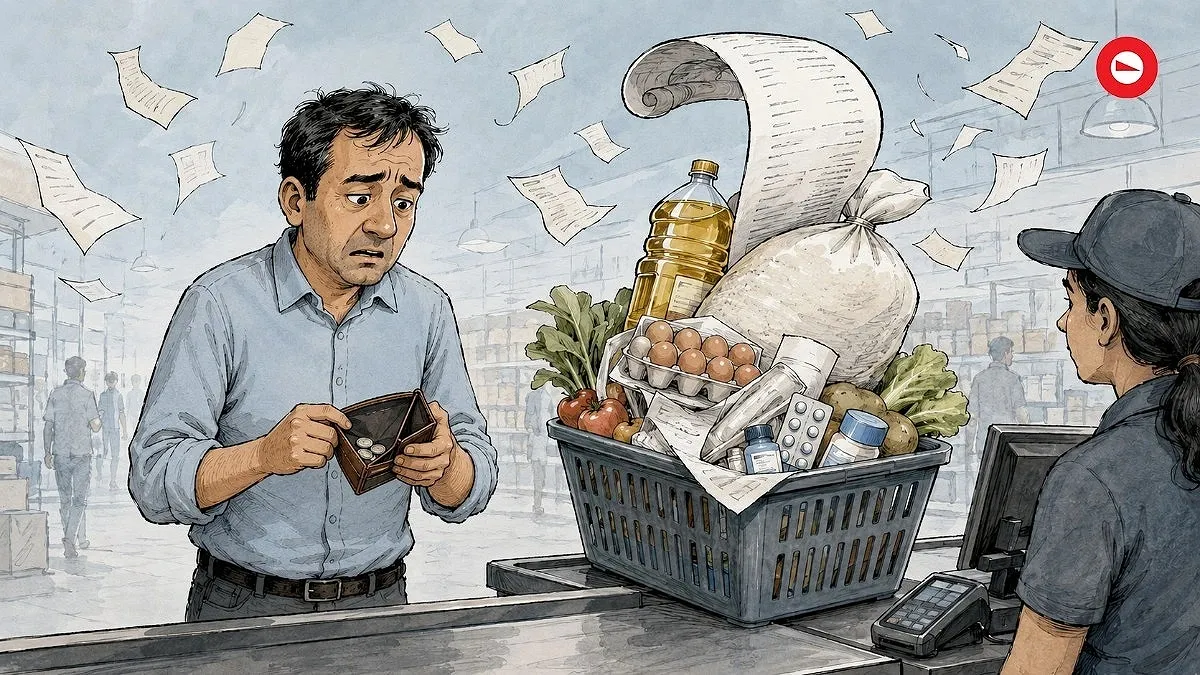
Electricity prices have gone up paving the way for other products to hike their prices. Research shows that a proportional increase in electricity prices leads to an approximately fourfold increase in overall expenses. According to this calculation, a 16.68 percent average price hike at the consumer level will raise daily living costs by at least 60 percent. This will impact the entire economy. This is the single largest electricity price hike in 25 years.
Today, Wednesday, the Bangladesh Energy Regulatory Commission (BERC) announced price hikes at both wholesale and retail levels, effective from this month.
According to the new decision, the wholesale electricity price has been increased by 1.39 taka per unit, and the retail price by 1.52 taka per unit. As a result, the average retail electricity price has increased by 16.68 percent, and the wholesale price by 19.85 percent.
According to analysts, the impact of the electricity price hike will not be limited to electricity bills. It may also affect industrial production costs, irrigation activities, small businesses, and the cost of living for ordinary people. This raises concerns about new financial pressure on consumers already struggling with inflation.
BERC stated that the new tariff was determined considering the rising costs of electricity generation, purchase and import, transmission, distribution expenses, and the overall financial situation. According to the commission's estimates, despite the wholesale price increase, the government will still need to provide an annual subsidy of approximately 41,000 crore taka to cover the deficit of the Bangladesh Power Development Board (BPDB).
Currently, the weighted average wholesale electricity price is 7 taka per unit. Under the new decision, it has been increased by 1.39 taka to 8.39 taka. Meanwhile, the average retail electricity price will rise from 9.11 taka to 10.63 taka.
Economist Dr. Mahfuz Kabir, Research Director at the Bangladesh Institute of International and Strategic Studies (BIISS), considers such a large one-time electricity price hike unreasonable.
He told Agamir Somoy, "Given the subsidy pressure in the power sector, a maximum 5 percent electricity price hike at the consumer level would have been somewhat tolerable. But such a massive price hike will become unbearable for the people."
"When electricity prices rise, everything is affected. Research shows that if electricity prices increase by 10 percent, overall expenses rise by about four times—meaning 40 percent. This could push inflation beyond 10 percent. People haven't even recovered from the shocks of the COVID-19 pandemic and past price hikes yet. Coping with new daily expenses will be extremely difficult for them," he added.
How Much Did Prices Increase?
According to the newly announced rates, all categories of consumers—residential, agricultural, industrial, commercial establishments, educational institutions, hospitals, irrigation, and electric vehicle charging stations—will have to pay higher prices than before.
Under the new tariff, for residential consumers, the price per unit of electricity has increased from 69 paisa to a maximum of 2 taka 74 paisa, depending on usage. In percentage terms, the price hike across different categories ranges from approximately 15 to 20 percent.
According to the new rates: Marginal consumers (0-50 units): 5.32 taka per unit, an increase of 69 paisa or 14.90 percent
0-75 unit users: 6.18 taka per unit, an increase of 92 paisa or 17.49 percent.
76-200 unit users: 8.50 taka per unit, an increase of 1.03 taka.
201-300 unit users: 9.10 taka per unit, an increase of 1.51 taka
301-400 unit users: 9.62 taka per unit
401-600 unit users: 15.01 taka per unit
Above 600 units (highest usage category): 17.35 taka per unit, an increase of 2.74 taka
Agricultural irrigation: 6.04 taka per unit, an increase of 79 paisa or 15.4 percent
Small industries (flat rate): 12.73 taka per unit, an increase of 1.97 taka
Educational institutions, places of worship, and hospitals: 9.05 taka per unit, an increase of 1.50 taka
Street lights and water pumps: 11.46 taka per unit
Electric vehicle charging stations: 11.36 taka per unit, an increase of 1.74 taka
Commercial and office category: 15.36 taka per unit, an increase of 2.35 taka or over 18.6 percent
Industrial sector:
33 KV industrial consumers: 12.75 taka per unit
132-230 KV industrial consumers: 12.66 taka per unit
Both categories saw an increase of 2 taka per unit
Concerned and Angry Consumers
Consumers are expressing concern over the new electricity tariffs. Professor Dr. M. Shamsul Alam, energy advisor to consumer rights organization CAB, told Agamir Somoy that BERC, as an independent and neutral regulatory body, has failed to properly fulfill its legal duties. He said this failure has once again been exposed through the determination of the new electricity tariffs.
Shamsul Alam questioned why, although public hearings are held on proposals to increase electricity prices, no public hearings are ever held on proposals to reduce prices. He claimed that despite repeated proposals from the public to reduce costs and lower prices, these matters are not given importance. Instead, various justifications for cost increases are presented to facilitate price hikes. In many cases, he referred to these cost increases as "looting expenses."
Jahangir Ahsan, a resident of Mirpur in Dhaka, said the price of everything is increasing. Now electricity prices have also increased. This will again cause the prices of goods to rise. It will become difficult to manage other expenses along with the increased electricity cost and to run households.
Hatem Ali, President of BKMEA, told Agamir Somoy that many factory owners were already struggling to pay electricity bills at the previous rates. For many, bearing this new expense will be impossible. The increased costs will raise production expenses. It will become difficult to compete in the global market. Many factories may close, reducing employment.
The Capacity Charge Trap in the Power Sector
The 'capacity charge' (rent for power plants) has become a major trap for the country's power sector. In recent years, the government has had to pay enormous amounts of money to keep power plants idle without generating electricity, and the ultimate burden is falling on the general public.
According to recent BERC data, the capacity charge in the power sector was only 5,453 crore taka in the 2011-12 fiscal year, but skyrocketed to 45,451 crore taka in the 2024-25 fiscal year. It is feared that this idle expense could increase further to 52,681 crore taka in the 2026-27 fiscal year. As a result, the capacity charge per unit of electricity, which was 2.35 paisa in 2011, has more than doubled to 5.46 paisa in 2026.
Experts say the root cause of this crisis is the approval of excessive power plants beyond realistic demand during the Awami League government's tenure. Currently, the country's peak electricity demand is around 18,000 megawatts, but production capacity has been created for over 29,000 megawatts. Because of this massive surplus capacity of 11,000 megawatts, the lion's share of expenses is being spent on idle plants. To cover this huge loss, the burden is being passed on to the people through repeated price hikes.
25 Years of Electricity Price Hikes
BERC began its journey in 2003. Since 2009, this commission has been increasing electricity prices. Before that, the Power Division used to set the rates. However, during the final period of the Awami League government, BERC's powers were curtailed, and electricity prices were increased multiple times through executive orders. During that time, there was a record of over 20 percent price hikes in three phases within a single year. However, according to BERC law, there is no provision to increase electricity prices more than once a year.
According to data from the Power Division and BERC, electricity prices were increased four times from 2001 to 2009. During this period, the average electricity price at the consumer level rose by 16 percent. After the Awami League came to power in 2009, they increased electricity prices 14 times until August 2024. During this period, the average price increased by 188 percent.
The Power Division increased consumer-level electricity prices the most in 2023. In January of that year, the government raised electricity prices twice at 5 percent each, and once again in February. In February 2024, another 5 percent electricity price hike was implemented, along with an increase in demand charges.
When providing loans under the ongoing package, the International Monetary Fund (IMF) had imposed a condition on the ousted Awami League government to gradually phase out subsidies in the power sector. To achieve this, former State Minister for Power, Energy and Mineral Resources Nasrul Hamid had mentioned raising electricity prices four times every year.
After the fall of the Awami League government, no electricity prices were increased during the interim government's tenure. The current government, after coming to power, had announced that it would not increase gas and electricity prices for at least two years. However, due to instability in the fuel market caused by the war in the Middle East, excessive capacity charges from unnecessary power plants built during the previous government's tenure, the devaluation of the taka against the dollar, and various other reasons, the government has moved away from that position.
