

I Did Not Support the Mob: Salehuddin

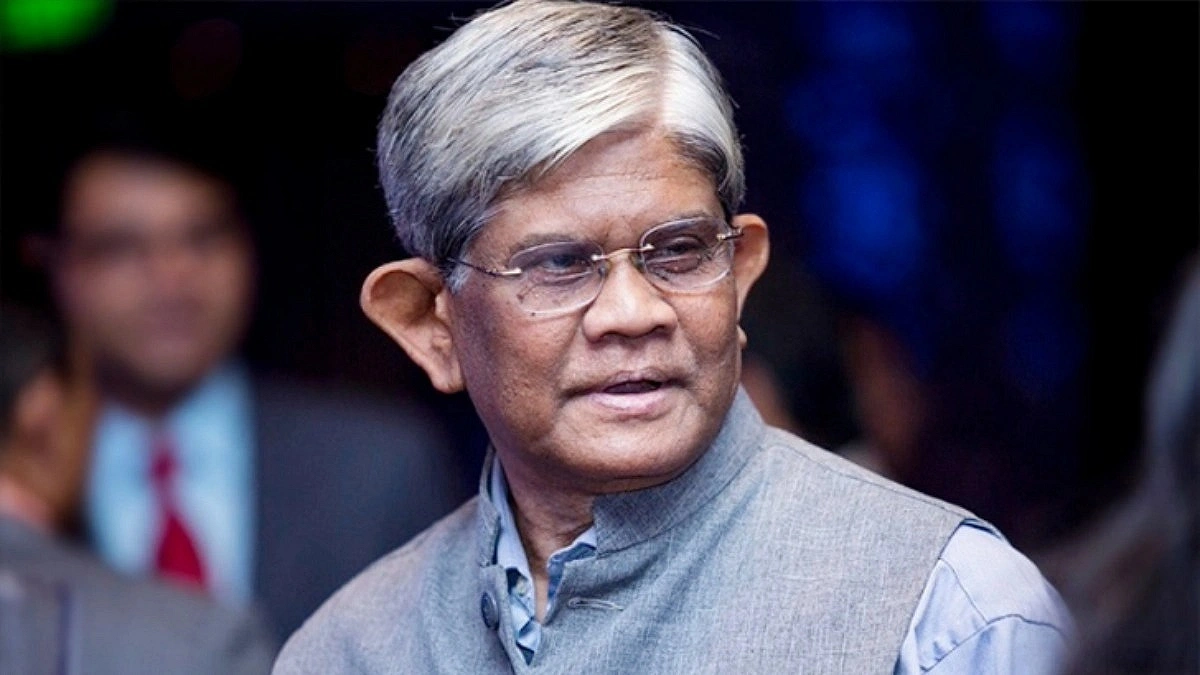
Photo: Collected
Former finance adviser of the interim government Salehuddin Ahmed said that he did not support the vandalism surrounding the destruction of the house at Dhanmondi Road 32 in the capital.
Speaking in an interview with Agamir Somoy, he said, “Morally, I did not support such a mob or vandalism.” However, he described the incident as a reflection of the excesses committed over the past 15 years.
Salehuddin added that Dhanmondi 32 had been a symbolic site since the Pakistan era. He explained that the public rage directed at the house and the Bijoy Soroni sculpture was a consequence of naming everything across the country after a single family.
He pointed out that while many things in Pakistan are named after Jinnah, they did not name every street after him. He recalled that initially, no one objected to names like Bangabandhu Medical University.
However, the public eventually grew dissatisfied when everything began to bear the same name. Despite this, he asserted that the destruction was not justified because the site was a museum.
Regarding the nature of the incident, Salehuddin said, “These events happened suddenly and very quickly. These were done with planning, abruptly bringing in bulldozers, which occurred before we could even understand it.”
He added that while they tried to stop it from their end, the force of the accumulated public anger was impossible to halt.
Upon taking office, Salehuddin mentioned facing pressure from various political parties and groups. He noted that major political parties, such as the BNP and Jamaat-e-Islami, would tell the administration, “Why are you going to undertake these reforms? Stay in caretaker mode. Do not touch the tax structure; we will look into these when we arrive.”
He explained that businessmen often came to the politicians.
The former adviser also highlighted indirect pressure from the media. He said that businessmen or politicians would often have specific things written in the media to discourage the interim government from certain actions.
However, Salehuddin viewed the scrutiny as a positive factor, stating that checks and balances are necessary. He concluded that without criticism from the media or the public, the administration might have become reckless; instead, they remained focused on accountability.

