
Antibiotic misuse could cost global economy $1.67t

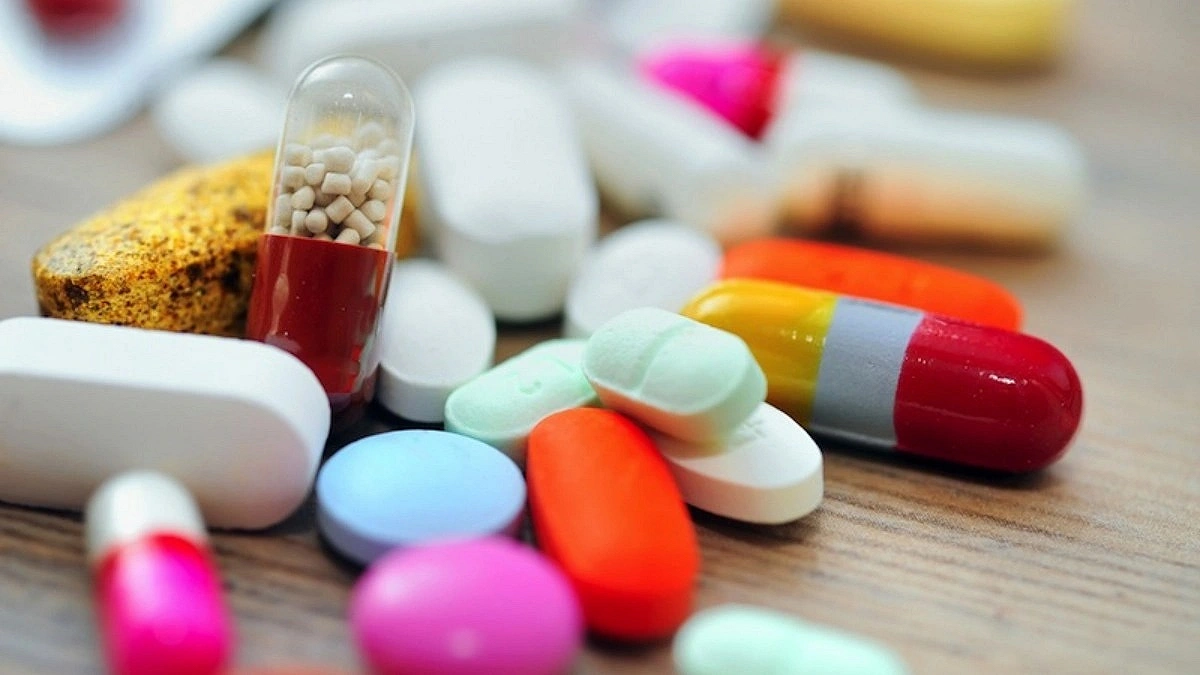
Representational image: Collected
The impact of indiscriminate antibiotic use is now hitting the economy as well. Antimicrobial drugs are used to prevent the growth of microorganisms like bacteria, viruses, and fungi.
However, the long-term indiscriminate use of these drugs, such as antibiotics, antivirals, or antifungals, has begun to reduce their effectiveness in the human body. This is no longer just a public health issue, but has also become a major threat to the global economy.
One study warns that if action is not taken, human antimicrobial resistance (AMR) could reduce the global GDP by $1.67 trillion by 2050. On the other hand, a coordinated investment in advanced treatment, new antibiotic innovation, vaccination, safe water, and sanitation could add an additional $990 billion to the global economy during the same period.
The information emerged from a study titled “Modeling the Global Economic Impact of Human Antimicrobial Resistance,” published in a working paper by the Center for Global Development (CGD).
Amanda M Countryman, a researcher at Colorado State University in the United States, and Anthony McDonnell of the Center for Global Development conducted the research.
The study said bacterial antimicrobial resistance directly causes 1.14 million deaths globally every year. AMR is directly or indirectly linked to 4.71 million deaths. As a result, drug-resistant infections are not only claiming human lives but are also escalating medical expenses, reducing the workforce and productivity, and creating negative impacts on the tourism and service sectors.
Based on forecasts from the Institute for Health Metrics and Evaluation (IHME), the study analyzed five potential scenarios. These scenarios discuss advanced bacterial treatment, the innovation and expansion of new Gram-negative antibiotics, as well as increasing vaccines, safe water, and sanitation facilities.
If this coordinated intervention succeeds, the study forecasts that around 109.95 million deaths could be avoided by 2050. At the same time, global healthcare expenditures could save $98.62 billion.
This will also have a major impact on the economy. As a result of the coordinated intervention, global GDP could increase by $386.2 billion in 2030, $784.8 billion in 2040, and $989.7 billion in 2050. By 2050, the amount of economic welfare increase could reach $250.04 billion.
On the other hand, if resistance continues to grow at the rate of the world’s worst-performing 15 percent of countries, the situation will be catastrophic. An additional 6.69 million people could die by 2050. Healthcare costs will rise by $175.74 billion.
Under this scenario, global GDP could decrease by $1.67 trillion, which represents 0.825 percent of the global economy. Economic welfare could decrease by $522.55 billion. This loss is more than double the welfare achievable through coordinated actions under the optimistic scenario.
The study added that simultaneous investment in healthcare improvement, new drug innovation, vaccination, safe water, and sanitation to prevent AMR can yield the most effective results. Merely discovering new antibiotics will not solve the crisis; equal importance must be given to the rational use of medicine and infection prevention.
Researchers believe that the potential economic benefits of anti-AMR initiatives far outweigh the implementation costs. The potential global economic gain from the innovation and expansion of Gram-negative antibiotics could be 28 times the implementation cost.
Amid this overall situation, a study published in the journal Antibiotics said 52.6 percent of children suffering from diarrhea in Bangladesh received antibiotics. Among them, 73.8 percent of children obtained antibiotics from pharmacies without a doctor’s prescription. The most commonly used antibiotics for diarrhea were azithromycin and metronidazole.
The study titled “Antibiotic Use for Diarrhea and Respiratory Illnesses Among Children Under Five in Bangladesh” highlights the horrific scenario of antibiotic use for diarrhea and respiratory illnesses in children under five years of age in Bangladesh. The study analyzed data from 3,025 children.
It revealed that in 68 percent of cases of children suffering from diarrhea, treatment was sought from local pharmacies, self-medicated, or no formal treatment was taken. The primary reasons cited for not visiting a registered physician included prevailing habits, long waiting times at hospitals, the distance of the medical center, and family financial constraints.
Meanwhile, to observe Bangladesh’s national antimicrobial resistance, data on 20,868 antibiotics used in patient treatment from 2017-2023 was analyzed. Among these, data was gathered from 61 percent of ward patients, 26 percent of intensive care unit (ICU) patients, and 13 percent of outpatient department (OPD) patients.
The most commonly used antibiotic was ceftriaxone at 31 percent, followed by flucloxacillin at 12 percent, and meropenem at 11 percent. In the outpatient department, ciprofloxacin was the most commonly used at 19.1 percent.
Md Manzurul Karim of the Department of Microbiology at University of Dhaka told Agamir Somoy, “Buying antibiotics from a pharmacy without a prescription is not logical. Because it is not possible for common people to determine what type of bacterial infection they are infected with.
“Antibiotics also vary according to the type of bacteria. Therefore, to determine which antibiotic is needed for which patient, a doctor’s advice and necessary tests are essential.”
He believes that only after necessary tests, including a blood culture, can one understand which antibiotic is required for the patient, or whether an antibiotic is needed at all. Many diseases are not caused by bacteria. Antibiotics are not effective for viral diseases.
Therefore, one should not take antibiotics when they are not needed. Regarding the use of meropenem and ceftriaxone, he said that meropenem is considered a last-resort antibiotic. When many previous antibiotics do not work, meropenem is one of the powerful antibiotics available to doctors.
However, the antibiotic that works today might also become ineffective in the future. As a result, if doctors have no new antibiotics left in the future, the situation will become even more catastrophic.
Public health expert Abu Jamil Faisal told Agamir Somoy, “Blaming only the uncontrolled and excessive use of antibiotics in humans will not do. There is a fear that the situation will become more horrific in the future.
“Because, the excessive use of antibiotics in poultry and livestock feed and its uncontrolled application in animal treatment is also one of the main reasons for creating AMR. Antibiotic-resistant germs can develop in the bodies of these animals and spread to the human body through food, water, and the environment. As a result, even if they do not take antibiotics, humans can come into contact with resistant germs.”
Therefore, he also mentioned that to combat AMR, it is crucial not only to control the use of antibiotics in human treatment but also to ensure the rational use of antibiotics in the livestock and poultry sectors.


