
The girl who kept writing letters: inside the world of Jenny Han


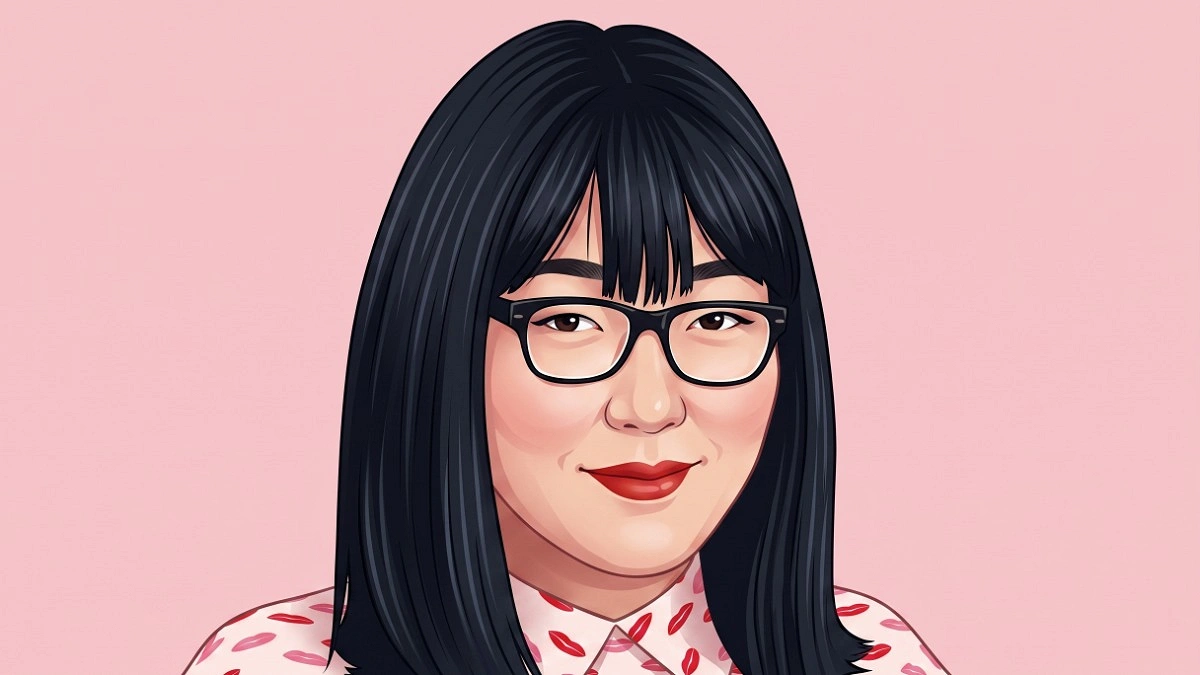
Picture: Generated by AI
There is a particular kind of magic in watching a writer build an entire universe out of a single summer house, a stack of old love letters, and the ordinary ache of growing up. Jenny Han has done exactly that, not once but twice, and in doing so she has become one of the most quietly powerful storytellers in American popular culture.
Born on September 3, 1980, in Richmond, Virginia, to Korean parents, Han grew up as what she has often described as a bookish, dreamy child who found comfort in stories long before she thought to write her own. She attended the Maggie L. Walker Governor's School for Government and International Studies, then went on to the University of North Carolina at Chapel Hill, where she earned a degree in fine arts. From there she moved north, eventually settling in Brooklyn, and completed a Master of Fine Arts in creative writing at The New School in 2006, the same year her debut novel arrived in the world.
That first book, Shug, followed a twelve-year-old girl named Annemarie Wilcox as she stumbled through the confusing terrain of middle school, first crushes, and family strain. It was modest and tender, a quiet start for a writer who would go on to sell millions of copies worldwide. But it already carried the fingerprints of everything Han would become known for: an ear for the small, specific details of adolescence, and an unwillingness to look away from the messiness of feeling everything at once.
It was her next project that turned Han into a household name among readers of young adult fiction. The Summer I Turned Pretty, published by Simon and Schuster, introduced the world to Isabel "Belly" Conklin, a girl who spends every summer at a beach house with her mother's best friend and her two sons, Conrad and Jeremiah. The novel and its two sequels, It's Not Summer Without You and We'll Always Have Summer, became New York Times bestsellers, and the love triangle at their center would go on to occupy think pieces, fan forums, and heated dinner table debates for the better part of two decades.
Han followed that trilogy with the Burn for Burn series, co-written with Siobhan Vivian, before returning fully to her own singular voice with To All the Boys I've Loved Before in 2014. The novel introduced Lara Jean Song Covey, a high schooler whose secret love letters to five past crushes are mysteriously mailed out without her knowledge, setting off a chain of events that is equal parts mortifying and romantic. The book, along with its sequels P.S. I Still Love You and Always and Forever, Lara Jean, cemented Han's reputation as a writer who understood, with uncanny precision, what it felt like to be a teenage girl caught between wanting to be seen and wanting to disappear.
What happened next set Han apart from most novelists working in her genre. Rather than simply handing her books over to Hollywood and stepping back, she became a genuine architect of their screen lives. Netflix adapted the To All the Boys trilogy into a trio of films starring Lana Condor and Noah Centineo, with Han serving as an executive producer on all three. The films became some of the streamer's most rewatched titles, turning Lara Jean into a cultural shorthand for a certain kind of hopeful, embarrassing, deeply sincere love story.
Then, in 2022, Han took an even bigger leap. She became the creator and co showrunner of The Summer I Turned Pretty as a television series for Prime Video, adapting her own trilogy and shepherding its journey from page to screen herself. The show, starring Lola Tung as Belly alongside Christopher Briney and Gavin Casalegno as Conrad and Jeremiah, became a genuine phenomenon, its soundtrack choices analyzed as closely as its plot twists, its finale episodes dominating social media conversation each summer. The series ran for three seasons, concluding in September 2025, with a feature film announced to close out the story properly, since as Han put it in a conversation with Entertainment Weekly, three books lined up naturally with three seasons and felt like the right shape for the story to take.
She has also spoken publicly about staying open to more of that world if the right idea ever arrives. Speaking with Entertainment Weekly, she noted that she never say never, and that if a story is genuinely there, she will be there to tell it, adding that inspiration as a storyteller can strike at any time. It is a small but telling admission from someone who has built an entire creative identity around returning, again and again, to the same beach house, the same characters, the same undiminished feelings.
Han's reach expanded further with XO, Kitty, a spin off series following Lara Jean's younger sister Kitty as she moves to Korea, which Han also created and co showruns. The choice to send a Korean American teenager to boarding school in Seoul allowed Han to explore identity and belonging in a way that felt personal, reflecting her own heritage as the daughter of Korean immigrants raised in the American South. Throughout her career, that duality, being both fully American and shaped by a Korean family history, has quietly threaded itself through her fiction, even when her books are ostensibly just about beach houses and first kisses.
Beyond books and television, Han's ambitions have only grown. Her production company, Jenny Kissed Me, is dedicated to telling coming of age stories at any age, a mission statement that suggests she sees her work not as a genre exercise but as something closer to a lifelong preoccupation. In 2026, a graphic novel adaptation of To All the Boys I've Loved Before was set for release, expanding Lara Jean's story into yet another medium, with Han herself writing the script and collaborating with illustrators to bring the letters to visual life. She told People that she felt genuine excitement about seeing Lara Jean's story exist in this new form, crediting the artists and adaptor who helped shape it.
It would be easy to reduce Han's success to good timing, arriving as she did just as young adult fiction was becoming a dominant cultural force and just as streaming platforms were hungry for source material with built in fandoms. But that explanation undersells what actually makes her work resonate. Han writes about longing in a way that refuses to condescend to her audience. Her teenage characters are allowed to be foolish and wise in the same breath, to make decisions that adults would call mistakes and to be right about their own hearts anyway. She does not rush past heartbreak to get to resolution, and she does not treat first love as something to be outgrown rather than honored.
There is also her willingness to sit inside grief without flinching. Susannah, the mother figure at the emotional center of The Summer I Turned Pretty, is dying across the trilogy, and Han lets that reality shape everything without turning the story maudlin. It is this same instinct, an insistence on emotional honesty over easy comfort, that has made her adaptations feel faithful even as they expand and reshape her original texts for the screen.
Now in her mid-forties, with more than a decade and a half of published work behind her, Han occupies a rare position in publishing and entertainment alike. She is a novelist who became a screenwriter, a screenwriter who became a showrunner, and a showrunner who has never stopped being, at heart, a novelist interested in the interior lives of young women. Her books have been translated into more than thirty languages, reaching readers far beyond the specific American adolescence she often writes about, a testament to how universal that particular ache of first love and first loss really is.
Fans continue to speculate about whether Cousins Beach will ever welcome them back for a fourth chapter, whether Kitty's story will keep expanding, whether Jenny Kissed Me will produce something entirely new that has nothing to do with letters or beach houses at all. Han herself has offered no promises, only the suggestion that she is listening for the next story rather than chasing one. Given her track record so far, it seems unwise to bet against her finding it.
For now, her legacy is already secure. Jenny Han took the small, specific feelings of teenage girlhood, the kind often dismissed as trivial, and proved that they were worth an entire universe. In her hands, a box of old letters became a global phenomenon, and a summer house by the sea became a place millions of readers and viewers now think of as somewhere they, too, once belonged.
