

BMU Specialised Hospital to Shift to Company Model

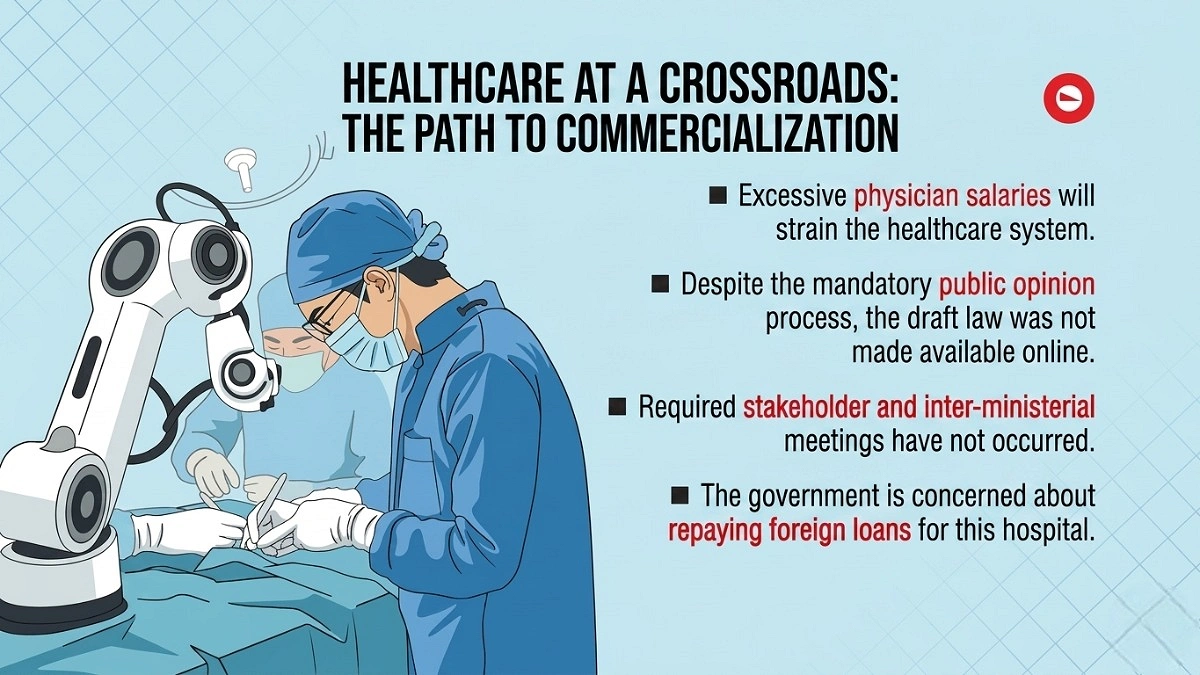
Graphics: Agamir Somoy generated by AI
The Bangladesh Medical University (BMU) Super Specialised Hospital is set to be converted into a company. Doctors, technologists, nurses, and administrative staff will have a different pay structure compared to other healthcare institutions. Experienced physicians will be recruited to provide international standard treatment.
The decision was approved by the Cabinet on June 4, which also endorsed the draft of the “Bangladesh Medical University (Amendment) Act, 2026.”
The government is also concerned about repayment of the foreign loan used to build the hospital. The Health Education and Family Welfare Division has proposed amendments stating that the government will be responsible for repaying the loan.
Earlier, on May 11, the BMU Syndicate meeting amended the hospital constitution, deciding that it would operate under the Companies Act of 1994. Critics say this move could make the hospital overly commercial, potentially increasing treatment costs and putting services beyond the reach of ordinary patients.
The legislative amendment process has also raised concerns over procedural gaps. Normally, draft laws are published on official websites for public consultation and stakeholder feedback, along with inter-ministerial meetings. However, due to time constraints, the draft was not published online, and no stakeholder or inter-ministerial meetings were held.
The Super Specialised Hospital under BMU was originally established to reduce overseas medical expenses and ensure world-class healthcare. Built with Japanese assistance, the 750-bed facility has long suffered from manpower shortages, administrative complications, and unclear management structures, preventing it from becoming fully operational.
The proposed plan envisions running the hospital through a separate company jointly owned by BMU and the Ministry of Health. The government believes this structure will improve efficiency, speed up decision-making, and ensure modern management.
The hospital was intended to provide integrated treatment for complex diseases such as heart disease, cancer, kidney disorders, and neurosurgery under one roof. However, prolonged inactivity has deprived patients of expected services. The future success of the plan will depend on transparency and strict regulatory oversight.
More details coming soon.