
100 Days of the BNP-Led Government
Opposition Sees More Failures Than Successes

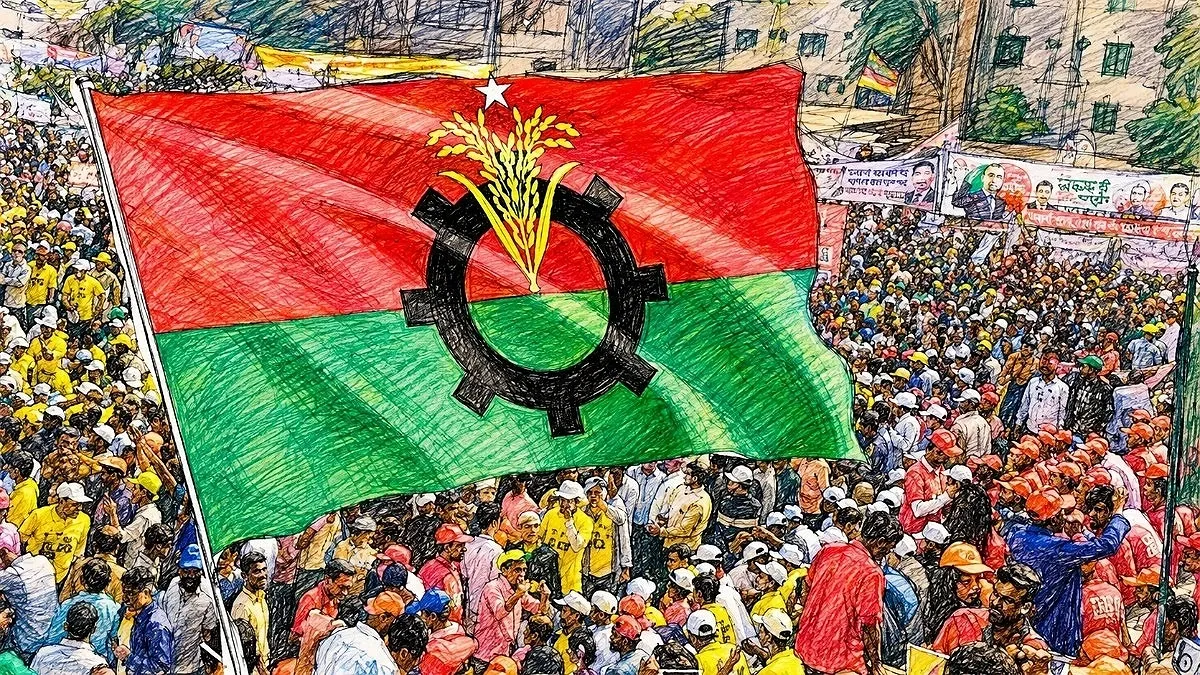
Graphics: Agamir Somoy
The first 100 days of the BNP-led government have drawn mixed reactions across the political arena. While the government has presented the period as the beginning of state reforms, administrative restructuring, and economic stabilization, opposition parties say the government has failed to meet public expectations. According to them, signs of failure have become more visible than any tangible success during this period.
Opposition parties allege that the promises of a new political arrangement and state reforms made after the July uprising have seen no effective progress in implementation. They say frustration has grown in political circles due to the government’s failure to provide a clear roadmap on major issues such as the ‘July Charter’ and a referendum.
According to opposition leaders, the political and administrative reforms people expected after the change in government have not materialized. Instead, they allege that the new administration continues to operate within the old structure.
They have also identified law and order as one of the government’s biggest failures. Opposition parties claim incidents of theft, robbery, land grabbing, political violence, murder, and rape have increased in different parts of the country. They say the government has so far failed to establish effective control to ensure public safety.
Dissatisfaction over the market situation is also growing. Although the government promised to reduce the prices of essential commodities, ordinary people say there has been no relief in the market. Prices of rice, lentils, oil, vegetables, meat, and other essentials remain high. Opposition parties blame poor coordination and weak market monitoring for the situation.
Evaluating the government’s first 100 days, Jamaat-e-Islami Assistant Secretary General Hamidur Rahman Azad told Agamir Somoy, “The scale of the government’s failures outweighs its successes. Although a government’s term lasts five years, if such an assessment emerges within just 100 days, it reflects the government’s shortcomings. The government has failed to meet public expectations and aspirations in any major area.”
He added, “From the beginning, the government has deceived the public over the July Charter issue. At the same time, the deterioration of law and order and attempts to take control of banks have already created concern among people. Overall, we believe the government is ultimately following the same old political path.”
Criticizing the banking sector, he said institutional partisan control is intensifying. According to him, just as there were allegations of political control over banks during the Awami League era, the current government also appears to be following the same path.
NCP Joint Convener Sarwar Tushar said, “The government has retreated from almost every promise it made to the people. Instead of real change, we are witnessing a form of publicity-driven politics. Although the Prime Minister has projected a performance-based political image, it is not enough to ensure the qualitative change people in Bangladesh expected.”
According to Sarwar Tushar, “Political and institutional reforms were the most anticipated issues, but the government has fallen behind in those areas. The human rights situation is also concerning. Arrests are taking place in different areas over criticism of the government. Economically, the country has gone onto the back foot because of wrong policies.”
Regarding the July Charter and referendum, the NCP leader said, “In reality, the BNP will not implement the July Charter; they are only taking a symbolic position. Their biggest responsibility was to implement the referendum verdict, but instead they are moving in a different direction. This is a major betrayal of the people.”
He added, “From the beginning, the government adopted positions that forced opposition parties into criticism. Opposition parties did not want to oppose the government from day one. But the government’s stance on the July Charter and referendum effectively amounts to rejecting the public mandate.”
Islami Andolan Bangladesh Joint Secretary General and Dhaka North President Principal Hafez Maulana Sheikh Fazle Bari Masud said he sees very little positive to highlight from the government’s first 100 days. According to him, the deterioration of law and order and growing insecurity among people are more visible.
He said, “People are becoming frustrated as incidents such as the rape and murder of Ramisha remain without justice. People do not feel much difference from the previous situation. This is creating fears that the government may also be following the old path.”
He added, “This government came to power with huge expectations. If this government also fails, it will be extremely unfortunate for the country. Although some positive initiatives have been mentioned, people have yet to see real benefits from them. Commodity prices also remain beyond the reach of ordinary people.”
JAGPA spokesperson Rashed Pradhan told Agamir Somoy, “The completion of the government’s first 100 days means its honeymoon period is over. While Prime Minister Tarique Rahman may have achieved some personal successes during this period, listing the government’s overall failures would take a long time.”
According to him, “The current economic and social situation, deterioration of law and order, looting, and incidents of rape have increased public concern. The expectations people had from the BNP government in a democratic Bangladesh after the fall of fascist Sheikh Hasina have not been fulfilled.”
He also said, “Behind the burden of symbolic welfare cards, fears of a silent famine are emerging in the future. This has created anxiety among the country, the nation, and ordinary people.”
Political analysts say the government came to power amid enormous expectations and emotions, which also increased public pressure for quick results. As a result, criticism during the evaluation of the first 100 days has naturally become more intense. They say the government’s biggest challenge now will be to demonstrate visible progress in line with its promised reforms and public expectations.
Political analyst Professor Dr. Akram Hossain said, “Given the political reality and public expectations under which the government came to power, people expected to see visible changes very quickly. But the 100-day evaluation shows there has still been no clear progress on many important promises. Public expectations regarding state reforms, market control, and law and order have particularly not been met. However, the government still has an opportunity to improve the situation through effective initiatives.”
