
Eid Travel Pressure Hits North Hard, South and East Stays Smooth

Collected Photo
Eid journeys from Dhaka towards the northern and north-western regions of the country saw severe suffering this year. Passengers using the Dhaka-Mymensingh highway also faced similar hardship, comparable to those in northern routes. However, travelers heading towards the south-eastern region experienced comparatively smooth journeys. Unlike usual times, the Dhaka-Chattogram highway and the western end of the Jamuna Bridge remained largely free from major traffic congestion.
The seven-day Eid holiday is still ongoing. The government holiday that began on Monday will end on Sunday. Working people are expected to return to work from Monday. The pressure of return journeys has not yet started, although questions remain over whether the fatigue of the homebound journey has eased.
During the Eid break, many people send some family members home in advance. Still, intense travel pressure builds up in the two days before Eid. This extended holiday saw nearly one crore people leave the capital. The country’s strained public transport system absorbed this pressure, revealing a dual picture of the national highway network. Eid-ul-Azha also creates a different travel pattern compared to other festivals, as highways face two-way pressure: millions leaving Dhaka on one side and thousands of cattle-laden trucks entering the city on the other. This exceeds the carrying capacity of the road network.
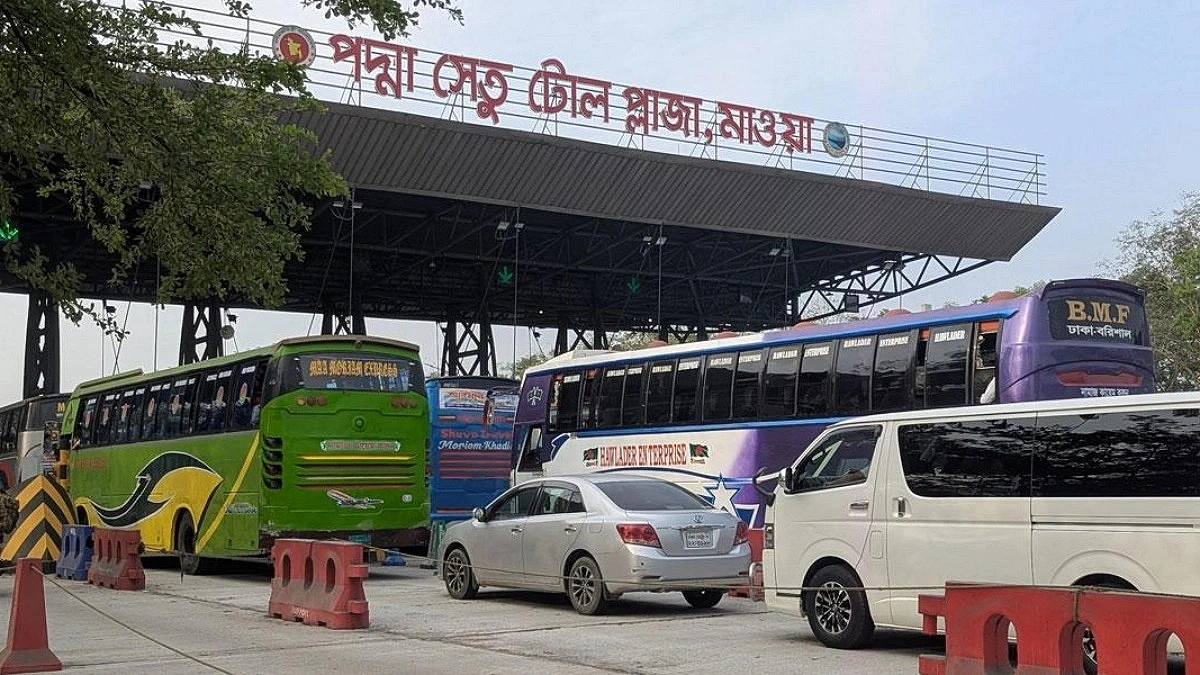
Several of the 94 high-risk points identified by the Highway Police experienced intermittent severe traffic congestion in the three days before Eid. However, the Dhaka-Chattogram route and the Dhaka-Mawa-Padma Bridge highway showed an exception, where travel remained relatively smooth and comfortable.
Sources from Agamir Somoy district correspondents, the Roads and Highways Department, and Highway Police said the most severe disruption occurred on the Dhaka–Tangail–Jamuna Bridge highway. Heavy traffic congestion stretched from the eastern toll plaza of the Jamuna Bridge to Rabna Bypass and Pakulla in Tangail, covering around 20 to 25 kilometers. Passengers suffered extreme hardship as vehicles remained stuck for hours.
Severe congestion also developed on the Dhaka-Mymensingh highway in the Bhogra and Chandana Chowrasta areas of Gazipur. Waterlogging caused by rainfall significantly slowed vehicle movement. Massive crowds gathered at Chandra Tri-Mohona intersection, a key entry point to the northern region, and at Nabinagar after garment factory workers were released simultaneously. Several kilometers of traffic congestion were also observed in these areas.
Transport experts and Highway Police identified five major reasons behind the increased suffering on the roads. These include two-way pressure from cattle-laden trucks and passenger buses, ongoing development projects and potholes, unexpected rainfall and waterlogging, breakdowns of unfit vehicles, and the presence of cattle markets and indiscriminate passenger pickup along highways.
They said that in the days leading up to Eid, nearly one crore people left Dhaka, while hundreds of cattle-laden trucks entered the capital from different regions. This two-way flow exceeded highway capacity. At the same time, ongoing construction work on the Ashulia Elevated Expressway and the four-lane expansion of the Dhaka–Sylhet highway narrowed road space in many areas, preventing smooth traffic flow.
Unexpected rainfall also accompanied the Eid journey. Heavy rain fell in different parts of the country just before Eid. Waterlogging in parts of Gazipur’s industrial zones and sections of highways brought traffic movement to a near standstill. Unfit vehicles also remained a persistent problem. Several cattle trucks and old buses broke down on the Jamuna Bridge link road and on the bridge itself, creating long queues of stranded vehicles.
In addition, cattle markets set up along the edges of highways and buses picking up passengers outside designated terminals disrupted traffic flow further.
However, unlike previous years when the western side of the Jamuna Bridge and the Hatikumrul intersection in Sirajganj were known as a ‘corridor of suffering’, this year the situation was different. The newly constructed Hatikumrul flyover and interchange were fully operational, allowing vehicles heading north after crossing the bridge to move without obstruction.
Similarly, on the Dhaka-Chattogram highway, the deployment of five additional toll booths at the Daudkandi Meghna-Gomti Bridge toll plaza prevented the formation of long traffic jams.
