


More Grain, Less Nutrition: The hidden health risk
- Picture of unsafe food in GED assessment

Collected Photo
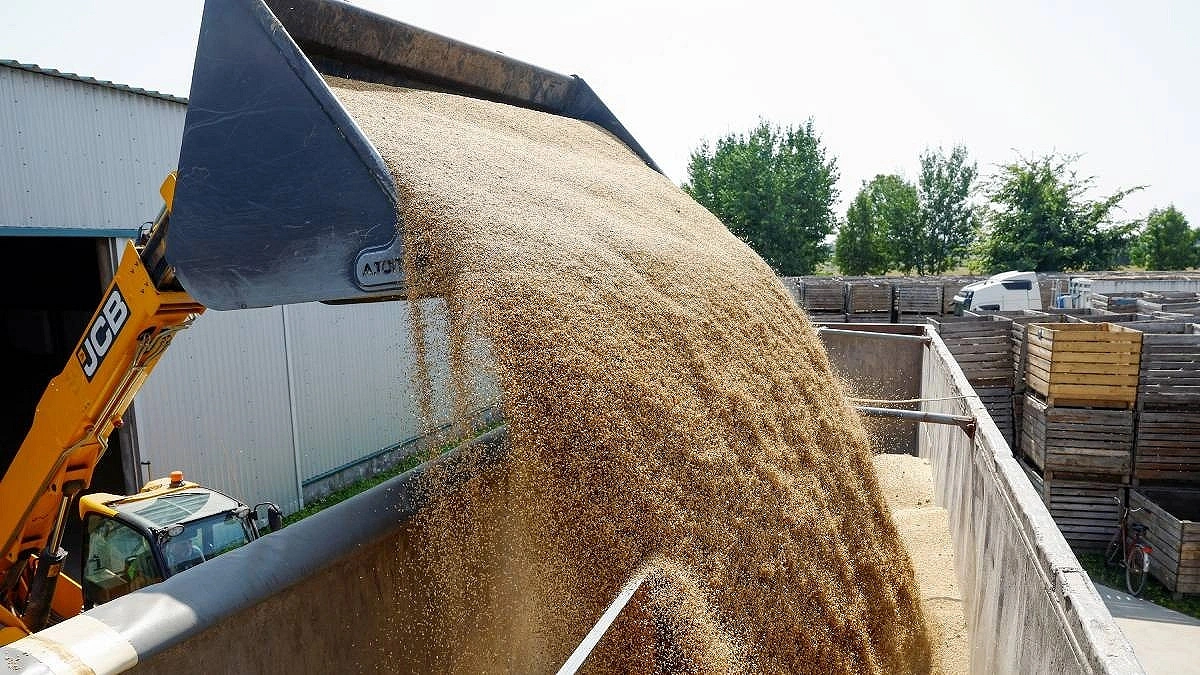
Fields filled with green crops. New rice in the farmer's granary. Stores overflowing with food grains. But does that food provide the true essence of life? Or is it unknowingly introducing deadly diseases into the body? Despite increased production in the country, the necessary nutrition is not reaching the plate. Bangladesh is creating new records in production.
Yet, behind this apparent abundance lies a grave crisis in the country's food supply chain. Despite good production, a terrifying picture of unsafe food has emerged in an evaluation by the General Economics Division (GED) of the government's Planning Commission. These issues have been highlighted in the Five-Year Strategic Framework.
The GED evaluation states that while food production in the country is increasing, nutrition is decreasing. Consequently, 1 crore 55 lakh (15.5 million) people are suffering from acute food insecurity. Additionally, 3.5 crore (35 million) people are enduring chronic food insecurity. Among children under five, 24% are stunted and 12.9% are wasted.
Furthermore, 25.8% of women of reproductive age suffer from anaemia. Although Bangladesh achieved near self-sufficiency in rice production by producing 4 crore 19 lakh 20 thousand tons (41.92 million tons) of food grains in the 2023-24 fiscal year, it also secured a place among the world's top three rice-producing countries.
GED Member (Secretary) Dr. Manjur Hossain told Agamir Somoy that food insecurity is not uniformly distributed everywhere. In this regard, the districts most affected by food insecurity are in coastal areas, riverine char lands, haor areas, and hill tracts. Additionally, unsafe food is widespread in slum areas. The food security crisis the country faces is primarily due to issues in food distribution, lack of accessibility, dietary habits, and governance challenges. The Framework considers food production in agriculture holistically, encompassing the entire process from farm to family dining table.
The GED said that rice contributes 70% of the total calorie intake for people across all income groups, including the highest earners. This proves that dietary diversity has not kept pace with income growth. Among women aged 15-49, 60% have a Vitamin A intake below the recommended level. Among reproductive-age women, 65% have insufficient iron intake. Among children under five, 40% have inadequate zinc intake. These are structural characteristics of a food system that has succeeded in producing sufficient calories but failed to produce adequate nutritional quality.
There are significant failures in targeting within the current social safety net system. Between 30-40% of the benefits from major protection programs reach families who are not poor. Furthermore, food price volatility exacerbates this failure in reaching the target group. During the Monga (lean season) period, prices increased by 8 to 12% above the annual average. Sectoral forecasts also indicate that food prices have continued to rise year after year, maintaining pressure on wage-dependent families. Real agricultural wages have been declining compared to paddy prices since 2020.
Dr. Mohammad Golam Mostafa, Member (Public Health & Nutrition) of the Bangladesh Food Safety Authority, told Agamir Somoy, "It is our responsibility to oversee the production stage. Pesticides and insecticides must be used for food production, but they are not being used in moderation. Farmers are using excessive pesticides. Additionally, there are guidelines stating that harvesting must be done seven days or after a specified time limit following pesticide application. But our farmers are not adhering to that. As a result, these chemicals enter the human body and can create serious health risks."
We do not oversee nutrition. There are other government institutions for that. They must be made to function effectively,' added Golam Mostafa.
The GED further said that public food distribution systems must be continued, as they are one of the primary tools for managing food security in Bangladesh. The programs under this include Open Market Sales (OMS), Vulnerable Group Development (VGD), Vulnerable Group Feeding (VGF), Food Friendly Program (FFP), and employment-based food assistance. The OMS program—which sells subsidized rice and wheat flour at fixed prices through government-approved dealers—proved to be the most effective tool during the inflation crisis of 2022-24. At its peak during that time, it covered 1 crore 22 lakh (12.2 million) families.
Regarding the Family Card, the GED stated that on March 10 of this year, the government launched the Family Card by integrating 99 programs under 25 ministries. Registered in the name of the female head of the household, it serves as a platform for implementing PFDS (Public Food Distribution System) reforms. This Family Card will be used for food security and nutrition-related efforts.
Why is food becoming unsafe? Investigations reveal that unsafe food production in the country is driven by excessive greed for profit, a lack of awareness, and lax enforcement by regulatory agencies. At the agricultural and farm levels, there is excessive use of pesticides, insecticides, and antibiotics. Additionally, there is indiscriminate use of pesticides on crop fields and antibiotics in poultry, fish, and livestock.
Although many stakeholders—from producers and farmers to consumers—lack adequate knowledge and awareness regarding safe food production and the associated long-term health risks. The agencies involved in oversight, including the food safety authority, face various constraints, including manpower shortages, preventing them from conducting regular monitoring. Furthermore, driven by the desire for higher profits, a segment of unscrupulous traders are mixing harmful chemicals, formalin, and adulterated ingredients into food products.
The GED stated that the regulatory framework for food safety underwent significant reforms with the enactment of the Safe Food Act 2013 and the establishment of the Bangladesh Food Safety Authority (BFSA). While the legal framework exists, the capacity to enforce it is lacking. With approximately 500 inspectors spread across the country and hundreds of thousands of food businesses, systematic food safety assurance across the entire supply chain is not possible with the current workforce.
Concerns in the country's food environment include adulteration, excessive pesticide residues in fresh produce, heavy metal contamination in processed foods, and microbial contamination at the retail and restaurant levels. These represent failures in consumer protection and, simultaneously, failures in the export market. The rate of rejections of shrimp and fish exports to the European Union is directly linked to food safety issues.
New initiatives to keep food safe: The Framework proposes the establishment of a Food and Drug Control Authority (FDCA). This institutional reform will integrate food safety and drug regulatory functions under a single, sufficiently empowered agency. It is deemed necessary to bridge the gap between the mandate of the Safe Food Act and the actual operational effectiveness of the BFSA. The FDCA will ensure coordination between the DGDA (Directorate General of Drug Administration) and the BFSA to address food safety risks such as heavy metal contamination and pesticide residues.
However, to empower the FDCA as a law enforcement authority to increase surveillance over food business entities, a new parliamentary act or an amendment to the Safe Food Act 2013 is required.
Additionally, under the FDCA, 1,200 trained inspectors will be recruited annually, with a target of 2,000 inspectors by fiscal year 2031. A national database of food businesses will be created. Beyond this, by 2031, a well-equipped network of divisional food safety laboratories will be established in three divisional cities, and rapid testing units will be set up in 32 priority districts. Coordination for ensuring the safety of exported food will also be undertaken.


