


Nepal flood kills 579, asks for technical help

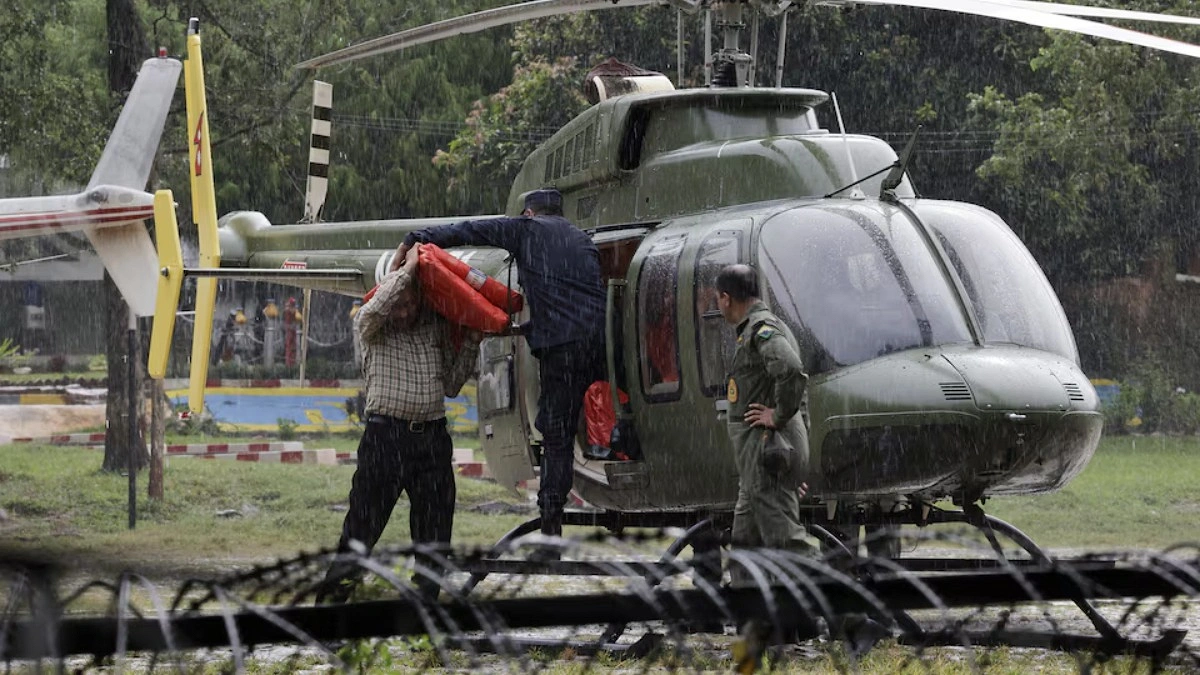
Photo: REUTERS
Nepal’s Foreign Minister Shisir Khanal said the nation requires specialized, technical foreign assistance rather than general search-and-rescue teams in the devastating flood that struck the Himalayan border of Nepal and China.
The disaster began on 26 August when a glacier collapse unleashed a massive torrent of rock, ice, mud, and debris through the Himalayan mountain river systems.
According to National Disaster Risk Reduction and Management Authority (NDRRMA), the flood killed 579 people across Nepal and China’s Tibet, while rescue teams still search for more than 2,000 unaccounted-for individuals.
The floodwaters tore through areas near the Chinese border, leveling entire towns and damaging hydropower plants. The Kathmandu Post reported that India, China, the United States, Britain, Japan, South Korea, Sri Lanka, and Bangladesh all offered to send their search-and-rescue teams to assist in the operations.
However, Nepal’s Foreign Ministry declined these offers, saying Kathmandu could manage the initial rescue efforts independently. Khanal supported the stance on Friday, explaining that Nepali rescuers are handling the general search-and-rescue tasks. Commenting on the decision, Khanal said, “We think there is no need for repetition in this.”
Instead of general search teams, Khanal emphasized that Kathmandu needs foreign expertise to solve complex technical challenges, such as recovering survivors from flooded tunnels, restoring transportation and communication services where the flood destroyed bridges, identifying dead bodies, conducting DNA testing, and preserving corpses for longer periods.
He said, “We have already made requests for such specialised services and technical assistance in areas where we don’t have enough expertise and technical knowhow.”
The country, wedged between giant neighbors India and China, has requested bailey bridges from both nations to quickly restore transport and communications in the disaster zone, where the flood destroyed about two dozen bridges.
Meanwhile, rescue officials in Nepal noted that the floodwaters washed many bodies down to Chitwan and Nawalparasi in the plains, roughly 100 kilometers (60 miles) from ground zero. The sudden influx has severely strained local facilities.
Khanal warned, “More bodies are likely to be recovered from these places where hospitals have been overwhelmed with dead bodies and lack refrigerators to store them.”
The catastrophic deluge caused extensive damage to school buildings, hospitals, hydroelectric plants, roads, bridges, and other vital infrastructure. Nepalese officials anticipate that Nepal will require substantial foreign support for future reconstruction and rehabilitation work.
Reports indicate that the flood may have trapped several workers inside the tunnels of hydroelectric plants. Because Nepal is relatively new to tunnel technology, the country urgently needs specialized equipment and technical knowledge to execute successful tunnel rescue operations.
Source: Reuters and BBC (adapted)


