


When Tehran does not fall, what to expect out of the war?

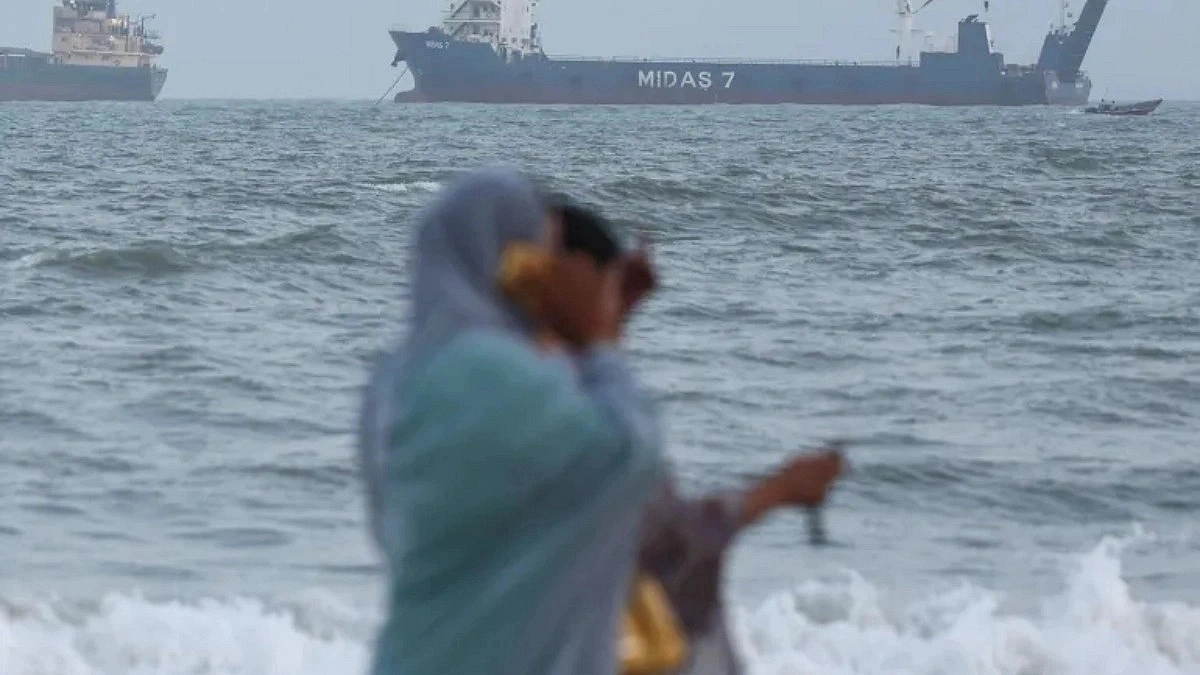
Ships sailing in the Strait of Hormuz near Bandar Abbas, Iran. Photo: Reuters
The war between Iran and the United States and Israel has now entered into its sixth month, a span of time when analysts believe that the likelihood of Tehran's current government falling or the US securing a definitive victory is quite low. Rather, it is anticipated that the conflict will be prolonged, and both sides will remain under pressure.
The war began on February 28th with a surprise attack on Iran by Israel and the United States. At that time, the US administration hoped that increasing military and economic pressure on Iran would trigger significant change in Tehran. Six months later, it has become clear that this plan has not succeeded. Many countries are now preparing for a prolonged conflict and its ramifications.
Oil-dependent Arab economies have also suffered a major blow due to the war. Following Tehran's attacks on oil tankers and the US blockade of Iranian ports, shipping traffic through the Strait of Hormuz has nearly ceased. This has disrupted the supply of oil and gas.
Meanwhile, the Middle East has seen its highest level of US military presence in years. The intensity of the war decreased somewhat after a memorandum of understanding was signed between Washington and Tehran in June. However, there are no signs of the conflict ending completely. Consequently, uncertainty persists across the region.
A prolonged war could also exacerbate Saudi Arabia's old conflict with the Houthi rebels in Yemen. Concurrently, efforts by India and China to expand their influence have not ceased. China's 'Belt and Road' Initiative has already established a strong position in the Middle East and North Africa.
Overall, the region is changing rapidly. The notion that security is guaranteed solely by having old military alliances with external powers is also weakening.
Recently, a defense agreement was signed between Turkey, Pakistan, and Saudi Arabia in Mecca. Analysts believe that more such military alliances could emerge in the future.
Sanam Vakil, Director of the Middle East and North Africa Programme at Chatham House, said, "The war has only accelerated pre-existing trends. The Gulf countries were already trying to diversify their economies."
She added that these countries were already moving towards strengthening defense ties with other nations and enhancing their own military capabilities, alongside the US security guarantee.
On the other hand, H.A. Hellyer, an analyst at the Royal United Services Institute, believes that Israel is still trying to expand its influence across the entire region.
He pointed out: "There is no possibility of the Tehran government falling in the next six months." In his view, if the economic pressure continues at the same pace, it could create a major crisis in Iran in a few years. However, this would take years, not just a few months.
The effective closure of the Strait of Hormuz, along with attacks on various cities across the Middle East, is also disrupting the economic plans of the Gulf countries. These nations had been trying to diversify their economies using oil revenue and present themselves as safe destinations for foreign investors.
Since the US and Israeli strikes on Iran began in February, the supply of oil, petroleum products, and liquefied natural gas has repeatedly faced major disruptions.
The Bab el-Mandeb Strait, already risky due to Houthi attacks from Yemen, became even more dangerous in July. At that time, the Iran-aligned Houthis declared a naval blockade against Saudi Arabia.
John Sfakianakis, chief economist at the Gulf Research Center, said that while oil prices have risen, it is not entirely a relief for the Gulf countries. Because export routes are obstructed, capitalizing on this additional revenue has become difficult.
The war has driven up oil prices, but inflation has also increased, further adding to the economic pressure on the Gulf states. At the same time, they are facing mounting pressure to boost defense spending.
Currently, most Arab countries not directly involved in the conflict are trying to adapt to the situation. Their primary goal has become minimizing the damage caused by the ongoing instability.
Source: Al Jazeera


