
Is the Trump administration divided on the Iran-Lebanon issue?

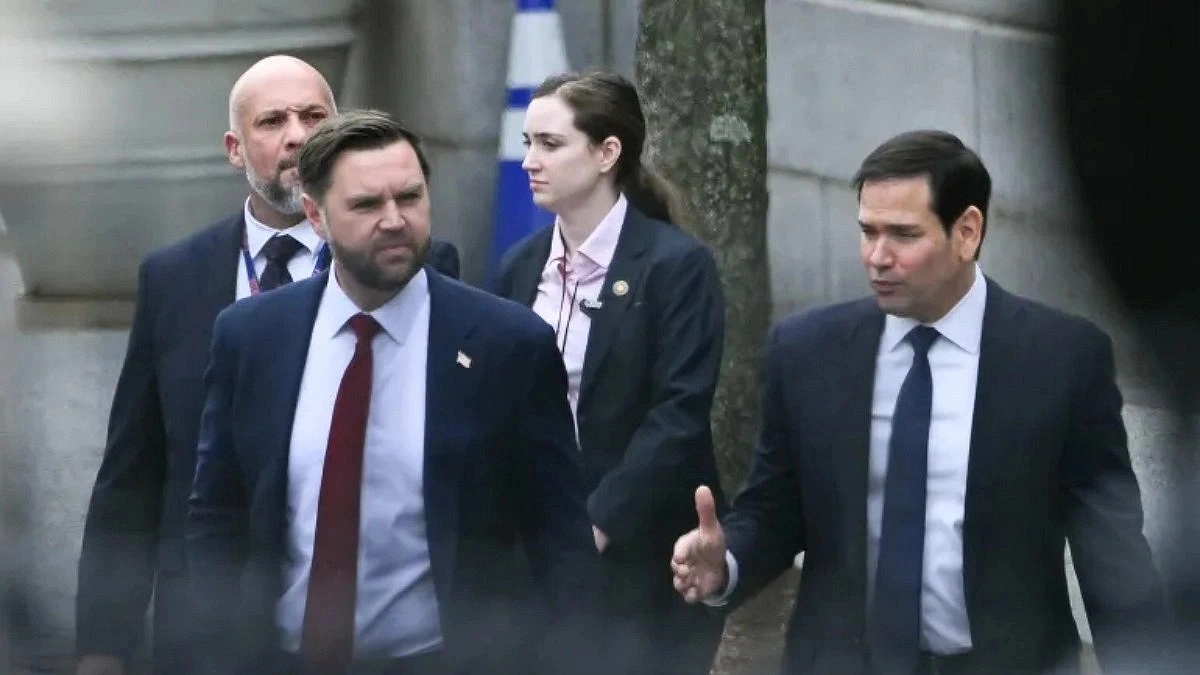
US Vice President JD Vance and Secretary of State Marco Rubio are seen leaving the Eisenhower Executive Office Building, located near the White House, together. Photo: Collected.
President Donald Trump has come under fire from pro-Israel politicians and critics following the signing of a memorandum of understanding with Iran. The agreement, which is intended to bring an end to the months-long conflict, has drawn sharp reactions from those who view the move with skepticism.
Vice President JD Vance, who led the negotiations with Iran in Switzerland, has now taken to the media to mount a strong public relations campaign in favor of the deal. Vance has welcomed the memorandum, describing it as good progress and stating that it lays a very solid foundation for a final, comprehensive agreement. At the same time, he has strongly criticized the open opposition voiced by Israeli officials regarding the accord. Addressing the Israelis directly, Vance said Israel has a population of only nine million and reminded them that any national security crisis cannot be resolved solely through killing or prolonging war.
On the other side, Secretary of State Marco Rubio has adopted a stance completely at odds with Vance's position. Rubio has refrained from any public criticism of Israel and has instead directed his anger toward the Iranian government. When journalists pressed him on Vance's critical comments toward Israel, Rubio avoided the question and chose instead to detail a recent Hezbollah attack at an Israeli checkpoint earlier in the week.
The ideological gap between Vance and Rubio on foreign policy is not new and has been evident for some time. Despite this apparent divergence between the two top officials, the White House has outright denied that any rift exists. In an official statement, the administration maintained that there is no division between Vance and Rubio concerning the issues of Iran and Lebanon. (Source: Al Jazeera)
