
Bangladeshi Student Wins Rosatom's Arctic Trip

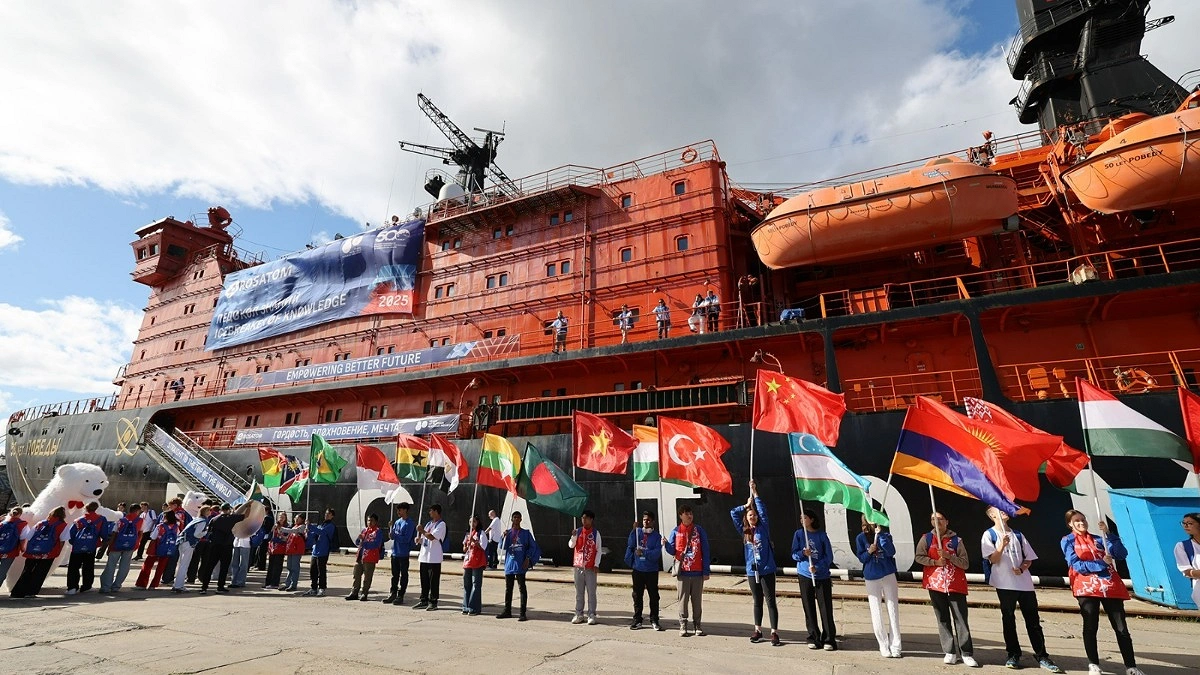
Photo: Agamir Somoy
Rosatom has selected a Bangladeshi student for a once-in-a-lifetime expedition to the North Pole. Md. Malekul Salehin Prottoy, a Class X student of Rajshahi Cadet College, earned the opportunity after winning the seventh edition of the international educational project Icebreaker of Knowledge, organized by Russia's State Nuclear Energy Corporation. The expedition will take place in August.
Prottoy secured the prestigious spot after competing against nearly 5,000 students aged 14 to 16 from 22 countries, including Bangladesh. Organizers announced the winners on June 23 at the Museum of Atomic Energy in Moscow.
As part of the award, Prottoy will join an Arctic expedition in August aboard the nuclear-powered icebreaker 50 Let Pobedy, the world's largest nuclear icebreaker.
The competition featured three stages; a science quiz focused on nuclear energy, Arctic exploration, and emerging technologies; a series of expert-led educational webinars; and a final presentation on "How Nuclear Technologies Are Changing the World Today." An international jury comprising experts from the fields of science, education, the nuclear industry, and Arctic research evaluated the finalists.
Expressing his excitement, Prottoy said he was still finding it difficult to believe that he had won the opportunity.
“Taking part in such an expedition is not just a journey, but a chance to step beyond the familiar and see how vast the world of science can be. It is a truly inspiring experience, one that I want to turn into motivation for the future,” he said.
The expedition will bring together outstanding students from around the world to explore the Arctic, learn about nuclear technologies, and gain firsthand experience of Rosatom's nuclear icebreaker fleet. Participants will take part in lectures, workshops, scientific experiments, and interactive sessions with leading experts.
Through the Icebreaker of Knowledge project, Rosatom aims to promote STEM education, nurture young scientific talent, encourage careers in science and engineering, and highlight the role of nuclear technology in Arctic development and international scientific cooperation.
