
west Bengal Election
9.1 million people remain disenfranchised

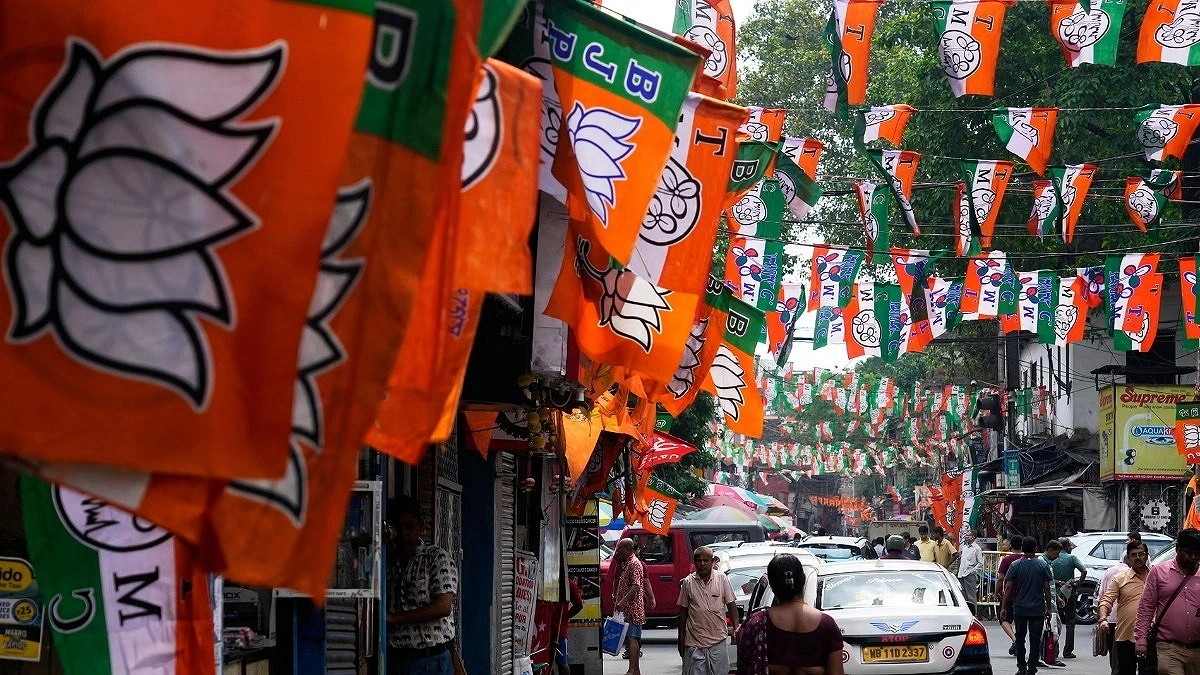
West Bengal in election mode
Election fervor grips West Bengal, with today marking the final day before the first phase of voting. However, nearly 9.1 million people in the state still remain outside the voter list. This accounts for almost 12 percent of the state’s total 76 million voters.
The disenfranchisement of such a large number of people has triggered a wave of criticism across India. Of the 9.1 million excluded, authorities have identified 6 million as deceased. The remaining nearly 3 million lie at the heart of the main controversy. Critics describe the voter list revision as a ‘bloodless political massacre’ and an attempt to systematically deprive minorities of their voting rights. Although excluded voters filed objections and took the matter to court, they ultimately remain without voting rights.
The process, known as the ‘Special Intensive Revision’ (SIR), is being carried out across various states and union territories in India. The government of Narendra Modi has described it as an initiative to prevent ‘infiltrators’.
The central BJP government’s move to ‘purify’ the voter list has sparked intense outrage. Authorities prepared a new voter list at an unusually rapid pace ahead of the West Bengal elections.
The BJP, led by Prime Minister Modi, is attempting to unseat the Trinamool Congress, which has held power in the state for 15 years. Although the BJP has expanded its dominance across most Indian states, it has yet to establish a strong foothold in West Bengal. The state’s large Muslim population remains distrustful of the party’s Hindutva-oriented political stance.
According to the 2011 census, around 25 million Muslims live in West Bengal, accounting for nearly 27 percent of the state’s total population.
An analysis of the names removed from the voter list shows that Muslims have been disproportionately affected by the process, particularly in districts where they form a larger share of the population. In Murshidabad, 460,000 names were excluded; in North 24 Parganas, 330,000; and in Malda, 240,000.
Many Muslim families in Gobindapur, Gobra, and Balki villages said authorities struck off their names despite having the required documents. Others are struggling to provide proof of residence, name changes after marriage, spelling discrepancies, or evidence of relocation to another state.
Sagarika Ghose, a Trinamool Congress MP, told The Guardian, “What has happened in Bengal is a constitutional crime. It is a crime against the people of India and the people of Bengal.”
In her view, “This will be marked as a stain in the history of post-independence India. One person, one vote—this is a fundamental right guaranteed by the Constitution. No matter how poor or vulnerable you are, you have the right to vote. But that right has been taken away.”
According to experts and various organizations, Muslims and other religious minorities in West Bengal have been disproportionately removed from the voter list, reinforcing allegations of deliberate targeting.
Sabir Ahmed, head of the research organization Sabar Institute, said, “According to our research, religion is the single biggest differentiating factor. The scale at which Muslims have been affected is not proportionate.”
Critics have challenged the SIR process in court, describing it as an attempt by the BJP to influence the election outcome in its favor. They argue that the Election Commission, which oversees the process, can no longer be considered a neutral institution.
Former Chief Election Commissioner of India S.Y. Quraishi also expressed concern over the process. He said, “The SIR is completely unnecessary; it has been designed to harass. Administratively, it is a disaster, and the intent is not honest.”
He added, “It took us 30 years to achieve 99 percent accuracy. They want to surpass that in three months—what is the reason for such haste?”
Questions have also arisen over the use of a new AI-assisted algorithm. In attempting to identify so-called ‘logical inconsistencies’, it has required millions of people to prove their citizenship, including Nobel laureate Amartya Sen.
Experts say the algorithm has failed to account for cultural realities—such as variations in Bengali name spellings or minor inconsistencies in family records. It has even flagged young parents or large numbers of siblings as ‘irregularities’.
Economist Parakala Prabhakar warned, “This is akin to destroying the citizenship of minorities—a bloodless political massacre.”
