Why Pakistan Suddenly Attacked Afghanistan

Collected Photo
Pakistan has taken on a mediating role to help end the Iran-US war. Its efforts have shown early success, with Islamabad’s diplomatic initiative securing a temporary ceasefire. It continues to push for a lasting end to the conflict. At first glance, Pakistan appears to be aligned with peace. However, a permanent agreement has yet to materialize.
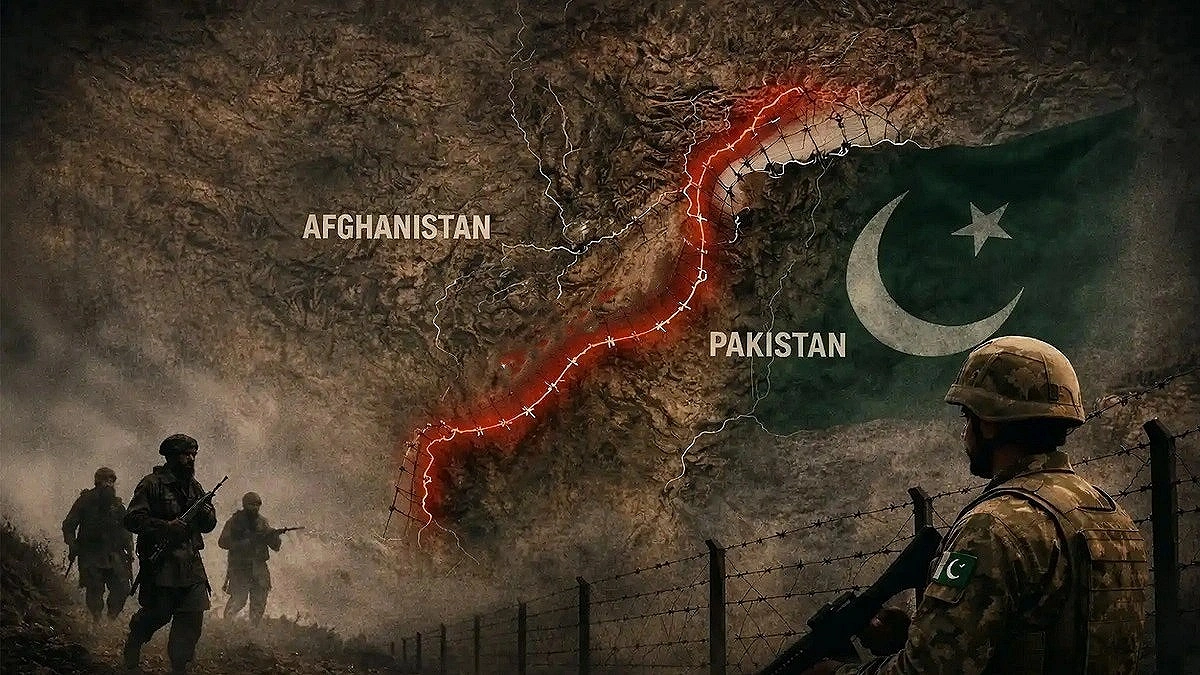
Even before the Iran-US conflict escalated, a Pakistan-Afghanistan war was already underway. Fragile ceasefires have repeatedly collapsed. In recent weeks, the situation appeared relatively stable as Islamabad focused on mediating the Iran war. However, on Monday, Afghanistan claimed that mortars and missiles fired from Pakistan struck a university and civilian homes, resulting in casualties.
The timing of the sudden attack, carried out without any clear provocation, has raised questions. After the collapse of Iran-US peace talks, is Pakistan now seeking a way to ‘step back’ from escalating regional tensions?
Last week, Pakistan failed to facilitate a second round of negotiations between the United States and Iran. US President Donald Trump warned of “bombing” if no agreement is reached. Meanwhile, Tehran cautioned that any attack on its energy infrastructure would trigger “fourfold retaliation” against Gulf countries.
In this situation, Pakistan finds itself in a difficult position. If war resumes, Gulf countries including Saudi Arabia could become involved. Before the ceasefire, Pakistan’s close ally Saudi Arabia had already been targeted multiple times in Iranian attacks.
Why the sudden attack in Afghanistan?
Pakistan and Saudi Arabia have a NATO-style mutual defense agreement, under which an attack on one is considered an attack on both. As a result, if Saudi Arabia comes under renewed attack, it could be forced to provide military support to Islamabad despite Pakistan’s economic constraints. This month alone, Pakistan reportedly deployed around 13,000 troops and 12–18 fighter jets to Saudi Arabia under the agreement.
If war restarts, Pakistan would face not only military pressure but also diplomatic strain, as it may be forced to take a position against Iran—one of its key regional partners. A prolonged conflict could also trigger political instability at home.
Analysts note that Iran is a Shia-majority country, and any conflict with it could generate internal reactions in Pakistan, where nearly 20% of the population follows Shia Islam.
Experts believe these pressures may explain Pakistan’s escalation of tensions with Afghanistan.
Not a new pattern
Pakistan has previously intensified border tensions with Afghanistan during periods of Middle Eastern conflict. On February 27, Pakistan carried out airstrikes on Kabul and other cities—just a day before US and Israeli strikes on Iran. The Taliban responded strongly, and both countries effectively entered a state of open conflict.
Pakistan has long accused Afghanistan of sheltering Tehreek-e-Taliban Pakistan (TTP) militants. After a suicide attack on February 6 at a mosque in Islamabad killed more than 30 people, Pakistan waited several weeks before launching strikes in Afghanistan on February 28.
Analysts suggest that by engaging in conflict with militarily weaker Afghanistan, Pakistan may be signaling that it is already occupied with its own security challenges—potentially creating justification for avoiding deeper involvement elsewhere, including direct support for Saudi Arabia.
Breakdown of mediation efforts
By late March, China mediated a new ceasefire between Afghanistan and Pakistan. Around the same time, Pakistan became active in mediating between the United States and Iran.
Initial progress appeared promising. In early April, Pakistan helped bring a US delegation led by Vice President JD Vance and Iranian officials into discussions. This briefly improved Pakistan’s international image.
However, the process later collapsed. Trust between Iran and Pakistan deteriorated, and Islamabad failed to bridge key demands between Washington and Tehran. As a result, a second round of talks in Islamabad was cancelled at the last minute.
Tensions between the United States and Iran have since escalated further. With renewed fears of war, analysts say Pakistan appears to have returned to its earlier strategic approach.
On Monday, Afghanistan claimed that the Sayyid Jamaluddin Afghan University in Kunar province was partially destroyed, along with nearby civilian homes. It reported around 10 deaths and more than 80 injuries. Pakistan, however, denied targeting the university and called the allegation ‘completely false’.
The exact cause of the escalation remains unclear. Afghan media outlet Tolo News reported that Taliban forces launched retaliatory attacks after a child was injured in Pakistani firing in the Spin Boldak area on Sunday.
Overall, the situation has raised a broader question: is Pakistan using Afghanistan as a ‘manageable conflict zone’ to absorb external geopolitical pressure?