

No school, life in a tent, yet the exam bell rings in Gaza

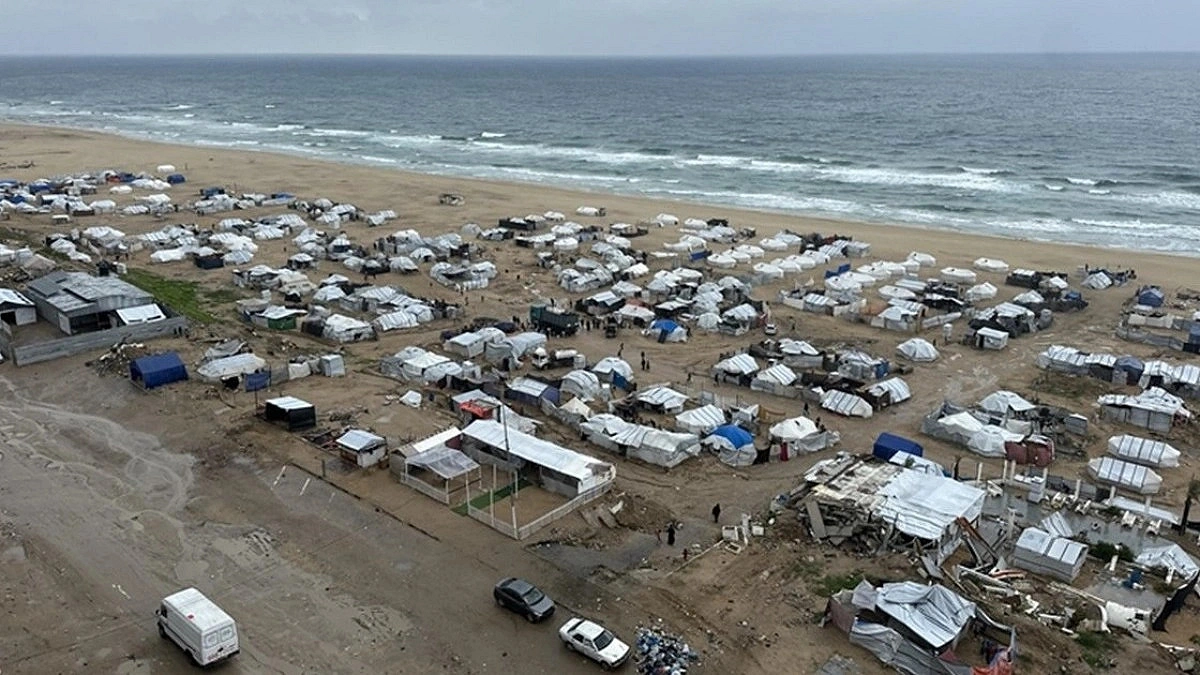
Collected Photo
The morning light had not yet fully broken. Dana Shabat, an 18-year-old young woman, began walking through the rows of tents in Deir al-Balah. She carried no books, no schoolbag on her shoulders—only a mobile phone and a fierce determination to hold on to her future. She had to walk for an hour to reach a café, where she would sit for the most important examination of her life. For this young woman from Gaza, the "Tawjihi" (high school) exam is not just a test; it is her last hope to move towards a future beyond the darkness of war.
Dana has always excelled in her studies. She dreams of studying abroad on a scholarship. Whether to pursue medicine, economics, or business—she has not yet decided. But she wants to leave behind Gaza's uncertainty and build a new life one day. (Source: Al Jazeera)
That path, however, is far from easy. Her life has been turned upside down by more than two and a half years of Israeli attacks. Last May, her mother Lina was killed in an airstrike. Their home in Beit Hanoun, northern Gaza, now lies in near ruins. So she now lives with her father and siblings in a tent in Deir al-Balah, central Gaza.
Countless schools in Gaza have been destroyed by the war, and many have been turned into shelters. As a result, students have had to continue their studies online, and the exams are being conducted in the same way. Every day, Dana wakes up at dawn, walks for an hour to reach the café, and relies on electricity and internet access there to take her exam on her mobile phone.
This year, about 37,000 students in Gaza are sitting for this examination. The Tawjihi exams started on June 20 and will end on July 8. For the first time since the war began, the exams are being coordinated with the administration in the West Bank. But there is one difference—in the West Bank, students sit on school benches, while in Gaza, they sit at café tables.
Dana's father, Muhanna Shabat, was a chemistry teacher before the war. Despite the family's many needs, he managed to arrange the cost of a private tutor for his daughter's education. He said, "We once had a beautiful home and a stable life. Now we have lost everything and live in a tent. But we have not let our daughters' education stop."
When Dana returns home, her younger sisters embrace her. Neighbours also ask about her exam. Then she prepares for the next day. To charge her phone, she has to send it to a separate centre. Power outages are now a daily companion. Yet Dana has not stopped dreaming.
She wants to become a leader, to work for society, and to learn new languages. Most of all, she wants her mother to look down from above and say—that war could not take everything away; her daughter's dream is still alive.
Translated by: Rubaiya Jesmin, Kolkata Correspondent

