Venezuela Earthquake
Two Children Rescued Alive from Rubble After 85 Hours

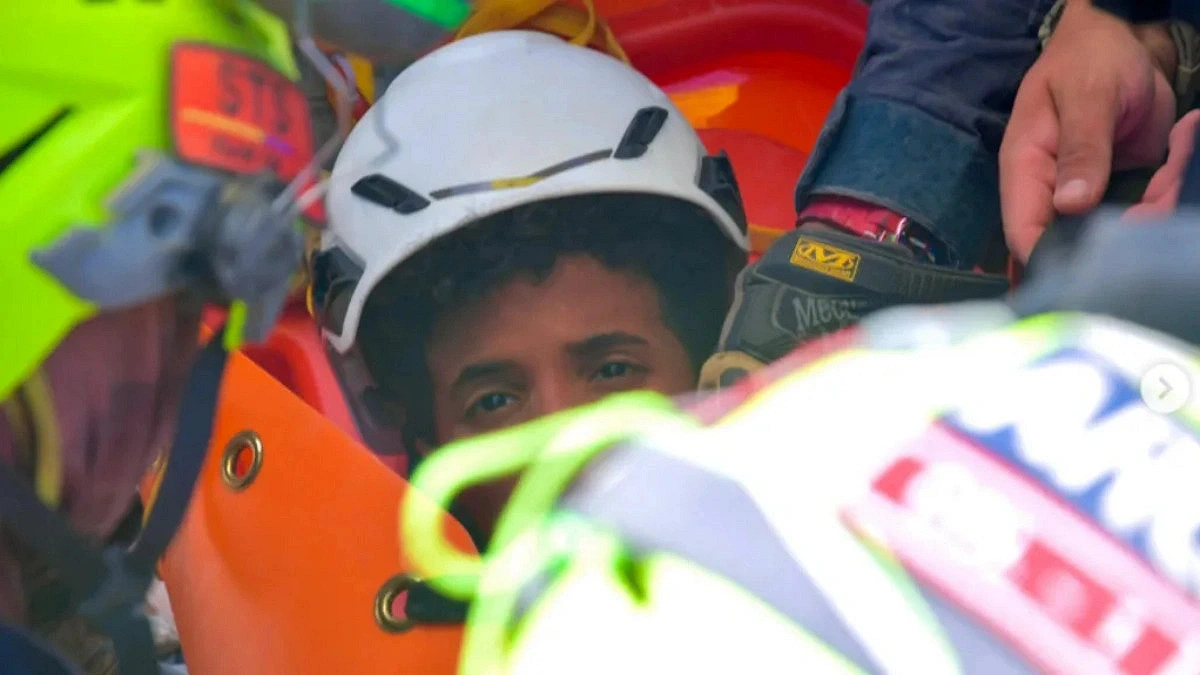
Photo courtesy: BBC
Venezuela lies devastated by a catastrophic earthquake. Rubble and debris are everywhere. After being trapped under the debris for more than three days, two 11-year-old children have been pulled out alive. Locals are hailing this as a major success for rescue workers.
Following two powerful earthquakes—magnitudes 7.2 and 7.5—that struck on Wednesday, the death toll in the country has surpassed 1,450. Thousands more remain missing.
Eighty-five hours after the quake, Moisés was rescued alive. A video shared on social media shows rescue workers pulling him out from beneath the rubble. His eyes were covered to protect them from sunlight. As he was brought out, everyone present applauded and cheered the rescue team.
A few hours later, interim President Delcy Rodríguez announced that another 11-year-old child had been found alive. She shared a video on social media showing rescue workers lowering the child on a stretcher from the top of a massive pile of rubble. She commented, "At this moment, every life is a symbol of hope for Venezuela."
Colombia's National Disaster Risk Management Agency reported that Moisés had been trapped about three metres deep under the rubble. It took the rescue team nearly six hours of extremely delicate and high-risk work to free him. According to international news agency Reuters, during the operation, a rescue worker communicated via wireless that Moisés had been found close to his mother and sister—but the other two had died.
The two powerful earthquakes, striking just 39 seconds apart on Wednesday, caused hundreds of buildings to collapse. Many people are still trapped under the debris. Countless others are desperately trying to remove rubble with their bare hands to find their loved ones. Many have reported hearing human voices from beneath the wreckage, but without heavy machinery to move the concrete, they are helplessly waiting for rescue teams.
Rescue workers have said there is still hope of finding more survivors. Those who have managed to access food and water beneath the rubble are more likely to be alive.
The coastal region of La Guaira has been the hardest hit. Emergency rescue operations are being conducted in the town of Caraballeda in this area.
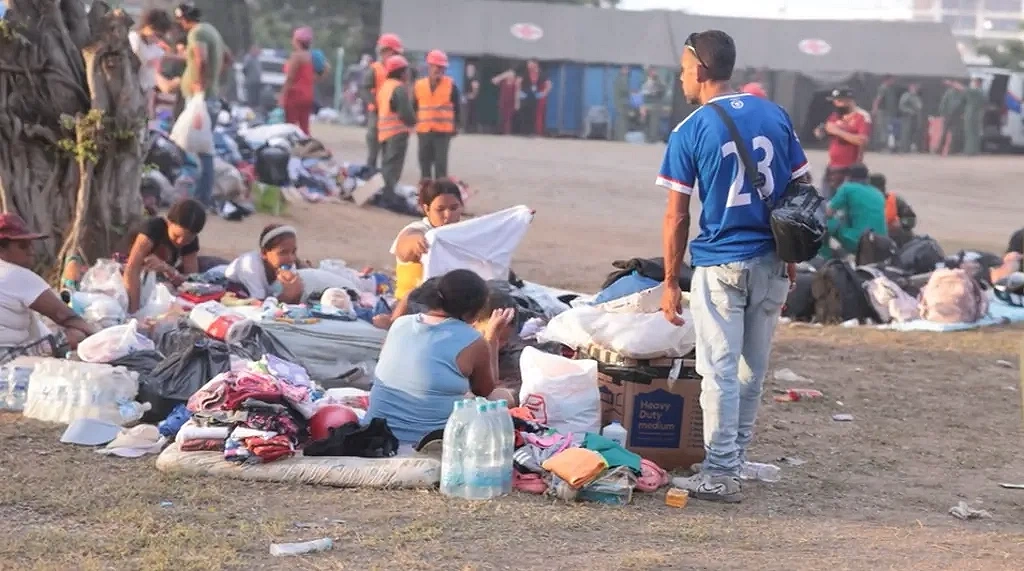
Thousands of people have taken temporary shelter in their own vehicles or in open spaces such as airports and golf courses for safety. The golf course in Caraballeda has become the main hub for emergency medical care, relief distribution, and rescue operations.
Many Venezuelan citizens have gathered at the Caraballeda golf course. However, many of the affected people have complained that the government's rescue and relief efforts are too slow relative to the needs. In the hardest-hit areas, including Caribe and Tanaguarenas, the work of clearing debris has not even begun in many places.
Meanwhile, rescue teams from various countries, including Mexico, Spain, Qatar, the United States, and the United Kingdom, have arrived in Venezuela to assist with the rescue operations.
Tom Fletcher, the UN Humanitarian Coordinator, has said that 39 search and rescue teams from different countries around the world are working. Each team has between 50 and 100 members. He stated that around 2,000 rescue workers, 111 sniffer dogs, medical teams, and advanced small drones are being used in efforts to locate people trapped under the rubble. Source: BBC