
Uncertainty Remains Over the Caretaker Government System

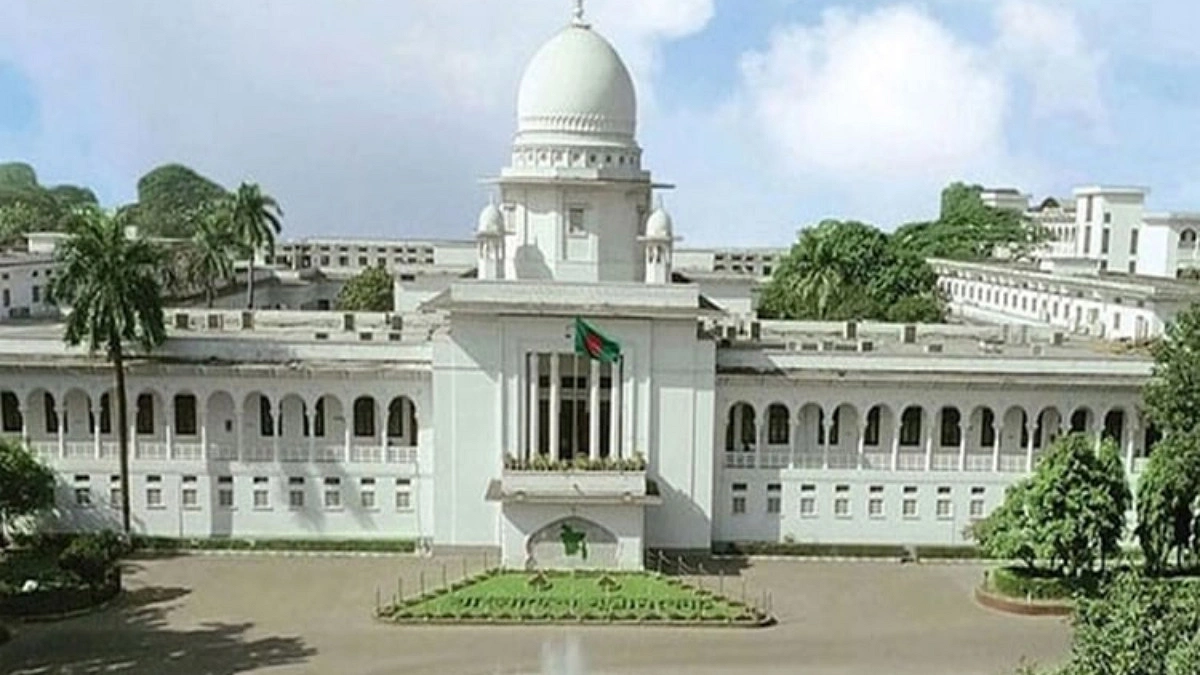
Representational Image. File.
Following the directive of the Supreme Court, the caretaker government system has been reinstated in Bangladesh. However, there remains ambiguity regarding how this government will be formed in the future and what its structure will be. This is because the case related to the Fifteenth Amendment, which abolished the caretaker government, is still pending before the Appellate Division. Additionally, the proposed new framework in the July National Charter and the divergent stances of political parties have further complicated the issue.
After the fall of the Awami League government on August 5, 2024, in the face of a mass uprising, several parties, including BNP and Jamaat-e-Islami, filed petitions for a review of the verdict that had abolished the Thirteenth Amendment. Following lengthy hearings, on November 30, 2025, the Appellate Division ruled that the constitutional provisions related to the caretaker government are again in effect. As a result, this system has been revived. The court also clarified that these provisions would be considered for application in view of the upcoming elections.
According to the Thirteenth Amendment, a tiered alternative structure was specified for appointing the 'Chief Adviser' in the caretaker government system. The options were: first, the most recently retired Chief Justice; second, the immediately preceding retired Chief Justice; third, the most recently retired judge of the Appellate Division; fourth, the immediately preceding retired judge of the Appellate Division; fifth, a qualified citizen considered by the President; and sixth, the President himself. However, even though the caretaker government system has been revived, the matter is not entirely settled. The final hearing on the Fifteenth Amendment, through which this system was removed from the constitution, has not yet concluded.
In December 2024, the High Court declared several clauses of the Fifteenth Amendment, including the provision abolishing the caretaker government, illegal. However, it did not strike down the entire amendment. Subsequently, an appeal was filed seeking to overturn the entire amendment, and the matter is currently under consideration by the Supreme Court.
BNP's Law Affairs Secretary, Barrister Badruddoza Badal, believes, "A final decision on the definitive structure of the caretaker government will be possible only after the final verdict on this case (regarding the Fifteenth Amendment)." He commented that until the court delivers its ruling, it is not possible for anyone to say with certainty what form the future caretaker government will take.
However, Supreme Court senior lawyer Dr. Sharif Bhuiyan opined, "The BNP holds an absolute majority in parliament. If they wish, they can resolve the matter by passing a law in parliament itself. In that case, the court case could effectively lose its significance."
Meanwhile, the BNP has advocated for a non-partisan caretaker government in its 31-point reform proposal and election manifesto. The party wants the judiciary and the presidency to remain outside this process. The future caretaker government may not necessarily follow the old structure.
The July National Charter also reflects a consensus among political parties on reinstating the caretaker government. However, several alternatives have been outlined regarding the formation process. In the first step, a committee comprising representatives of political parties will attempt to select the Chief Adviser. If that process fails, the Chief Adviser will be chosen through consensus from names proposed by various parties. Should that also fail, there is a proposal for a larger committee, involving two judges each from the Appellate Division and the High Court Division, to resolve it through a vote. The July Charter further states that if all these processes fail, the provisions of the Thirteenth Amendment will be followed—but without allowing the President to become the head of the caretaker government.
Meanwhile, regarding the alternative of involving justices in this process through voting, the BNP and seven other political parties have submitted a Note of Dissent. They want the decision-making authority to rest with Parliament in this matter. In this context, lawyer Dr. Sharif Bhuiyan opined, "Here lies the big question. Ultimately, if Parliament itself elects the Chief Adviser, the majority party will have the opportunity to choose its own preferred person. This could raise questions about the caretaker government's neutrality."
In Bangladesh's political history, the caretaker government system played a significant role for a long time. It originated amidst disputes and distrust over elections held under partisan governments. Several national parliamentary elections conducted under caretaker governments were considered relatively acceptable.
On May 10, 2011, the Appellate Division of the Supreme Court, in a ruling on a writ petition, declared the caretaker government system illegal. On June 30 of the same year, the then Awami League government abolished it through the Fifteenth Amendment. Subsequently, three national elections were held in 2014, 2018, and 2024 under partisan governments. Among these, the BNP, Jamaat-e-Islami, and other major opposition parties did not participate in the 2014 and 2024 elections. These elections sparked widespread controversy both domestically and internationally. The opposition parties' allegation was that free and impartial elections are not possible under a partisan government.
Throughout the Awami League government's tenure, opposition parties, including the BNP, continued movements pressing this demand. However, the government did not concede. Ultimately, the political landscape shifted after the 2024 mass uprising, and the caretaker government system was reinstated.
Currently, the pressing questions are not just about bringing back the caretaker government, but also about what its structure will be, how the Chief Adviser will be selected, and how a non-partisan and acceptable system can be ensured.
Dr. Badiul Alam Majumdar, secretary of SUJON (Citizens for Good Governance), told Agameer Samoy, "Until the Fifteenth Amendment case pending before the Supreme Court is settled, it is not possible to say what the final framework will be." However, he believes there is still sufficient time to resolve the matter. Additionally, if they wish, members of parliament can take oath as members of the Constitution Reform Commission and directly bring reforms to various issues, including the basic structure.
