Nepal proposes NID card as valid travel document to India

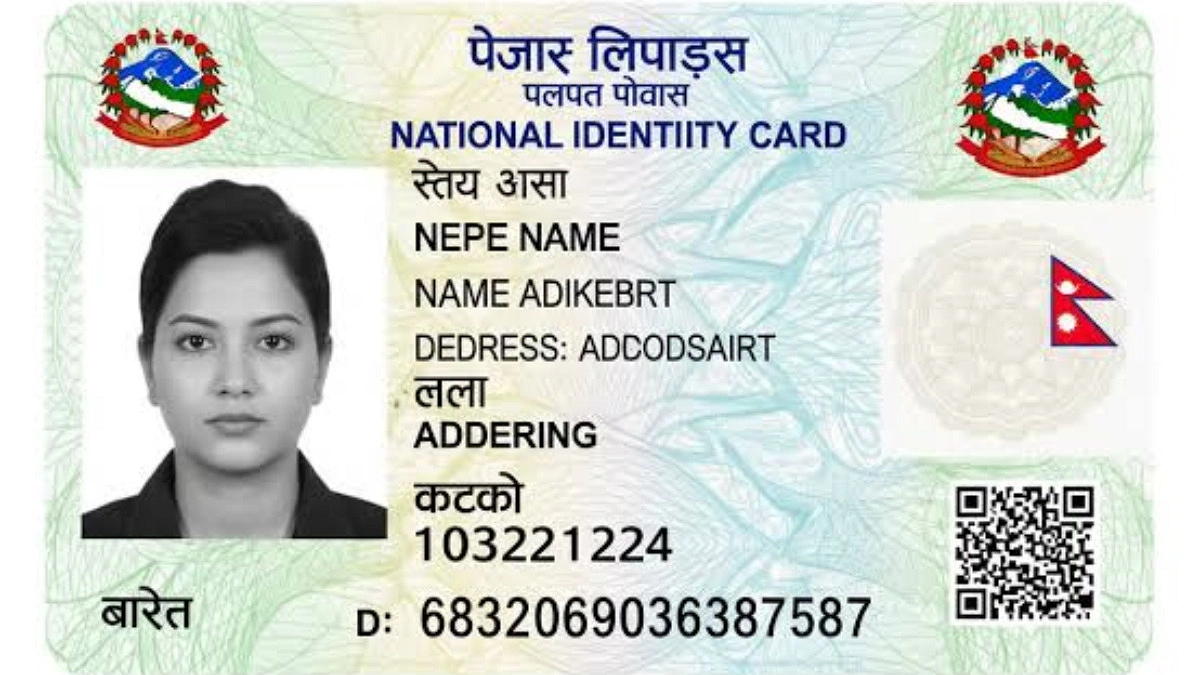
Representational image made by AI. Collected.
Nepal has formally requested India to recognize its National Identity (NID) card as a valid travel document for Nepali citizens crossing into India, potentially adding a third option alongside the existing passport and citizenship certificate. The proposal, currently under consideration by New Delhi, aims to simplify travel and align with Nepal's broader push toward a unified digital identity system.
Currently, Nepali citizens traveling to India—especially by air—must carry either a passport or a citizenship certificate. Similarly, Indian nationals entering Nepal are required to present a passport or an original voter identity card with a photograph. However, as the Nepali government has made the NID card mandatory for accessing a wide range of public services—from banking to land registration—and intends to eventually phase out the citizenship certificate entirely, the Department of Immigration (DoI) has urged India to accept the NID as a recognized cross-border credential.
Ram Chandra Tiwari, Director General of the DoI, confirmed that the proposal has already been forwarded to the Indian side through Nepal's Ministry of Foreign Affairs. Last week, a delegation from the Indian Embassy in Kathmandu held discussions with Tiwari and other senior immigration officials. According to sources, the embassy team responded positively to the request and informed Nepali authorities that the matter had been escalated to New Delhi for further deliberation.
"Our long-term goal is to have a single, secure identity card that replaces the traditional citizenship certificate. The NID is verified, authentic, and technology-friendly," Tiwari explained. "That is precisely why we have asked India to permit its use for both air and land travel."
The NID card incorporates advanced biometric data, including fingerprints, facial images, and iris scans. To date, more than 4.5 million Nepali citizens have received the card, while approximately 20 million have applied. The government first piloted the NID program in 2009 in Panchthar district and among Singha Durbar employees, and it has since become a cornerstone of the country's digital governance strategy.
Although official data combining land and air crossings remains unavailable, the DoI reports that roughly 150,000 Nepalis traveled to India last year. Tiwari noted that recognizing the NID would offer added convenience to citizens who may not have a passport or citizenship certificate readily available at the time of travel.
Beyond the practicalities of documentation, the move has also sparked discussions on border security. Indian security expert and Professor Brahma Chellaney, writing on X, argued that stricter border controls such as fencing or closure are neither feasible nor desirable given the millions of Nepalis living and working in India. Instead, he advocated for "smarter" border management through AI-enabled facial recognition, biometric screening, automated systems, and advanced surveillance technology—measures that would deter criminals and terrorists while keeping the border accessible for legitimate travelers.
Chellaney further emphasized that technology alone cannot guarantee security; he called for enhanced Nepal-India cooperation through joint patrols, intelligence sharing, and updated legal frameworks to facilitate the extradition of fugitives.
If India approves the proposal, the NID card will become the third officially recognized travel document between the two neighbors, marking a significant step in bilateral mobility and digital integration. For now, both governments await New Delhi's formal response.
Source: Kathmandu Post)