
The government is stable, so it is time for the BNP to have a president

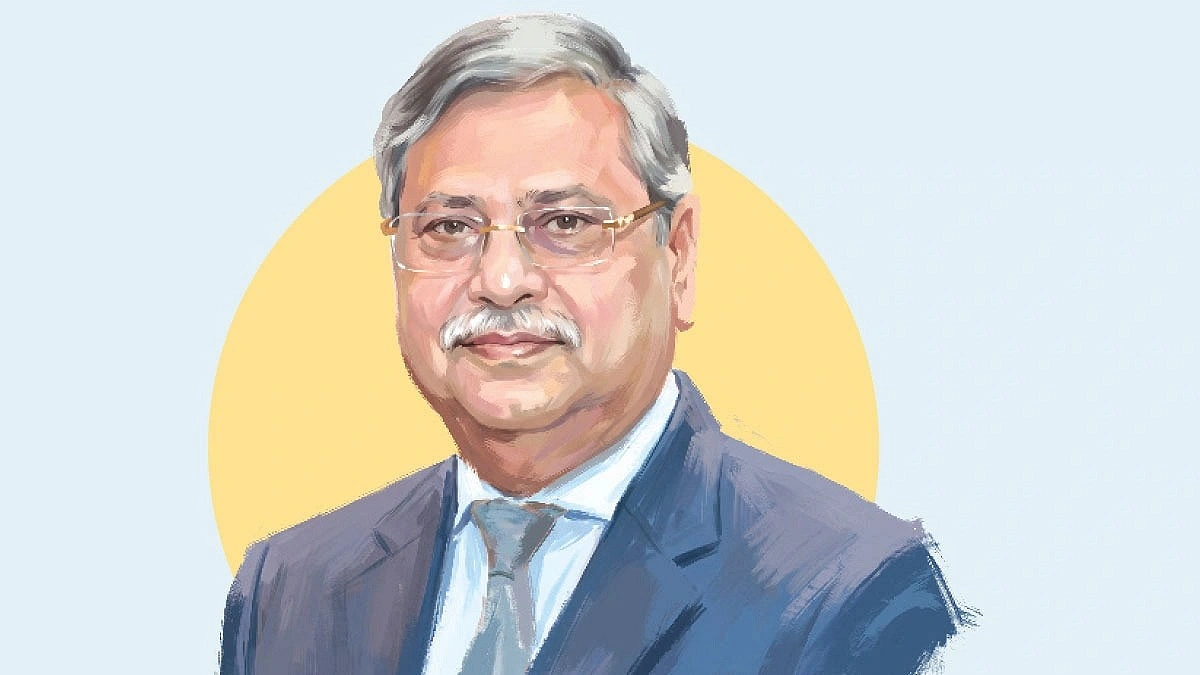
Graphics: Agamir Somoy
After the mass uprising, the BNP stood by the office of the president, not by Mohammad Shahabuddin, in order to avoid a constitutional crisis. Since the mass uprising or revolution led to the departure of almost all those holding constitutional offices in the country, a constitutional vacuum emerged everywhere. There had to be at least one way out of that situation. In that context, it was important to maintain the office of the president for constitutional continuity and constitutional necessity. Besides, following the February 12 election, the office had gained a degree of stability after August 5.
That is why, and out of respect for the office of the president, the BNP stood by it. This does not mean the BNP stood by Mohammad Shahabuddin as an individual. In my opinion, the BNP stood by the office of the president. From the very beginning of the interim government, the BNP wanted an election and an elected democratic government. Since the vacuum would have been greatest at the highest level, if there had been a speaker or someone else in that position, perhaps the situation would have been different.
The way Shahabuddin Chuppu assumed the office of president also generated intense controversy. There was extensive debate over his previous career and his previous activities. There was even controversy surrounding him within the Awami League, whose activities are currently banned. Considering how he had supported authoritarianism and fascism and the position he had taken in favor of authoritarianism and fascism, he was fortunate that the constitutional rules and constitutional immunity attached to the office of the president gave him a significant benefit. That benefit was not received by Shahabuddin Chuppu as an individual. It was received by President Mohammad Shahabuddin.
Compared with the team of the fascist government, his departure has been far more dignified and honorable. At least he was able to resign. Others had to flee, but he did not. It was solely because of the constitutional importance of the office of the president and the need for constitutional continuity during a time of crisis that he did not have to face the same fate as the then head of government or other Awami League leaders.
The BNP government did not provide Mohammad Shahabuddin with any exit. He had been ill, and his illness gradually worsened. Now he wants to leave. The BNP also wanted stability for its government. The government has now achieved a level of stability, and it is time for it to focus on electing a president. Taken together, they want a democratic government and a democratic president. At the same time, Shahabuddin Chuppu also wants to step down because of his illness. The two things have come together, making this the perfect time for both sides. Both sides have accepted it, so Shahabuddin Chuppu has been able to leave, and the BNP has also accepted it. I do not think there is anything else behind this.
However, allegations may still be raised in the future regarding his various controversial activities before becoming president, whether during his time as a judge or while serving at the Anti Corruption Commission. If Hussain Muhammad Ershad could be tried, then former President Shahabuddin Chuppu could also face trial if someone files a complaint. However, under the current Constitution, it is not possible to try him for any actions taken or decisions made while serving as president. According to the existing Constitution, a president of Bangladesh cannot be tried for decisions made while in office.
When it comes to selecting and nominating a new president, the BNP should think very carefully. The BNP’s history of presidential nominations has, in most cases, not been pleasant. In the past, nominations from within the party did not produce favorable outcomes, and nominations from professionals outside the party were also unsuccessful. For that reason, the BNP must give much greater thought to its next presidential nominee. In the past, it has been seen that most individuals who became president through the BNP failed to uphold the party’s dignity, failed to treat the party fairly, or even betrayed the party, with the exception of President Ziaur Rahman.
There are one or two others besides him, but the rest failed to embrace the BNP’s mission and vision. Instead, they acted unfairly toward the party. Professor Dr. A. Q. M. Badruddoza Chowdhury tried to misuse the office of the president. On the other hand, despite being a BNP president, Professor Iajuddin Ahmed failed to do justice to the BNP.
It should be remembered that controversies have arisen over the office of the president at different times because individuals were not selected according to the weight and responsibility of the office, meaning the most suitable person was not appointed as president.
Writer: Political scientist and professor, Department of Political Science, and Director, Center for Advanced Research in Social Sciences, University of Dhaka.
