

Typhoon Maysak, floods kill 7 in China

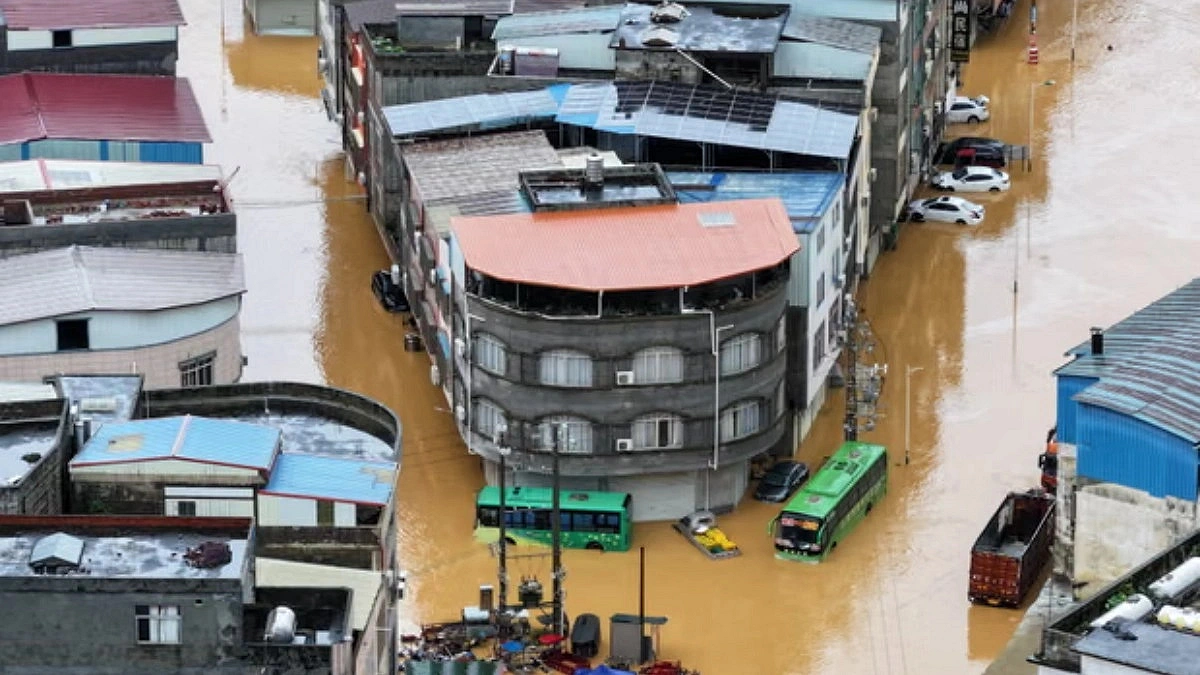
Flooding caused by Typhoon Maysak in Pingshan village, Guangxi province, China. Photo: Reuters
Two people have been killed in Nanning, a city in southern China's Guangxi province, due to Typhoon Maysak, while five others died in northern China amid torrential rainfall.
On Monday, the city's Deputy Mayor, Wei Xiang, announced that a dam collapse triggered by the typhoon submerged Nanning, the capital of the Guangxi region, forcing thousands of people to evacuate to safer ground. Around 55,000 people in Nanning have already been affected by the floods, and 48,000 residents have been moved to safety so far.
China's Ministry of Water Resources stated in a report that water levels at the Guigang hydrological station rose to 42 meters by 12:30 PM.
Video footage from the Fangchenggang area in southern China showed a small car being swept down a street, with water levels reaching the steering wheel of another vehicle, and a man desperately trying to prevent his electric scooter from washing away.
Meanwhile, in Guigang, a city about 170 miles away, floods turned a major road into a literal lake. Vehicles on the road were submerged, and strong currents crashed into homes.
In northern China, heavy rainfall claimed five lives, including two people who died in flash floods in Inner Mongolia on Saturday evening, and three others in Fushun, Liaoning province, on the same day.
Authorities have warned that "extremely heavy rainfall" could worsen the flood situation and disrupt ongoing rescue operations.
According to the state news agency Xinhua, Bavi, which previously hit the US island of Guam, is expected to bring strong winds and heavy rainfall to eastern China starting Thursday.
Chinese meteorologists project heavy downpours over the coming days in regions including Guangxi, Guizhou, and Hunan. More than 150 million people live in these three regions combined, a population larger than that of Russia.
Analysts point out that weather-related risks disrupt billions of dollars in commercial activity every year. Heavy rains flood cities, halt industrial activities, and submerge or wash away crops.
China, the world's second-largest economy, faces a growing threat from extreme weather events, which meteorologists link directly to the climate crisis.
Source: The Guardian

