
Could Myitsone Dam Become Myanmar’s Next Security Threat?

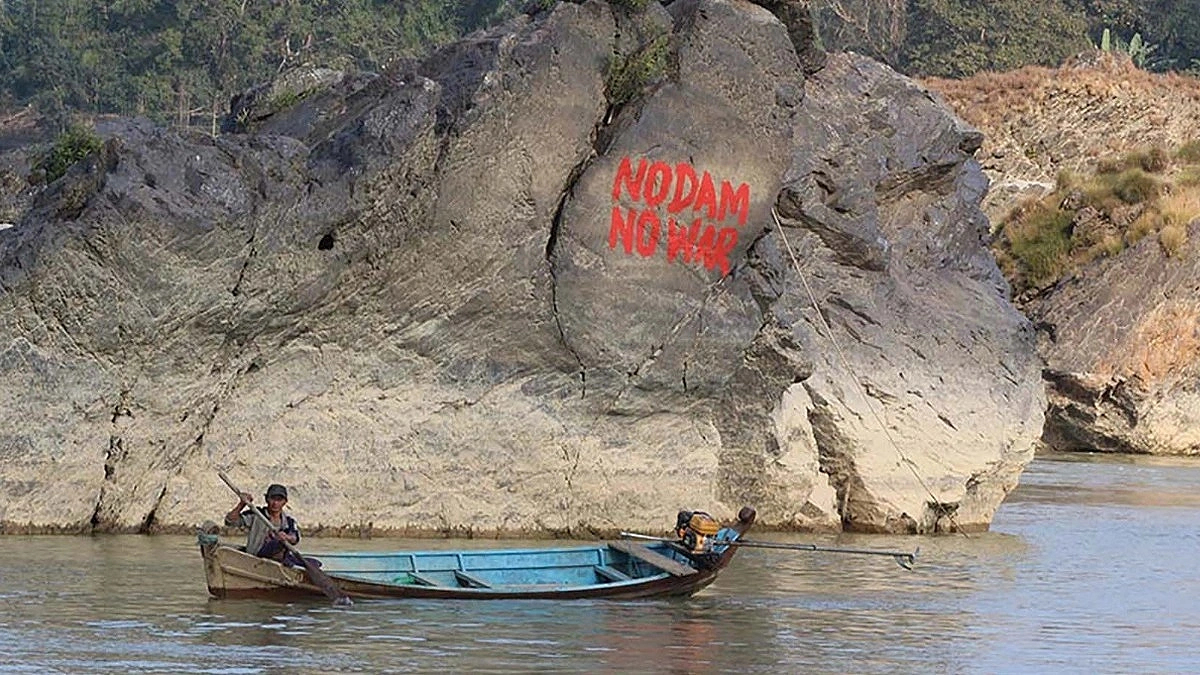
The dam is planned at the confluence of the Mali and N’Mai rivers, approximately 32 kilometers from the capital of Kachin State
Myanmar junta chief Min Aung Hlaing reportedly agreed to revive the long-suspended Myitsone Dam project during his recent visit to China, signaling the possible return of one of the country’s most controversial infrastructure projects despite years of public opposition and an ongoing civil war.
For many observers, the project is more than a hydropower development. Its revival has reignited concerns over the lack of meaningful public consultation, as well as its potential environmental, social, and national security consequences.
Opposition to the Myitsone Dam has long centered on its environmental and cultural impact. Critics warn that the project could displace local communities, submerge ancestral lands, and permanently alter the headwaters of the Irrawaddy River, Myanmar’s most important waterway.
The dam is planned at the confluence of the Mali and N’Mai rivers, about 32 kilometers from Myitkyina, the capital of Kachin State. Designed to generate nearly 6,000 megawatts of electricity, the project is expected to export most of its power to China.
The project was suspended in 2011 after unprecedented nationwide protests prompted then-President Thein Sein to halt construction.
The dam’s location has also raised serious safety concerns. It lies close to the Sagaing Fault, one of Myanmar’s most active earthquake zones. While modern engineering can reduce seismic risks, experts say no large dam can be considered completely safe against a major earthquake.
A catastrophic failure after the reservoir is filled could trigger devastating flooding downstream, threatening the lives and livelihoods of millions of people. As a result, analysts argue that the project represents not only an environmental challenge but also a long-term public safety risk.
Beyond physical hazards, the dam’s strategic significance has become another source of concern. The proposed reservoir could cover an area approaching the size of Singapore, requiring extensive security measures and tightly controlled access.
Given Myanmar’s ongoing political instability, questions remain over who would be responsible for protecting such a critical facility. Some analysts fear China could use the need to safeguard its investment as justification for expanding its long-term security presence in the country, further increasing Beijing’s strategic influence.
According to analysts, if the Myitsone Dam project moves forward, it will represent far more than a hydropower development. It could become a defining test of Myanmar’s sovereignty, national unity, and its ability to determine its own future.
