

Sharks Do Math, Love Jazz, and Have Belly Buttons

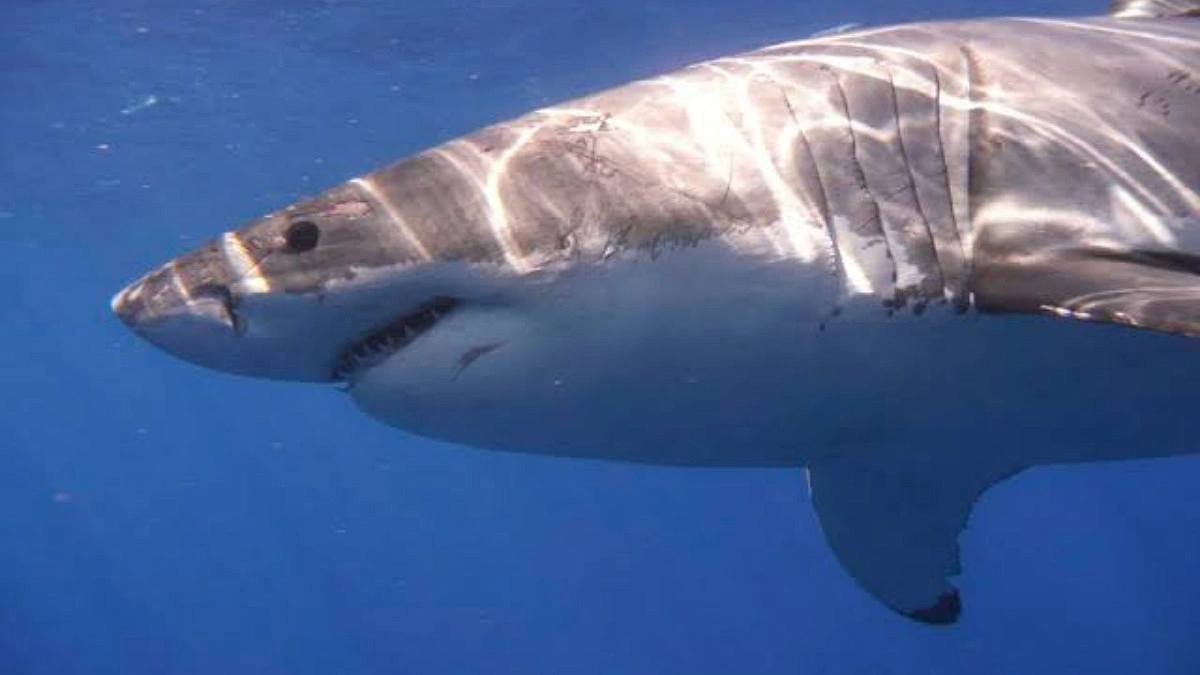
Photo: REUTERS
Sharks, the elite predators of the world’s oceans, possess secrets that challenge their reputation as mindless hunters, proving they are more like humans than many realize.
From a taste for jazz to basic math skills, these ancient creatures have survived for 450 million years - predating trees, the rings of Saturn, and even the North Star.
These survivors have endured all five of Earth’s major mass extinctions, including the “Great Dying,” which wiped out 90 percent of marine life. Today, around 500 species of sharks navigate nearly every corner of the sea, utilizing evolutionary traits developed over hundreds of millions of years.
Math and Music in the Deep
Scientific research indicates that sharks are capable learners. Experiments show that young grey bamboo sharks can remember abstract patterns and shapes for nearly a year. They even perform basic math, distinguishing between different quantities such as three and five.
In a study at Sydney’s Macquarie University, Port Jackson sharks demonstrated a specific preference for jazz music.
Researchers trained them to associate music with food, and while they responded to jazz, they struggled with classical melodies.
“It was obvious that the sharks knew that they had to do something when the classical music was played, but they couldn’t figure out that they had to go to a different location,” said researcher Culum Brown in a press release.
Family Ties and Womb Wars
The biological reality of sharks often mirrors mammalian life. Species like bull sharks and hammerheads possess belly buttons - scars left behind by umbilical cords after birth. Conversely, sand tiger sharks face a brutal start through “intrauterine cannibalism.”
In this process, the strongest embryo consumes its siblings within the womb until only one remains. Other species, such as the spiny dogfish, endure pregnancies lasting up to two years before giving birth to live pups.
The Social Life of Predators
Sharks are far from solitary loners. Grey reef sharks maintain friendships within specific “cliques” for as long as four years. Lemon sharks learn vital survival skills, such as finding food, by interacting with their peers.
Even great whites show social bonds; researchers tracked two sharks, named Simon and Jekyll, as they traveled 3,730 miles together without separating.
Super-Senses and Skin Armor
A shark’s skin consists of tiny “teeth” called denticles, which reduce drag and allow for efficient swimming. Historically, craftsmen used this rough material - known as “shagreen” - to smooth violins or create furniture.
Beyond the five basic senses, sharks utilize three “super-senses”:
- Lateral Lines: Fluid-filled pores that detect vibrations in the water.
- Pit Organs: Sensors that identify low-frequency electrical fields from prey.
- Ampullae of Lorenzini: Pores on the head that sense electrical impulses from muscle contractions - including a beating heart - and help the shark navigate using the Earth’s magnetic field.
While humans and sharks diverged from a common ancestor roughly 440 million years ago, their evolutionary journey remains a testament to resilience and complexity.
Source: BBC (adapted)

