

How Was a 150 Million Year Old Dinosaur Found in Thailand?

Collected Photo
Dinosaurs. The very name brings to mind a gigantic creature. They ruled the Earth millions of years ago. But about 66 million years ago, these creatures became extinct in a catastrophic event. Even so, their story has not ended, because fossils hidden beneath the ground continue to reveal new chapters of history.
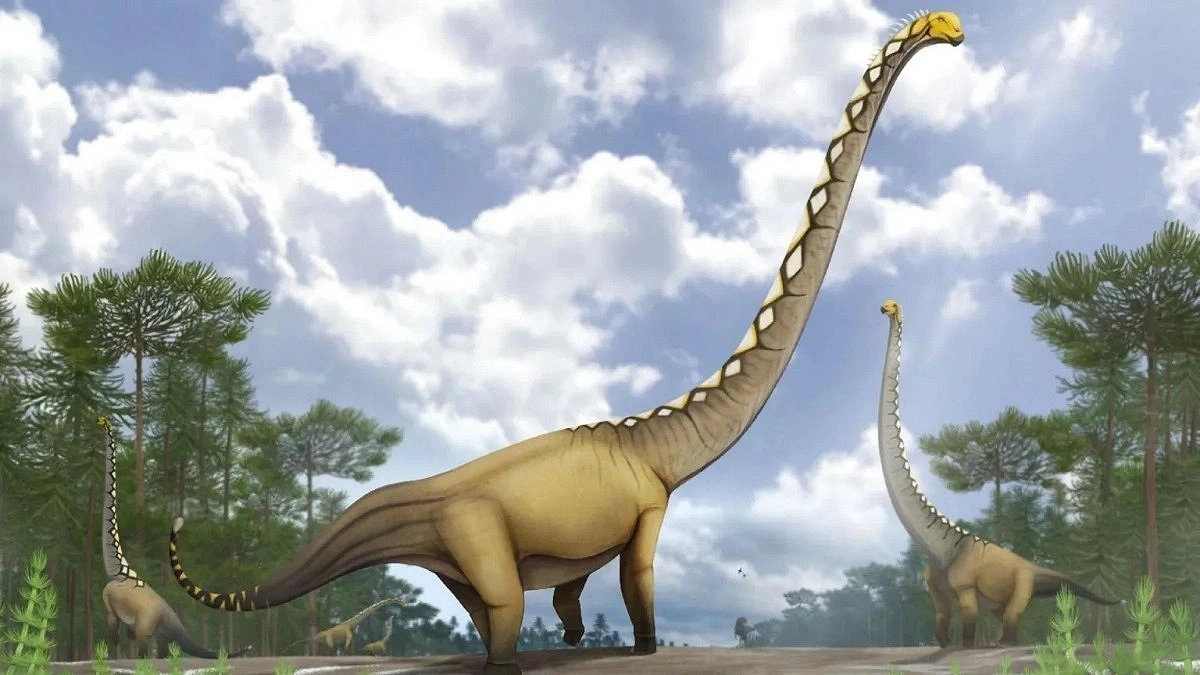
This time, Thailand has delivered such a surprise. Scientists have discovered the fossil of a new dinosaur species in Kalasin Province in the country’s northeastern region. Researchers believe the dinosaur roamed the Earth about 150 million years ago. In other words, it was a resident of the Jurassic period.
The new species has been named Uragasaurus kalasinensis. It was an herbivorous dinosaur. Its most remarkable feature was its unusually long neck. Its entire body measured about 20 meters, or 66 feet, in length, roughly the length of a cricket pitch.
Scientists say its long neck allowed it to easily feed on the leaves of tall trees. It could effortlessly reach places that other animals could not.
The story behind the discovery is also quite interesting. In 2008, a local resident found some unusual pieces of rock in the Phu Noi area of Thailand. They looked much like snake scales. After learning of the discovery, researchers went to the site.
Excavation works then began. One fossil after another emerged. Dinosaur teeth were found, along with various bone fragments. Later, a dorsal vertebra, or a spinal bone, attracted the attention of researchers. That single bone opened the door to a new mystery.
After conducting a CT scan of the fossil, scientists confirmed that it belonged to a dinosaur from the Mamenchisauridae family. Members of this family are known for their exceptionally long necks.
Until now, most fossils of this type of dinosaur had been found in China. However, this is the first time a fossil from this dinosaur family has been discovered in Thailand.
Researchers also said the dinosaur’s bones contain certain characteristics that do not match those of any other known dinosaur in the world. In particular, the structure of the internal air chambers in the bones and the ‘Y’-shaped bone arrangement are entirely unique. These characteristics helped it gain recognition as a new species.
The lead author of the study, Dr. Apirut Nilpanapan, a researcher at Thailand’s Mahasarakham University, said that after confirming the new species, he became so excited that he accidentally broke his computer. Later, however, he also felt relieved because years of research had finally paid off.
The study was recently published in Nature, one of the world’s most prestigious scientific journals.
The history of dinosaurs is no less remarkable. The first dinosaurs appeared on Earth about 230 million years ago during the Triassic period. They then dominated the planet for nearly 160 million years throughout the Jurassic and Cretaceous periods. From giant herbivores to fearsome carnivores, many different kinds of dinosaurs roamed the Earth during that time.
However, scientists believe that about 66 million years ago, a massive asteroid struck what is now Mexico’s Yucatán Peninsula. As a result, catastrophic climate change occurred. Sunlight was blocked for a long period. The food chain collapsed. Eventually, most dinosaurs became extinct along with about 75 percent of the Earth’s species.
Yet their story has not stopped. Every new fossil seems to open a new chapter about the world that existed millions of years ago. This newly discovered dinosaur in Thailand has added another important chapter to that history.
It is worth noting that in May this year, scientists in Thailand also discovered another long-necked herbivorous dinosaur named Nagatitan. Measuring about 27 meters in length and weighing about 27 tons, it is currently considered the largest dinosaur ever discovered in Southeast Asia.
Source: BBC

