
Flooded with Mourners as Iran Vows Revenge at Khamenei’s Funeral

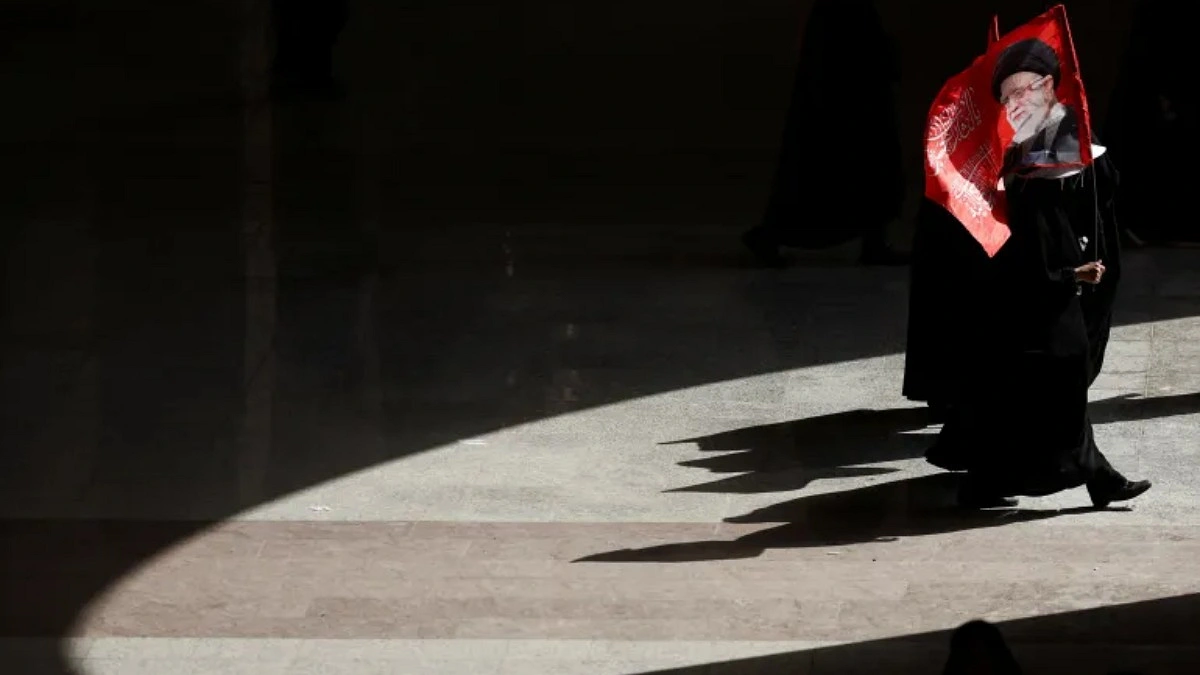
Photo: REUTERS
Thousands of mourners dressed in black have packed the streets of Tehran, gathering at the Grand Mosalla religious complex for the official funeral ceremony of the late Iranian Supreme Leader Ayatollah Ali Khamenei.
The atmosphere in the capital is charged with grief and defiance, as crowds carrying red banners - a traditional symbol of revenge - fill the complex and surrounding areas.
Early Friday morning, massive crowds massed outside Tehran metro stations, waiting for the rapid transport system to open so they could reach the venue. Videos released by Iran’s ISNA news agency depicted hundreds of people gathered in front of closed station gates.
Inside the courtyard of the Grand Mosalla, the AFP reported that the air was filled with chants of “death to America” and “revenge, revenge” as the public awaited the arrival of the Supreme Leader’s coffin.
A Legacy of Power and the Rise of the IRGC
For Iran, this ceremony represents more than the passing of a leader; it marks the end of an era that spanned over 40 years and shaped every major state institution.
Since becoming the Supreme Leader in 1989 while Iran was recovering from its war with Iraq, Khamenei turned his office into the nation’s absolute center of power. He maintained direct oversight of the judiciary, state broadcasting, strategic appointments, and the armed forces.
A defining element of his decades-long rule was the evolution of the Islamic Revolutionary Guard Corps (IRGC). Under Khamenei’s guidance, the IRGC transformed from a military wing into a dominant force in Iran’s security apparatus, political landscape, and economy.
His strategic vision also prioritized the development of ballistic missiles as a deterrent against the United States and regional opponents. While this policy, along with his defense of Iran’s right to enrich uranium, triggered heavy sanctions from the US and Europe, Khamenei remained steadfast in his assertion that the country was not seeking nuclear weapons.
Retaliation Demanded Following Assassination
The funeral follows the assassination of Khamenei on 28 February, which occurred on the first day of a conflict involving the United States and Israel.
Iranian officials have characterized the killing as a “strike at the heart of the country,” while devoted followers expressed fears that his death was intended to weaken the entire system.
The presence of red flags across the funeral serves as a potent message to the current administration.
Mohammad Eslami, a research fellow at the University of Tehran, explained the significance of these symbols, noting that followers are demanding direct retaliation.
Eslami said, “They are asking the Iranian government to kill those who have killed their supreme leader. We should consider that the late supreme leader was more than a kind of head of the state.”
As regional tensions deepen with Gulf Arab states and the US, the massive turnout and calls for vengeance underscore the volatile path ahead for Iran.
Source: Al Jazeera (adapted)
