

Even war-torn Kyiv is ahead of Dhaka in terms of livability

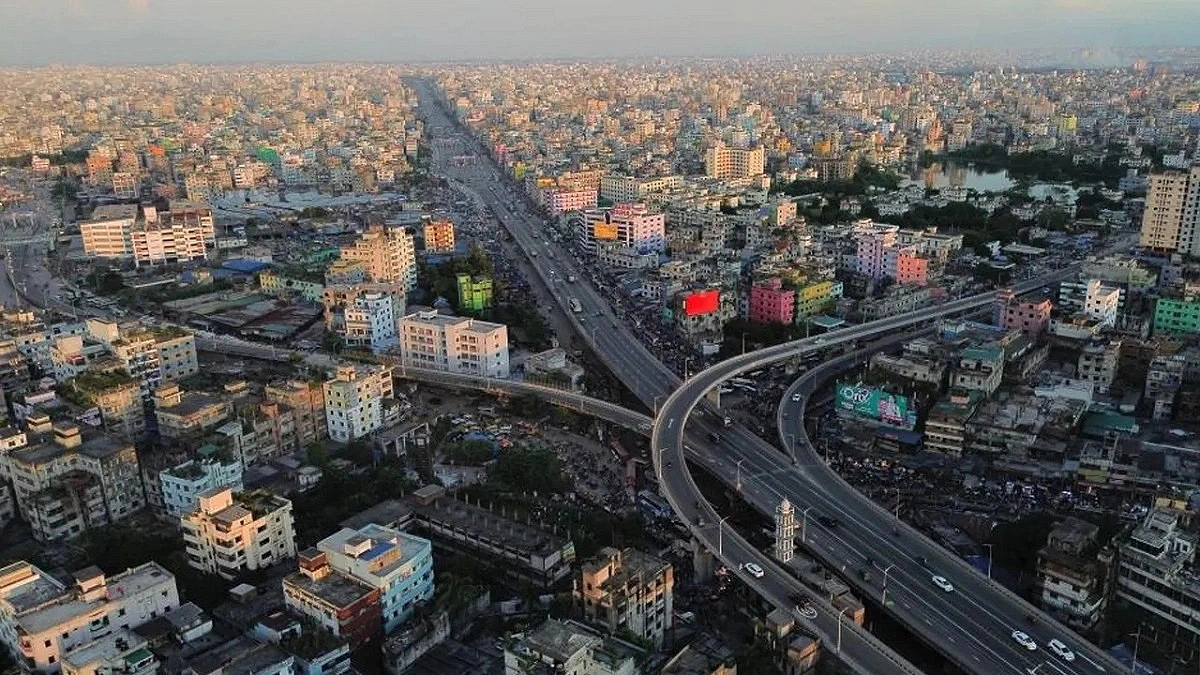
Dhaka remains as one of the most unlivable city in the world. Copenhagen is the best. Photo: Collected.
As every year, the Economist Intelligence Unit (EIU) has published its Global Livability Index. In this survey of 173 cities worldwide, Dhaka has ranked as one of the least livable cities for the second consecutive year. Like last year, the capital of Bangladesh is in 171st position on the list.
In the EIU's 'Global Livability Index 2026', Dhaka's total score is 41.7. Only Tripoli and Damascus are ranked below Dhaka. Tripoli is in 172nd place, while Damascus is at the very bottom in 173rd position.
The EIU publishes this index to assist the Human Resources (HR) departments of multinational companies and to determine benefits for expatriate employees. Five criteria are considered for evaluating city livability: stability, healthcare, culture and environment, education, and infrastructure. The report states that Dhaka has consistently been at the bottom of the livability index for the past several years.
This year, the Danish capital Copenhagen has been recognized as the world's most livable city, retaining the top spot for the second consecutive year with a total score of 98. Vienna ranks second, Melbourne third, Sydney fourth, and Zurich fifth. Vancouver is the only North American city in the top ten, securing ninth place.
Meanwhile, among the world's major megacities, Tokyo is the only city in the top ten. According to the EIU, large cities generally score lower on livability due to factors such as traffic congestion, population density, and crime rates.
Since 2013, the war-torn Syrian capital Damascus has held the position of the world's least livable city, with a score of 31.6. Just above it, Libya's Tripoli is in 172nd place. Dhaka sits in 171st place with a score of 41.7, while Pakistan's Karachi is in 170th position.
Recent wars and political instability have affected the rankings of several Middle Eastern cities. Following an Iranian drone attack, Oman's capital Muscat fell 14 places to 123rd position. Similarly, the rankings of Qatar's Doha, and the UAE's Dubai and Abu Dhabi, have also dropped a few places.
The published report mentions that the overall standing of Asian cities has improved this year. Particularly due to significant progress in various cities in China and Japan, Asia's average score has increased by 0.3 points. Currently, the average score for 58 Asian cities stands at 73.9, which is even higher than the average score for Eastern Europe. However, the report notes that the persistently low scores of the least developed cities like Dhaka have pulled down Asia's overall average.
Chinese cities have made significant improvements in the healthcare sector due to government investment. The country is implementing a plan so that every citizen can access medical services within a 15-minute walk. However, the report mentions that due to strict surveillance systems, environmental problems, and democratic deficits, the overall livability rankings of Chinese cities have not improved at the expected rate.
The top five cities on the list are Copenhagen, Vienna, Melbourne, Sydney, and Zurich. This list reflects not only the dominance of European cities but also Australia's consistently strong performance.
The Danish capital Copenhagen has been at the top of the list for two consecutive years. The city scored 100 out of 100 in three indicators: stability, education, and infrastructure. Additionally, it also held a top position in the culture and environment indicator.
The cities at the bottom of the list are Tehran, Harare, Kyiv, Port Moresby, Lagos, Algiers, Karachi, Dhaka, Tripoli, and Damascus.
A notable aspect of the report is that even the war-torn Ukrainian capital, Kyiv, is several steps ahead of Dhaka in the livability index.

