

Dawn
53% of Pakistani University Students Addicted to Drugs
- Global drug users reach 316 million

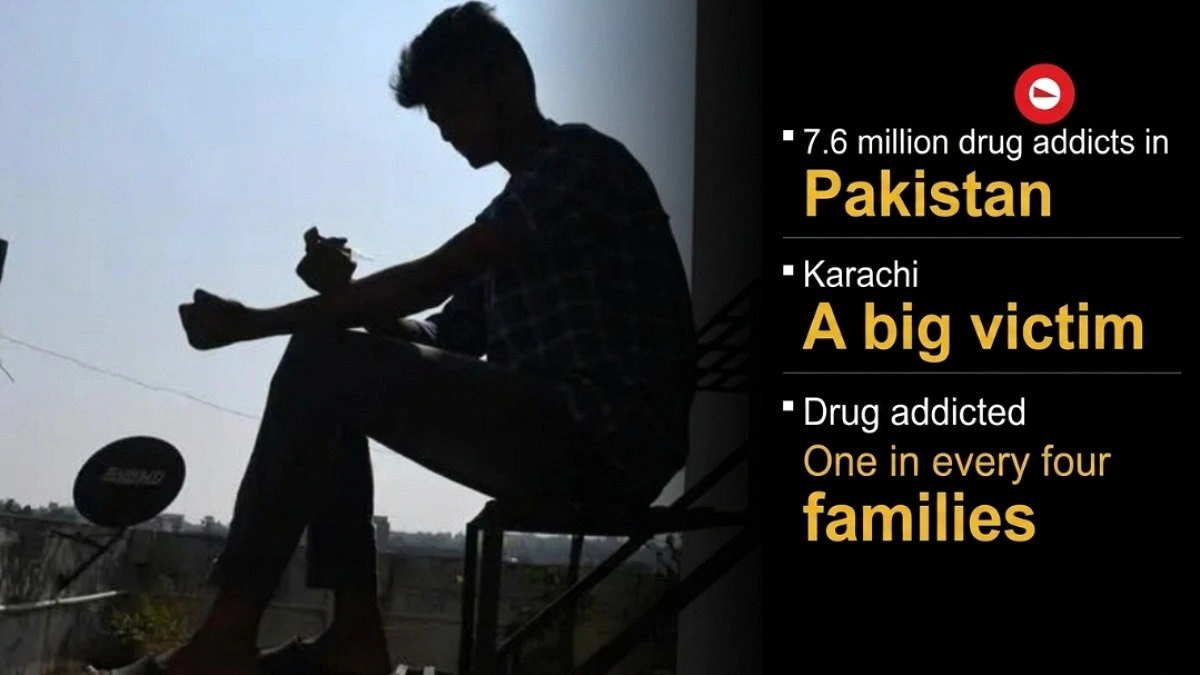
Graphics: Agamir Somoy generated by AI
Drug addiction has reached alarming levels in Pakistan, with the country's commercial hub, Karachi, emerging as one of the hardest-hit cities. At least one member in every four households in Karachi is reportedly affected by substance abuse.
Once primarily used as a transit route for international drug trafficking, Pakistan has now become one of the world's leading drug-consuming nations.
A 2022 United Nations report estimated that 7.6 million people in Pakistan were addicted to drugs. Recent figures suggest that number has risen sharply to nearly 9 million, with thousands of new users added each year.
The crisis cuts across all segments of society, affecting both wealthy and low-income communities. Students from elite private schools, public colleges, and underserved areas have all been impacted. According to a 2022 survey conducted by Pakistan's Anti-Narcotics Force (ANF), 53% of university students had been exposed to drugs in some form, while nearly one-third admitted to using illegal substances.
Experts warn that weak enforcement of international regulations and Pakistan's domestic drug laws has allowed heroin, cocaine, synthetic drugs, and tranquilizers to spread rapidly across the country. The findings were highlighted in a report released on the International Day Against Drug Abuse and Illicit Trafficking.
The report recommends several urgent measures to address the growing crisis. First, it urges authorities to treat drug addiction as a mental health condition and a treatable disease rather than a moral failing or criminal offense. Social stigma and punitive attitudes often discourage victims from seeking treatment, allowing drug traffickers to continue operating unchecked.
Second, the report says anti-drug operations are frequently undermined by corruption within law enforcement agencies and limited resources. Although major traffickers are often arrested by police and the ANF, conviction rates remain low. It calls for faster trials and stricter enforcement to create a stronger deterrent. The report also recommends strengthening security along the border regions of Balochistan and Khyber Pakhtunkhwa, where traffickers continue to operate with relative ease.
Finally, the report urges educational institutions and organizations across Pakistan to adopt comprehensive anti-drug policies, including random drug testing, regular counseling, and rapid rehabilitation services. Provincial education and health authorities are also encouraged to introduce anti-drug education into school curricula and expand access to mental health services.
The report concludes that building a strong rehabilitation system and community support network is essential, emphasizing that drug addiction destroys not only individuals but also families and society as a whole.

