

Netanyahu rejects Trump’s Gaza plan, demands real disarmament

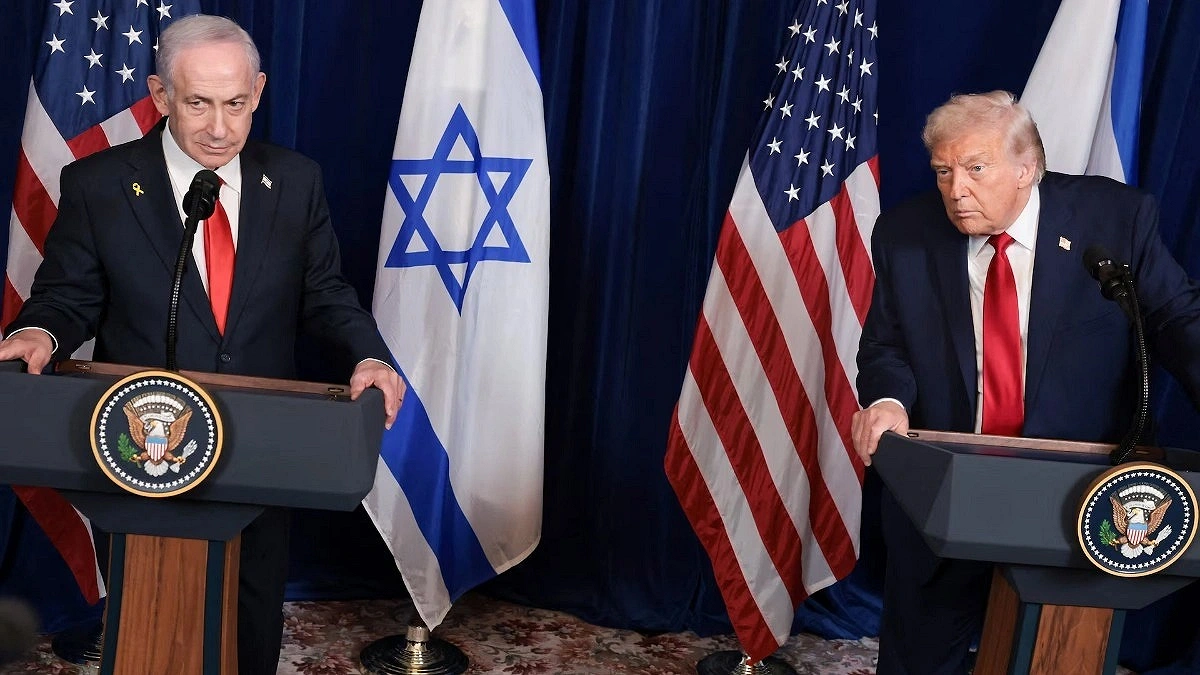
Photo: REUTERS
Israeli Prime Minister Benjamin Netanyahu has rejected the 15-point plan for Gaza proposed by US President Donald Trump, declaring that the Israeli military will not initiate any withdrawal until the Hamas militant group undergoes a “genuinely” verifiable disarmament.
This move comes despite an announcement from Trump’s Board of Peace last month claiming they had secured an agreement for the “complete disarmament” of Hamas and other armed factions in the territory.
However, Hamas maintains its own condition, asserting that the surrender of its heavy weaponry remains contingent on Israel ceasing “all forms of aggression” and pulling its armed forces out of Gaza.
During a cabinet meeting held on Sunday, Netanyahu took a firm stance, saying, “Israel rejects the 15-point document.”
He emphasized that the Israeli military “will not carry out any withdrawal until Hamas is genuinely disarmed and will continue to thwart threats against our forces and our citizens.” This rejection follows Israel’s ongoing military strikes in Gaza, which have persisted even after an initial ceasefire agreement was reached last October.
In response to the deadlock, a senior official from the Board of Peace insisted that this US-backed peace initiative represents the sole path forward for the region.
Meanwhile, a Hamas official said the group “reaffirms it commitment” to the accord and stands ready “to engage seriously and responsibly in implementing” the 15-point plan.
The group urged international mediators to guarantee “that all parties comply with what has been agreed.”
This rejection marks a significant setback for the peace plan first unveiled by Trump in September of last year, which envisioned the Board of Peace supervising disarmament, troop withdrawals, and the reconstruction of Gaza.
While Netanyahu’s decision was widely anticipated, his delay in announcing it underscores the political tightrope he must walk. He remains visibly dissatisfied with Trump’s framework but seeks to avoid straining relations with Israel’s most vital global ally.
Just over a week ago, Trump lauded the development as a “monumental step toward lasting peace and security” after Hamas agreed to disarm for the first time, provided Israel withdraws its forces.
Yet, Netanyahu made it clear that such a move will not occur under his leadership without a verifiable process, asserting that the disarmament cannot be a “fictitious disarmament” but must be real.
The reality is that any potential disarmament and withdrawal of Israeli forces would likely necessitate a phased approach.
Netanyahu confirmed he is engaging with US officials on the next steps, remarking, “They have ideas; some of them are acceptable to us and some are not, and we know how to stand our ground on these matters.”
His uncompromising position is influenced by the upcoming Israeli elections and intense pressure from right-wing coalition members like National Security Minister Itamar Ben Gvir, who has already labeled the draft “not acceptable”.
Nickolay Mladenov, a senior diplomat and the high representative for the Board of Peace in Gaza, defended the proposal on Channel 12, urging Israel “to give the process a chance”.
He described the plan as the only way to prevent a recurrence of the 7 October 2023, attack, noting it is based on a process that is “verifiable, that is reversible, that at each stage can be stopped, and that we have built up with a very clear-eyed understanding of what are the challenges ahead.”
He clarified that Israel would not be forced to withdraw until it could be verified that Hamas is taking steps to disarm.
The cost of the conflict remains staggering, with the United Nations reporting that roughly 1.9 million people, or 90 percent of Gaza’s population, have been displaced and over 73,000 deaths in Gaza according to local health ministry figures.
Source: BBC (adapted)