

Moon Settlement on Horizon
- The Artemis mission marks humanity’s return to the Moon, but with a far greater
- goal, building a lunar base and preparing for future missions to Mars.

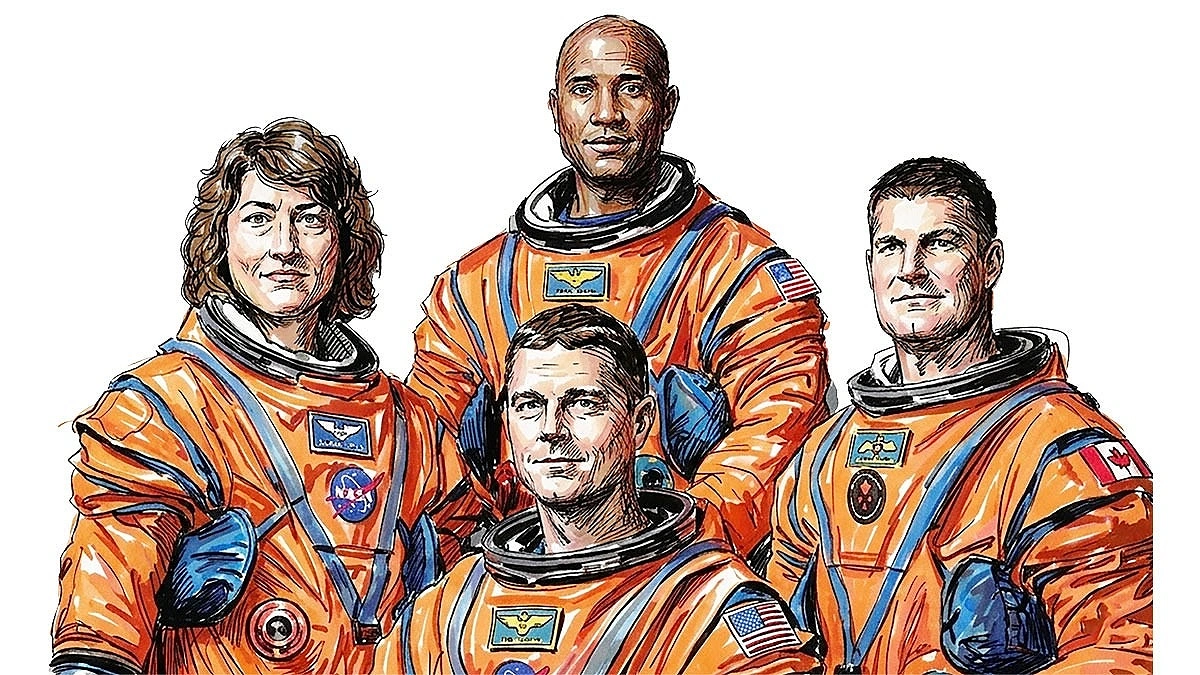
Four astronauts of the Artemis-2 Mission
Victor Glover said that seeing Earth from space is an incredible experience and that humanity’s focus is now shifting toward the Moon and deeper space exploration.

Once, humans went to the Moon to prove technological superiority. Now they are returning with a much larger ambition, not just to plant a flag and come back, but to establish a permanent base on the Moon and use it as a launchpad for deeper space exploration, including missions to Mars.
After Neil Armstrong first stepped onto the lunar surface in 1969, the world stood still. It marked the peak of the space race between the United States and the Soviet Union during the Cold War. More than half a century later, the context has changed. The Moon is no longer just a symbol of political rivalry; it is now seen as the first step toward a future space civilization.
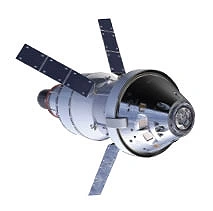
With this vision, NASA has launched the Artemis program. Named after the Greek goddess of the Moon and twin sister of Apollo, Artemis represents an ambitious new space initiative. The symbolism goes beyond sending the first woman to the Moon, it reflects humanity’s aspiration to become an ‘interplanetary species’. The program is a joint effort involving NASA, the European Space Agency, Japan’s JAXA, and the Canadian Space Agency (CSA), bringing together scientists, engineers, and astronauts from across the world to write a new chapter in space history.
Before reaching such an ambitious goal, extensive preparation was required. The first major test came with Artemis-1. On November 16, 2022, one of the most powerful rockets ever built, the Space Launch System (SLS), thundered into space late at night carrying the Orion spacecraft.
It was an uncrewed mission, but it served as a full rehearsal for future human spaceflight.
The next crucial step was Artemis-2. The primary objective of this mission was to test the Orion spacecraft with a human crew on board. The historic crew included Commander Reid Wiseman, pilot Victor Glover, mission specialist Christina Koch, the first woman set to travel toward the Moon, and Canadian astronaut Jeremy Hansen. Artemis-2 did not land on the Moon. Instead, it followed a carefully designed trajectory known as a hybrid free-return path.
After launch from Earth, the spacecraft traveled toward the Moon via trans-lunar injection. It then flew around the far side of the Moon before using Earth’s gravitational pull to return home.
If everything proceeds as planned, the next phase will be Artemis-3. In that mission, humans will once again step onto the Moon after decades. The goal is not just a short visit but potentially extended stays lasting days, weeks, or even longer in the future.

Artemis-3 is being considered a landmark moment in humanity’s return to the lunar surface.
Unlike the Apollo missions, the landing site will not be near the lunar equator but in the mysterious south polar region. The main objective is to search for frozen water trapped in permanently shadowed craters.
This ice could be separated into hydrogen and oxygen to produce rocket fuel, effectively turning the Moon into a refueling station and significantly reducing the cost of deep space missions. SpaceX’s Starship is expected to serve as the lunar lander, while astronauts will conduct scientific experiments on the Moon’s surface for about a week.
In the next phase, Artemis-4 will focus on establishing a small orbital station around the Moon called the Lunar Gateway, which will serve as a docking hub for deep space missions. By the early 2030s, Artemis-5 is expected to deploy an advanced lunar terrain vehicle and begin work on building a permanent base. Advanced nuclear fission systems may also be used to ensure continuous power supply on the lunar surface.
The Artemis program is not limited to science alone; it also lays the foundation for a new global lunar economy. Financial institutions project that this space-based economy could reach 1 trillion dollars by 2040. Private companies such as SpaceX and Blue Origin are expected to play leading roles in this emerging space industry.

