Is Bangladesh Ready?
El Niño confirmed, set to fuel more extreme weather, says WMO

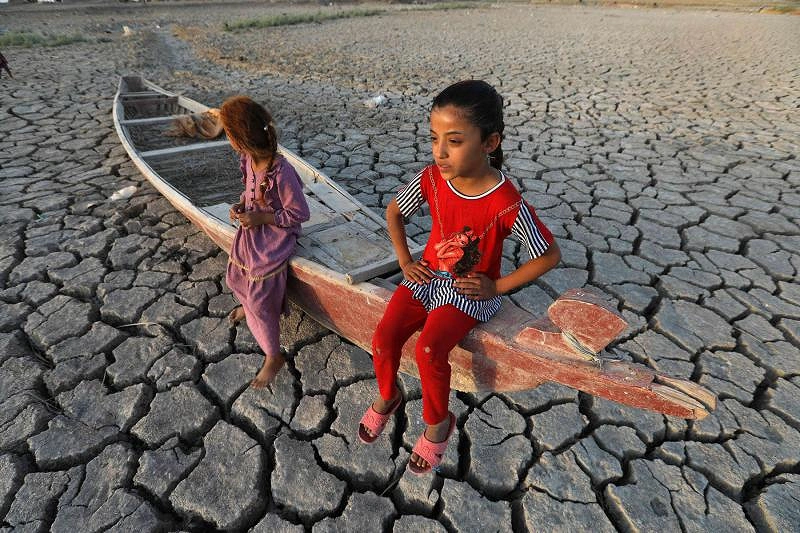
Representative Image: Collected.
The UN urged all countries on Tuesday to bolster early warning systems after confirming the onset of El Niño, warning that the Pacific Ocean-warming phenomenon will bring above-average temperatures “nearly everywhere” and fuel extreme weather.
According to the World Meteorological Organization (WMO), there is an 80 per cent probability that El Niño conditions will emerge between June and August, and a 90 per cent chance thereafter, reports UN News.
Tropical Pacific Ocean temperatures are 6°C above average, and this is fuelling concerns that in coming months, El Niño could feed on this extra heat, devastating vulnerable and unprepared communities worldwide.
WMO Secretary-General Celeste Saulo explained that warmer ocean conditions add heat and moisture to the climate, potentially worsening climate extremes, including heatwaves and heavy rainfall:
“The footprint of an El Niño travels far beyond its origins in the Pacific Ocean, impacting agriculture, energy supplies, trade, water resources, supply chains and livelihoods across entire regions.”
El Niño and its counterpart La Niña are opposite phases of the El Niño–Southern Oscillation, which is one of the most powerful naturally occurring climate patterns on Earth.
El Niño typically occurs every two to seven years and lasts around nine to 12 months.
Professor D AKM Saiful Islam of the Institute of Water and Flood Management at BUET told a Bangladeshi English daily that a possible super El Nino was raising fresh concerns for Bangladesh, which has limited capacity to cope with extreme heat.
"The key difference between wealthier and poorer countries lies not in the intensity of the heat but in their capacity to adapt, including access to air conditioning, cooling centres, workplace protections, public health systems and crop warning mechanisms. Bangladesh cannot manage this challenge alone," he said.

Reuters adds: El Nino is a periodic warming of sea surface temperatures in the central and eastern Pacific Ocean, which typically lasts between nine and 12 months, according to the World Meteorological Organisation.
The WMO said warm ocean waters were driving El Nino’s development and predicted above-average temperatures in most parts of the world from June to August.
The WMO said it was likely El Nino would continue until November.
“We need to prepare for a potentially strong El Nino event – which will exacerbate drought and heavy rainfall and increase the risk of heatwaves both on land and in the ocean,” WMO Secretary-General Celeste Saulo said on Tuesday.
The weather pattern is known to disrupt regional climates, potentially bringing warmer temperatures across the globe, while increasing rainfall to southern South America, the southern United States, parts of the Horn of Africa and central Asia.
It can also cause drought in Australia, central America, Indonesia, and sections of southern Asia, and lead to the formation of hurricanes in the central and eastern Pacific Ocean, the WMO said.
he most recent El Nino, in 2023-24, contributed to making 2024 the hottest year on record, Saulo said.
“Extreme heat alone is already one of the deadliest climate hazards we face, and an El Nino event could intensify the threat,” Saulo said.
The risks include more heat-related illness, a wider spread of vector-borne diseases and increased pressure on food and water systems.
“Communities that were already struggling will be pushed farther beyond their limits,” she said.
A shift had been observed in the Equatorial Pacific, with sea surface temperatures rising rapidly from late April to mid-May, suggesting El Nino conditions were developing, the WMO said.
The agency said it has observed unusually warm subsurface conditions across the tropical Pacific with temperatures exceeding 6C above average, creating a reservoir of heat that is driving surface warming.
Some national weather agencies have forecast the strongest El Nino in a decade, warning of hotter, drier weather across Asia in the second half of 2026 that is likely to damage crops and food supplies as farmers already struggle with fertiliser shortages and costly fuel caused by the Iran war.
However, the WMO said there was still uncertainty about the strength of El Nino as some models were not predicting a strong El Nino.
“The world must treat it as the urgent climate warning it is. El Nino conditions will pour fuel on the fire of a warming world,” said UN Secretary-General Antonio Guterres, urging a shift away from fossil fuels towards renewable energy.