Movie Stories Trapped in Train Coaches

Collected Photo
Since the dawn of literary and cinematic history, the moving train has shared an inseparable and thrilling relationship with the pages of books and the silver screen. From still lives to Impressionist works and portraits, artists have captured train interiors on their canvases.
But the connection between cinema and trains seems particularly deep—whether as a frame or a prop. One could say the age of cinema and the arrival of trains on screen are almost parallel. When cinematography and the first motion pictures emerged in 1895 through the Lumière Brothers, one of their earliest and most historic short documentaries was about a train: "L'Arrivée d'un train à La Ciotat" (The Arrival of a Train at La Ciotat). In that silent era, audiences in the theater were so terrified by the sight of a moving train hurtling toward the screen that they believed a real, living train would burst through the screen and crash down upon them.
Ever since this early beginning of cinema, the train ceased to be merely a mode of transportation and became one of the most powerful plot devices on celluloid. For film theorists and directors, the motion of a train, the parallel rhythm of the tracks, and its enclosed carriages appear to viewers as a perfect metaphor for human life, psychology, and social reality. This dynamic yet confined environment of a train is ideal for intensifying the excitement, mystery, and drama of any story unfolding inside it. Whether it is a classic murder mystery, a psychological thriller, a slice-of-life realist drama, or a romantic tale from modern Hollywood or Korean cinema, the carriages of a moving train feel like small societies in themselves—places where people of different classes and mindsets can easily be tied together by a single thread. That is why, even as technology has evolved over the past 125 years, transforming into green screens and LED walls, the moving train racing alongside the reels of the silver screen—touched by a skilled director—continues to captivate audiences just as strongly.
In the contemporary film "Banalata Express," based on a novel by Humayun Ahmed, the entire storyline revolves around the multifaceted twists and turns unfolding inside a train. Moreover, throughout the history of Bengali cinema, audiences have witnessed the significant presence of this monstrous yet serpentine, dramatic vehicle. For movie lovers who feel a special attraction to train-centric storylines, today's feature presents a selection of such films.
1. Bullet Train (2022)
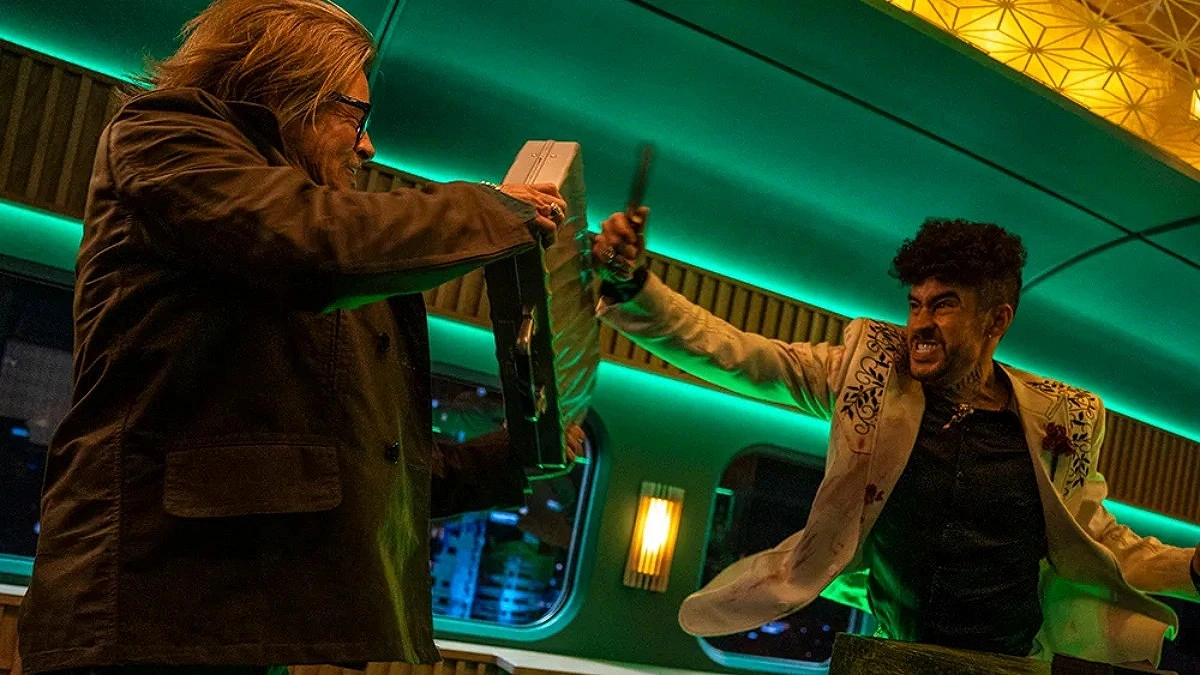
The entire story and sequence of events of the popular Hollywood action-comedy film "Bullet Train," released in 2022, takes place inside a high-speed Japanese train. Starring renowned actor Brad Pitt, the film is brilliantly adapted from the popular Japanese novel "Maria Beetle" by Kotaro Isaka. The main narrative revolves around a high-speed bullet train traveling from Tokyo to Kyoto. A professional assassin named "Ladybug" boards this train on a mission to retrieve a simple briefcase. However, after boarding, he discovers that several other world-class killers and criminals are also on the same train. The surprising thing is that all their missions are somehow deeply interconnected. This connection creates an ultimate confrontation inside the train. The film weaves a thrilling and humorous story of how these assassins face off against each other while trying to survive within the confined compartments of the train. The brilliant action choreography, excellent comedic timing, and unexpected twists, all utilizing the train's limited space, make the movie immensely enjoyable for audiences. Apart from a few flashback scenes, the main fights and drama of the entire film take place inside this moving train.
The film's scenes were not actually shot on a moving Japanese train. The train compartments were perfectly replicated on a set at Sony Studios in Los Angeles. Modern "virtual production" technology was used to depict the moving scenery outside the train's windows. Massive, high-power LED screens were placed around the set, playing pre-recorded footage of Tokyo and Kyoto's night highways and cityscapes. This integrated scenery gave the actors a realistic feel during their performances.
2. Nayak (The Hero) (1966)
"Nayak" is a unique masterpiece created by Bengali film director Satyajit Ray. Almost the entire story of the film unfolds in the first-class compartment of a train traveling from Kolkata to Delhi. The lead role was played by the legendary actor Uttam Kumar. The real-life superstar portrayed a popular but mentally troubled film star named "Arindam Mukherjee" on screen.
A scene from Nayak Bangla Movie.
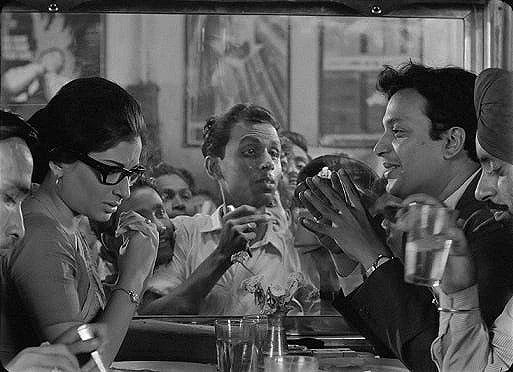
On the train, he meets Anindita (Sharmila Tagore), a sharp-minded female editor. During the long train journey, Arindam begins to effortlessly reveal his life's successes, failures, loneliness, and hidden guilt to Anindita. The director used the train's enclosed environment as a brilliant canvas to portray repressed human psychology, ego, and the hypocritical facades of people from various strata of society. The rhythm of the train's wheels and the scenery outside the moving window become a metaphorical journey of life, gradually revealing the ordinary man inside a mega-star to the audience.
Despite the technological limitations of 1966, Satyajit Ray created a wonderful optical illusion inside the studio. An exact set of an air-conditioned first-class train compartment was built at New Theatres Studio in Kolkata. To create the sense that the train was genuinely swaying on the tracks, Ray would hang props such as water bottles, umbrellas, and cameras inside the set and make them sway. Additionally, a rear-projection screen showing moving landscapes was used outside the train's windows to create the perfect atmosphere of a moving train.
3. The Lady Vanishes (1938)
"The Lady Vanishes," directed by the master of suspense, Alfred Hitchcock, is one of the finest classic mystery-thrillers. The film's primary setting is a moving train in Europe. While traveling, a young woman named Iris notices that her compartment companion, an elderly woman named Miss Froy whom she met the previous night, has suddenly disappeared. Her existence seems to have vanished into thin air. The most mysterious part is that when Iris asks about the elderly woman, the other passengers completely deny that any such woman was ever on the train. Just then, with the help of a young musician named Gilbert, Iris begins searching compartment after compartment on the train.
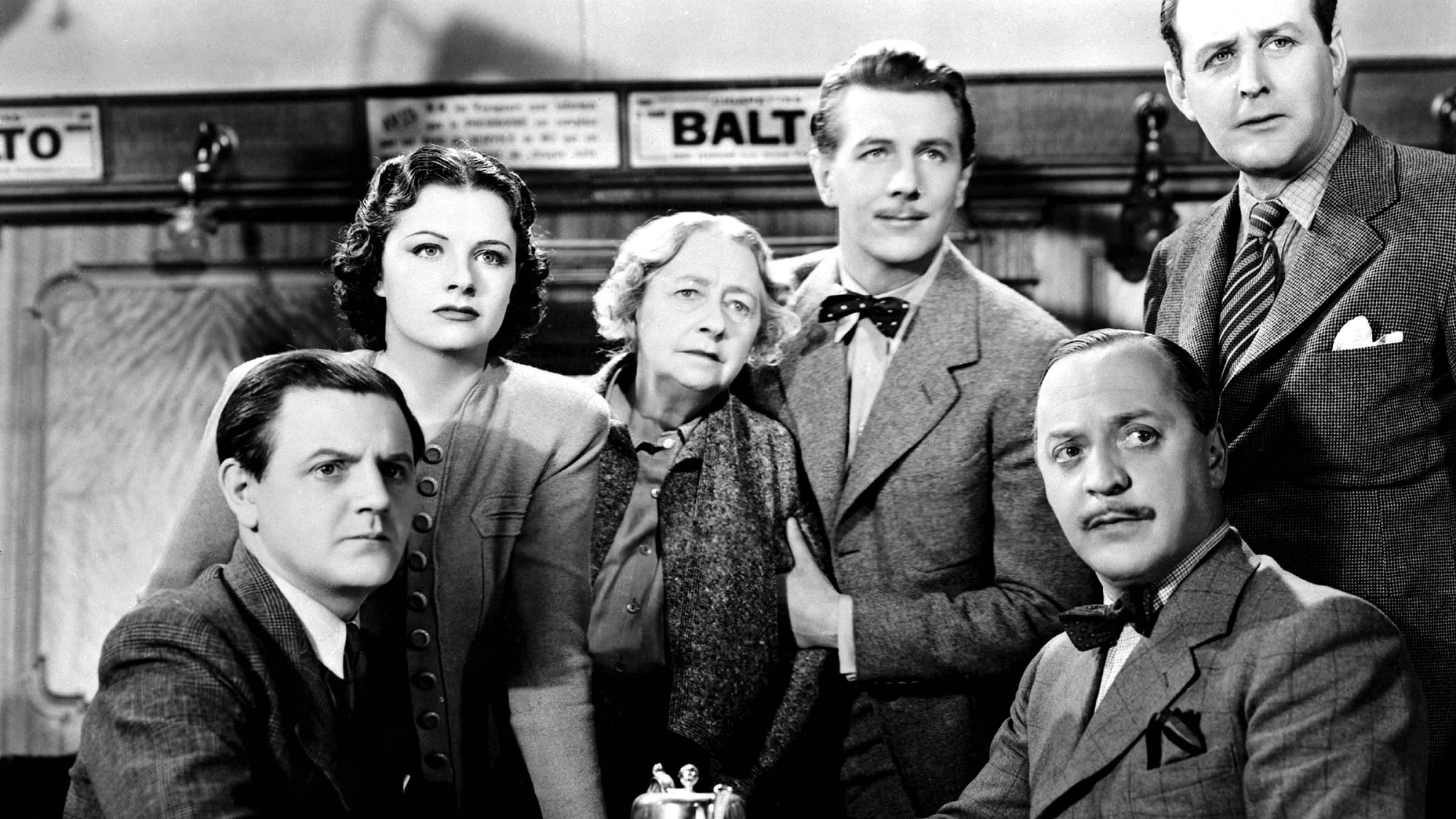
Hitchcock masterfully transforms the train's narrow corridors and compartments into an atmosphere of intense suspense and suspicion. In the end, it is revealed that this is not just a simple disappearance case, but a blueprint for a large-scale international espionage and political conspiracy hidden beneath the surface. This classic thriller, blending comedy and pure mystery created inside a train, leaves a lifelong impression on cinema lovers.
This film was also entirely studio-based. The entire train set was built on a very small, narrow sound stage at Islington Studios in London. Hitchcock brilliantly used the train's confined corridors and compartments to create an atmosphere of extreme tension and doubt. To create the illusion of moving scenery outside the train's windows, Hitchcock used rear-projection technology in that era, where the view from the moving train was projected onto a screen behind the set using a projector.
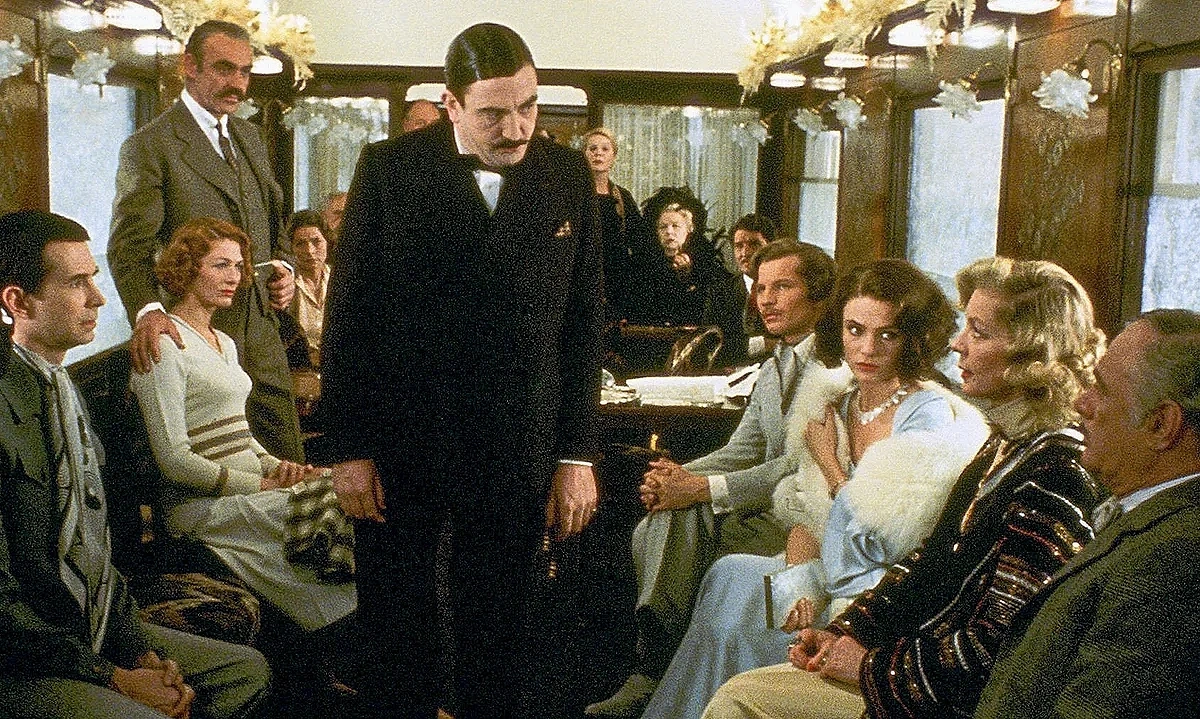
4. Murder on the Orient Express (1974)
Directed by Sidney Lumet and based on the timeless novel by the famous queen of mystery, Agatha Christie, "Murder on the Orient Express" is an excellent murder-mystery film. The entire story takes place inside the luxurious "Orient Express" train, stranded in snow on a winter night. A notorious American businessman is brutally murdered in one of the train's compartments. Coincidentally, the world-renowned detective Hercule Poirot is traveling on that very train. Poirot begins interrogating the 13 mysterious international passengers on the train, as each of them is under suspicion for one reason or another. The theme that since the train is trapped in snow, the killer cannot be from outside but must be hiding inside the train, confronts the audience with breathtaking suspense. How Poirot unravels the mystery of the murder through intricate psychological analysis, using brilliant indoor lighting and the precise utilization of the confined train compartments, is an experience in itself to watch on the silver screen.
For the film, an exact replica of the luxurious Orient Express train compartments was built at Elstree Studios in London. To make the interior scenes realistic, the entire set was placed on a kind of mechanical hydraulic mechanism that constantly shook and swayed during filming. This created the feeling that the train was actually moving along the tracks. The scenes of Poirot's complex psychological analysis were shot using excellent indoor lighting and the masterful use of the confined train compartments.
5. Train to Busan (2016)
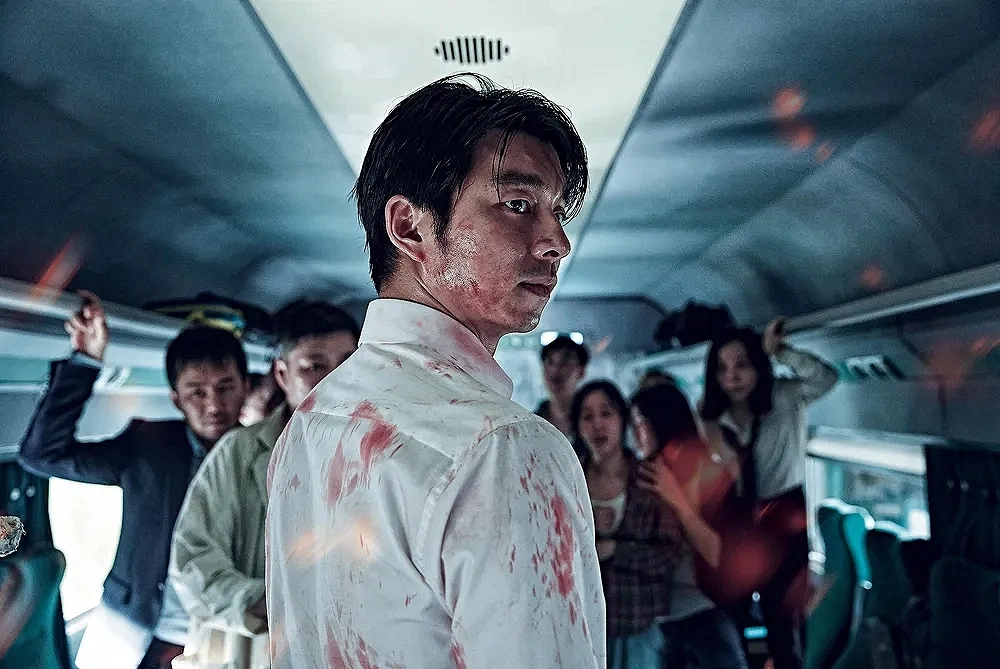
This South Korean blockbuster set a new milestone in the zombie genre of cinema. Ninety-five percent of the film's events take place inside a high-speed KTX train traveling from Seoul to Busan. A father and his young daughter board the train heading to their destination. Just then, a severe zombie virus outbreak occurs across all of South Korea. After an infected passenger boards the train, the compartments one by one begin turning into zombies. The film's narrative follows the struggle for survival of the passengers trapped in the train's death trap, exploring stories of extreme human selfishness and sacrifice. The way each action and horror scene is created using the train's glass doors, dark tunnels, and narrow compartments keeps audiences glued to their seats. It is one of the most dynamic and emotional action-horror films set against a moving train backdrop.
The majority of this Korean film was shot in front of a green screen in the studio. Several sets resembling the compartments of a Korean high-speed KTX train were constructed. These were placed on gimbals, which could create jolts and motion dynamics as needed. The fleeing zombies outside the windows, stations, or surrounding elements from the green screen were later flawlessly added using VFX/CGI technology. Large panel lights were used outside the set to maintain proper light reflections.
6. The Darjeeling Limited (2007)
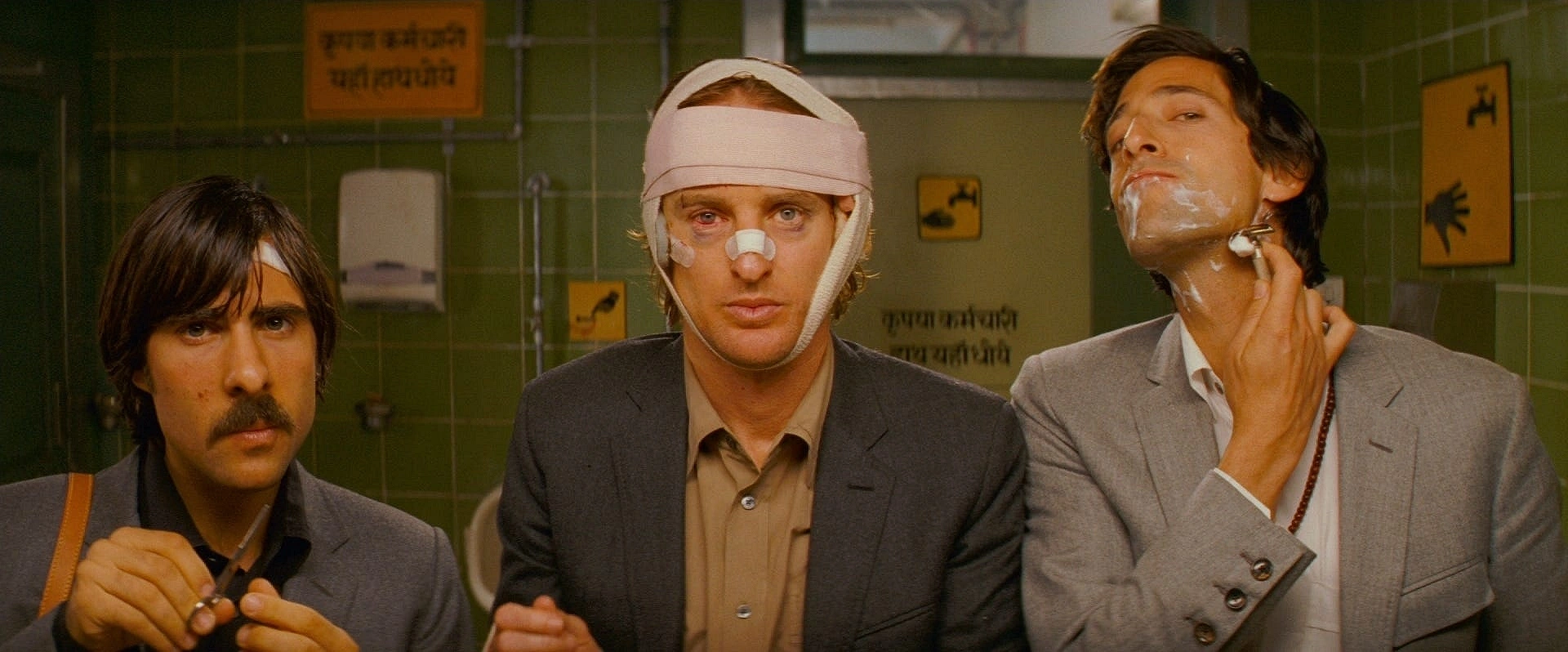
"The Darjeeling Limited" is a wonderful comedy-drama film made in the signature style of renowned director Wes Anderson. Three brothers who have been estranged for a long time, following the death of their father, board a train called "The Darjeeling Limited" in Rajasthan, India, on a long journey to reduce the emotional distance between themselves and find inner peace. The majority of the film features the three brothers' strange behavior, flashbacks, arguments, and the train's unique atmosphere. Wes Anderson decorated the train compartments with his characteristic visually stunning colors, perfect symmetry, and exquisite furnishings. As the brothers watch the rural Indian landscape pass by through the train's windows, the film moves forward accompanied by their strained relationships and their experience of rediscovering life. The train's dynamic yet confined environment serves as a wonderful catalyst for the characters' internal transformations.
This film is the only exception on the list of train-centric movies. Director Wes Anderson does not like artificial studio sets or green screens at all. So he rented an entire real train and locomotive engine from Indian Railways! The brothers painted the interiors of the real train traveling through the Thar Desert in Rajasthan and decorated them with Rajasthani furniture. The film was shot quite dangerously and on real locations inside the extremely narrow compartments of a moving train, with cameras and lights set up inside.