
Waste Coconut Husk Now Changing the Fate of Hundreds of Women in Bagerhat

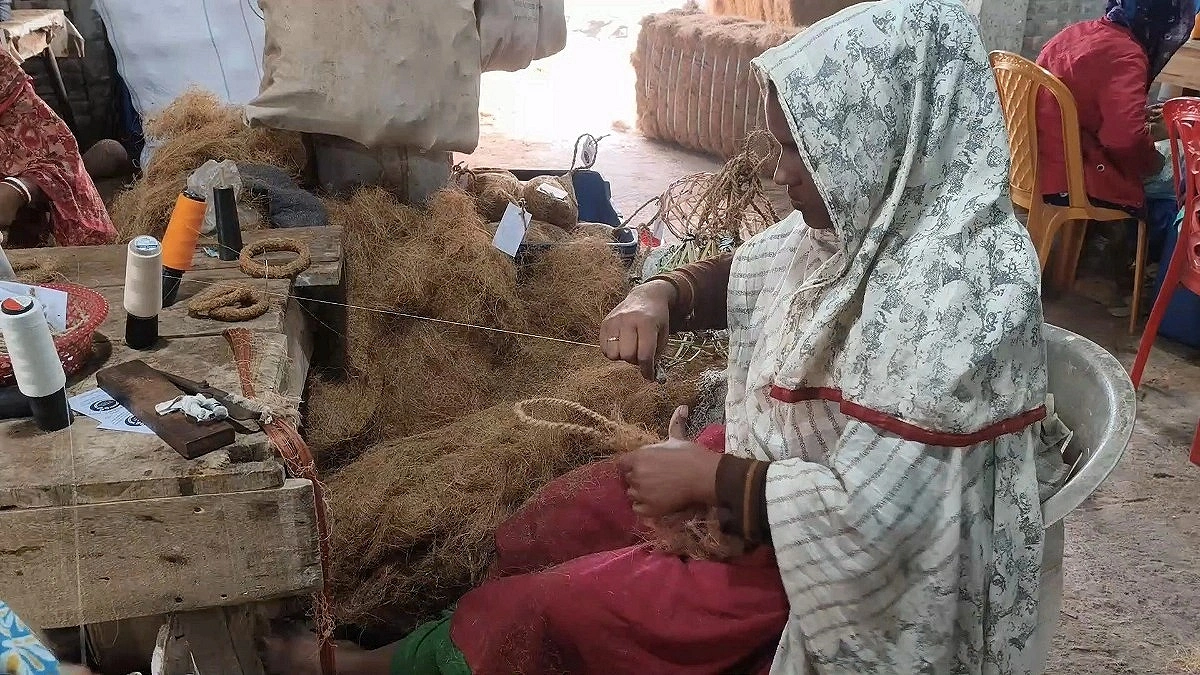
Photo: Agamir Somoy
What was once considered household waste or a neglected, worthless material is now transforming the lives of hundreds of women in Bagerhat. By creating eco-friendly and aesthetic products from coconut husk, entrepreneur Rozy Ahmed has built a remarkable success story while generating employment opportunities for local women. Thanks to her initiative, products made in the rural paths of Bagerhat are now reaching European markets.
At her home in the Basabati area of Bagerhat town, Rozy has established a small factory called “Messrs Organic Product.” Using wood, bamboo, fabric scraps, cotton, thread, and primarily coconut husk, the factory produces around 40 types of eco-friendly and decorative products, including 13 varieties of birdhouses, coco poles, mulching mats, flower baskets, dish scrubbers, dog houses, cat homes and toys, slippers, soft toys, wooden stools, winter sheets, and baby vouchers.
These products have moved beyond the local market and gained significant demand internationally. Currently, the factory regularly exports goods to Belgium, Germany, and Greece.
Every day, 50 to 60 women work at Rozy Ahmed’s factory. From homemakers to college students, many women are now earning independently through employment there. A visit to the factory reveals a vibrant and busy environment, some women cut coconut husks into shape, others stitch products with needle and thread, while others work on colouring and design. Their skilled craftsmanship produces internationally competitive products.
Speaking about her journey, Rozy Ahmed said she first started marketing products such as coco poles, mulching mats, hanging baskets, and flower pots made from coconut husk in 2019. During the COVID-19 pandemic, when employment opportunities declined, she expanded production at home to support local women.
Rozy said, “Initially, I started with only 10 to 12 women after training them. Later, I received an order for 1,000 birdhouses from an NGO. They liked my design, and after that, there was no looking back.”
The economic impact of the factory becomes clear through the stories of its workers. Factory worker Shefali Begum said, “My husband is a day labourer, and it was very difficult to run the household on his income alone. Now, the salary I earn here helps support the family. I can pay for my children’s education, books, and school fees from my own income. It has greatly reduced our financial burden.”
Workers Mariam Akter and Rubina Begum shared similar experiences. Previously, they were entirely dependent on their husbands for household expenses, but earning an income has brought financial stability and boosted their confidence.
Even college student Tania Khatun works part-time at the factory alongside her studies to cover her own expenses while learning new skills.
In recognition of her unique business success, Rozy Ahmed recently received a special award at the “SME Women Entrepreneurs Fair” organized by the Bangladesh Bank.
However, the entrepreneur also pointed out some challenges. She said local coconut production has declined, forcing them to import coconut husks from India. “With government support, easy loans, and export assistance, we could expand the factory further. This would create more jobs for women and contribute significantly to foreign currency earnings for the country,” she said.
Sharif Sardar, an official of the Bagerhat BSCIC Industrial Estate, praised the initiative, saying, “Rozy Ahmed’s enterprise is not just a business.It is a successful model of women’s economic empowerment. Exporting products made from neglected materials like coconut husk to international markets is highly encouraging. It is creating jobs and contributing to the economy. BSCIC is always ready to support such promising entrepreneurs.”
Rozy Ahmed and the women working in her factory have demonstrated that with determination, creativity, and hard work, even discarded materials can become the foundation of a globally inspiring success story.
