

Egypt’s Orascom Embraces the Tongi-Made Model

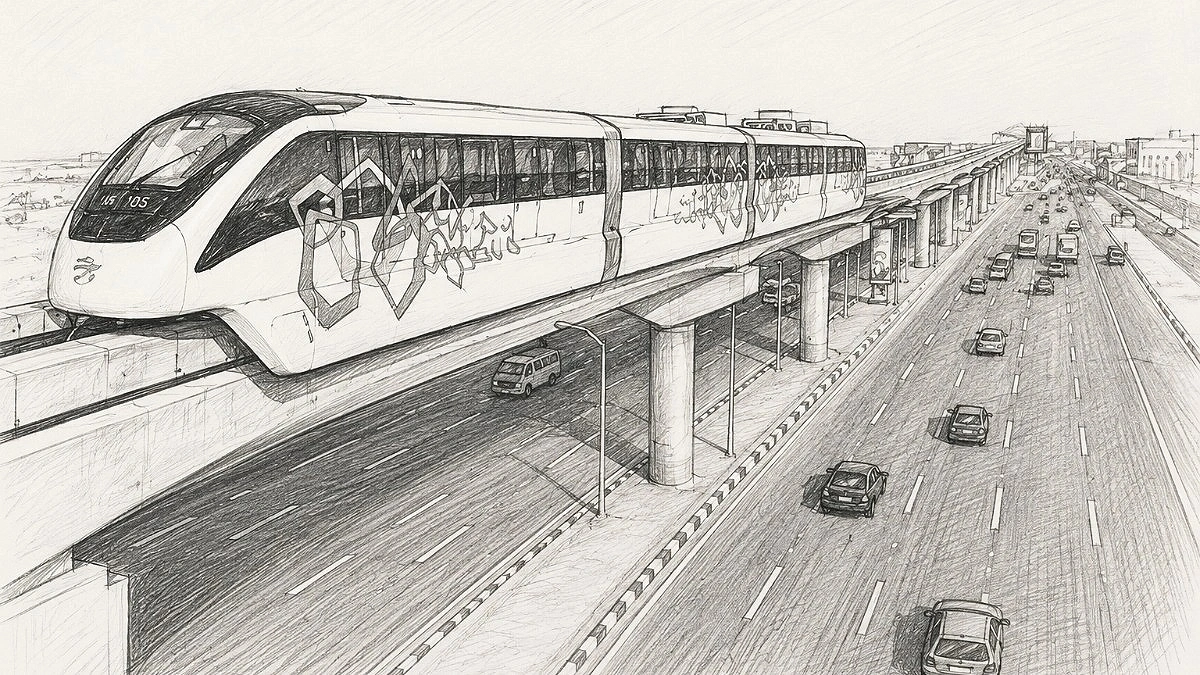
Reference Picture
Japan is renowned for its engineering excellence. Japanese products,from televisions to refrigerators and other electronics—are known worldwide for their quality, durability, and innovation. They command premium prices because consumers trust the brand.
Mention Jinjira a different image comes to mind. The area in Keraniganj, on the outskirts of Dhaka, has long been famous for producing lookalike versions of popular products. Whether electronics or other consumer goods, many well-known items available in local markets can be found replicated there. The phrase 'Made in Jinjira' has become shorthand for imitation products.
Many consumers unknowingly purchase these items believing them to be genuine. Labels may indicate Japan, China, or another country of origin, but the reality becomes clear only after use—by then, the buyer has already been deceived.
A similar 'Made in Jinjira' story appears to have unfolded around the Chattogram City Corporation's monorail project.
Agamir Somoy’s lead report on Saturday detailed how an individual allegedly attempted to secure involvement in a Tk 30,000 crore infrastructure project by claiming to represent two internationally recognized Egyptian construction firms. One is The Arab Contractors, a state-owned Egyptian company. The other is Orascom Construction, one of the world's leading construction giants.
Kawsar Alam Chowdhury reportedly presented himself as the authorized representative of both companies in Bangladesh and engaged with Chattogram City Corporation and the Bangladesh Investment Development Authority (BIDA). He did not merely hold discussions; he signed memorandums of understanding and other documents using Orascom's Egyptian address.
The city is currently conducting a feasibility study for a metro rail project at a cost of nearly Tk 700 million. Yet before that process has even concluded, there has been a strong push to fast-track a separate monorail proposal. Why the urgency? According to the report, Kawsar managed to convince influential figures within key government agencies.
What is perhaps more troubling is that these institutions apparently did not verify the legitimacy of his claims. Whether they failed to investigate or knowingly overlooked the issue is now a matter of public concern. Questions are also being raised about whether the network behind the scheme extended into the agencies themselves.
When contacted by Agamir Somoy Senior Reporter Abdullah Al Mamun, both Orascom Construction and The Arab Contractors categorically denied having any local representative in Bangladesh. They further stated that no individual named Kawsar Alam is affiliated with either company.
The irony deepens. While documents submitted by Kawsar used Orascom's Egyptian address, the trade license he provided to Agamir Somoy was issued in Tongi under Gazipur City Corporation. The situation recalls another familiar local brand reference: the well-known 'National Fan,' proudly labeled 'Made in Tongi'—a product whose name itself has inspired numerous imitations over the years.
In effect, the alleged representation of Orascom and The Arab Contractors appears to have become a 'Made in Tongi' operation. A local trade license was reportedly used to operate what was presented as the Bangladesh office of internationally recognized foreign companies. To make matters worse, the license had expired more than a year ago.
This is the 'Egyptian Orascom, Made-in-Tongi' model.
Following publication of the report, Chattogram City Corporation appeared to shift its position. The corporation's subsequent statement suggests an attempt to distance itself from earlier claims of agreements and partnerships with internationally renowned firms.
Officials now argue that the entity involved is 'Orascom Bangladesh,' not the Egyptian company itself.
Yet a fundamental question remains: How can the use of the logos and identities of the Egyptian companies in official memorandums be explained away? It resembles the classic mistake of telling countless new stories to cover up a single falsehood.
This controversy brings to mind a famous tale of Gopal Bhar. According to the story, King Krishnachandra once decided to honor Gopal Bhar with a prestigious award. Jealous of Gopal's popularity, a minister recruited an actor who closely resembled him and presented the impostor at the royal court.
The imitation was so convincing that even the king struggled to distinguish between the real and fake Gopal. Rather than arguing, the real Gopal proposed a simple test—one that required intimate knowledge of palace affairs.
When the questions began, the impostor quickly exposed his ignorance. Eventually, he admitted that he had been persuaded by the minister to impersonate Gopal. The king punished both the impostor and the minister.
The old tale may soon find a modern parallel in the 'Orascom Made-in-Tongi' affair.
The question now is whether Kawsar Chowdhury, who allegedly played the role of an international representative with remarkable confidence—will face consequences. Equally important is whether the influential individuals who accepted his claims and presented him at official development meetings will be held accountable. Or will everyone involved remain beyond reach?

