
Import-export goods damaged by rain
Port Seeks to Avoid Liability, Users Express Discontent

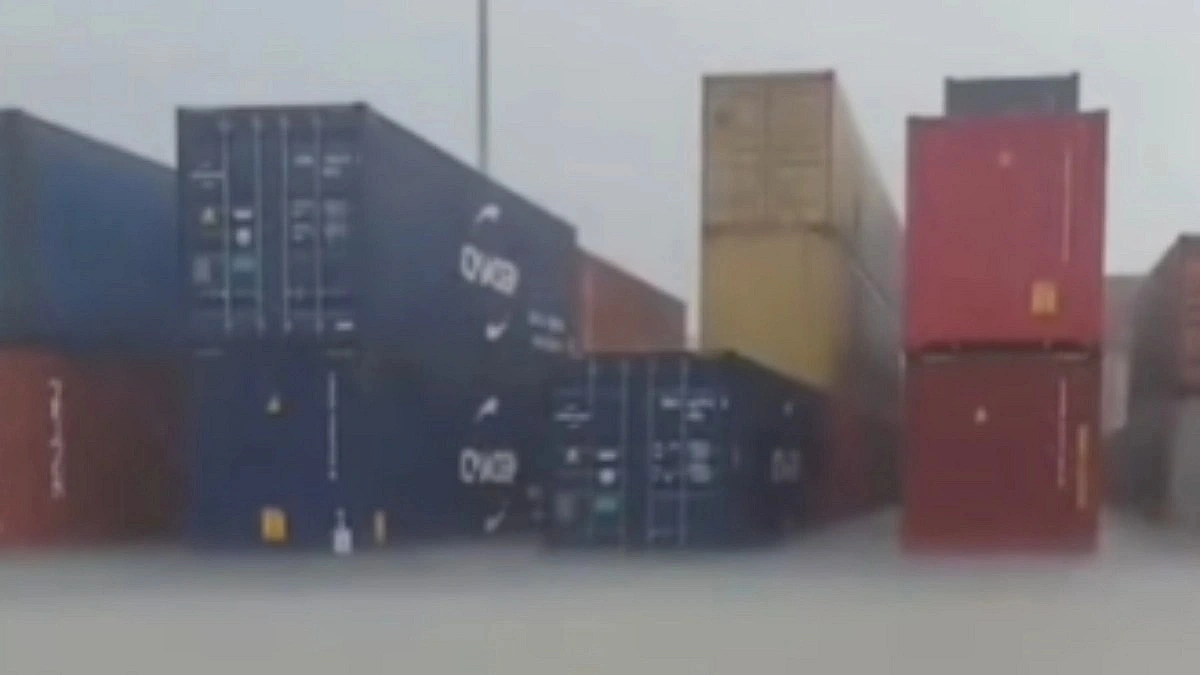
Chattogram Port’s container yard under water .Picture: Collected
Chattogram Port will not take responsibility for damage to import-export goods kept in its secured areas due to continuous rainfall. At the same time, it says it is not obligated to provide any accountability, issuing a strongly worded notice. Citing legal provisions, the port said in the notice that it is ‘denying, disclaiming and rejecting any claims for compensation from any party.’
The notice was signed on July 10, 2026, by Port Director (Transport) Golam Mohammad Sarwarul Islam. Following its publication, there has been widespread dissatisfaction among businesspeople, importers and shipping agents. In particular, they consider such language directed at port users to be ‘discourteous and arrogant.’
On July 5, 2026, continuous heavy rainfall across Chattogram city caused extensive waterlogging. Goods-filled containers in various yards inside the port suffered significant damage from rainwater. It has been reported that water accumulated beneath the containers entered inside and damaged the goods. At the same time, images of damaged goods at private container depots, which are also considered part of the port system, went viral on social media. There, people vented their anger against the port and demanded compensation. Following that, the port issued this strongly worded notice on Friday.
Reacting angrily, Chattogram Chamber President Mohammad Amirul Haque said, “The government provides relief to flood victims. But instead of compensation for goods destroyed while under the custody of Chattogram Port, businesspeople have been slapped in the face.”
He questioned, “The port cannot avoid responsibility by citing a natural disaster. We do not see it taking responsibility when goods are stolen, accidents occur, or containers go missing. It earns Tk 60 billion in revenue annually, but has no natural disaster management system and has not even built sheds to protect goods from rain!”
The notice, written in English by Golam Mohammad Sarwarul Islam, states that any damage or loss that may have occurred or has occurred to the aforementioned goods, cargo, containers and other items due to the aforementioned natural disaster constitutes an ‘Act of God,’ for the consequences of which the authority bears no legal responsibility and is exempt from all consequences under Regulation 199(14) of The Regulations for Working of Chittagong Port (Cargo and Container), 2001. It further states that the authority is “denying, disclaiming and rejecting any claims for compensation from any party/source arising out of the aforementioned natural disaster.”
Port users say that goods kept within the secured area remain under the port’s custody. Natural disasters are beyond anyone’s control. However, if the goods were damaged due to the port’s own negligence or shortcomings, the port must take responsibility for the losses.
Fazlul Kabir Mintu, member secretary of the Chattogram Port Protection Committee, said, “The port is trying to avoid responsibility by using legal excuses. But these goods are under its custody. It has no alternative but to bear responsibility for the losses. If it does not do so, the port’s reputation in shipping trade will be damaged.”
Acting Port Secretary Syed Refayet Hamim said no institution had sought financial compensation from the port after July 5. Asked why the notice was issued in advance, he replied, “Since we will not take responsibility for compensation, it was announced beforehand.”
A senior lawyer who works on port and shipping issues said that, under the law, two conditions must be met to avoid responsibility by declaring an incident an ‘Act of God.’ The incident must be entirely natural and beyond human control. Additionally, it must be proven that there was no possible way for people or the authorities to prevent the damage despite their best efforts. In this case, not all of the port’s yards were submerged. Therefore, this could be considered ‘negligent conduct’ by the authorities. Anyone who files a case in court could receive compensation.
As of now, it has not been possible to determine the actual amount of goods damaged by the flooding.
