

Of the two one LNG terminal shut, cutting supply by 50 percent

Collected Photo
The supply of Liquefied Natural Gas (LNG) has dropped by half. While an average of 1,100 million cubic feet of LNG is supplied daily during normal times, the supply fell to 570 million cubic feet from Tuesday afternoon (12:30 PM).
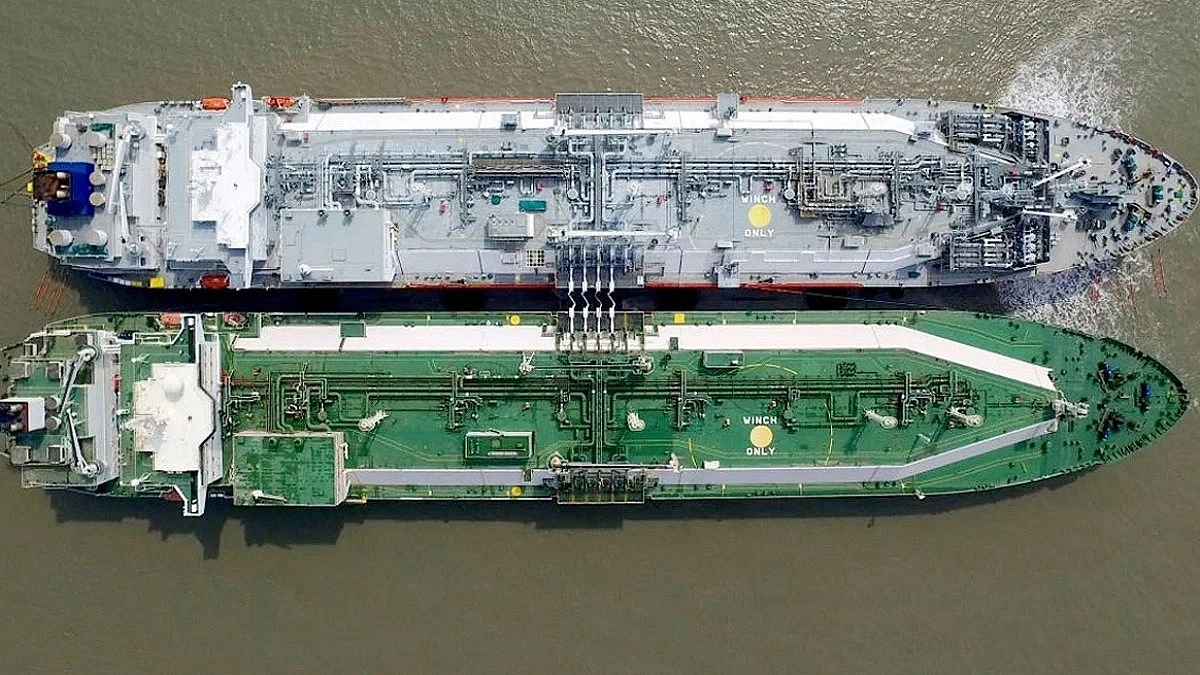
One of the two floating terminals in Maheshkhali, Cox's Bazar, is operated by the US-based company Excelerate. Since noon, that terminal has completely stopped supplying LNG. This terminal used to deliver 530 million cubic feet of gas.
The other terminal, operated by local company Summit, is currently supplying 570 million cubic feet of LNG. With the LNG supply halved, a gas shortage has hit the country. The areas around Dhaka are experiencing the most severe gas shortage.
Engineer Mohammad Shafiqul Islam, the acting General Manager of Rupantarita Prakritik Gas Company Limited (RPGCL), told Agamir Somoy that the supply has decreased due to a mechanical fault. He said, "A technical team is trying to fix the fault. We hope it will return to normal soon."
Under normal circumstances, up to 1,100 million cubic feet of LNG is supplied to the national grid daily from the two floating terminals in Maheshkhali. LNG is imported from Qatar and Oman through government channels, as well as purchased at higher prices from international spot markets. It is brought by ships to the floating terminals in Maheshkhali, where the liquid LNG is re-gasified. From the terminal, the gas is sent through subsea pipelines to the Maheshkhali landing station. From there, it travels via onshore pipelines through Pekua, Chakaria, and Banshkhali, reaching the gas transmission line built in Anwara, Chittagong. From Anwara, one pipeline goes directly to the CUFL and KAFCO fertilizer factories, while the other connects to the main Chittagong distribution line and joins the national grid's Feni-Ashuganj line.
Around 35 to 40 percent of the country's total gas production and supply is met through imported LNG. Due to the reduced LNG supply, consumers in industrial areas, CNG filling stations, and residential areas are facing gas shortages.

